
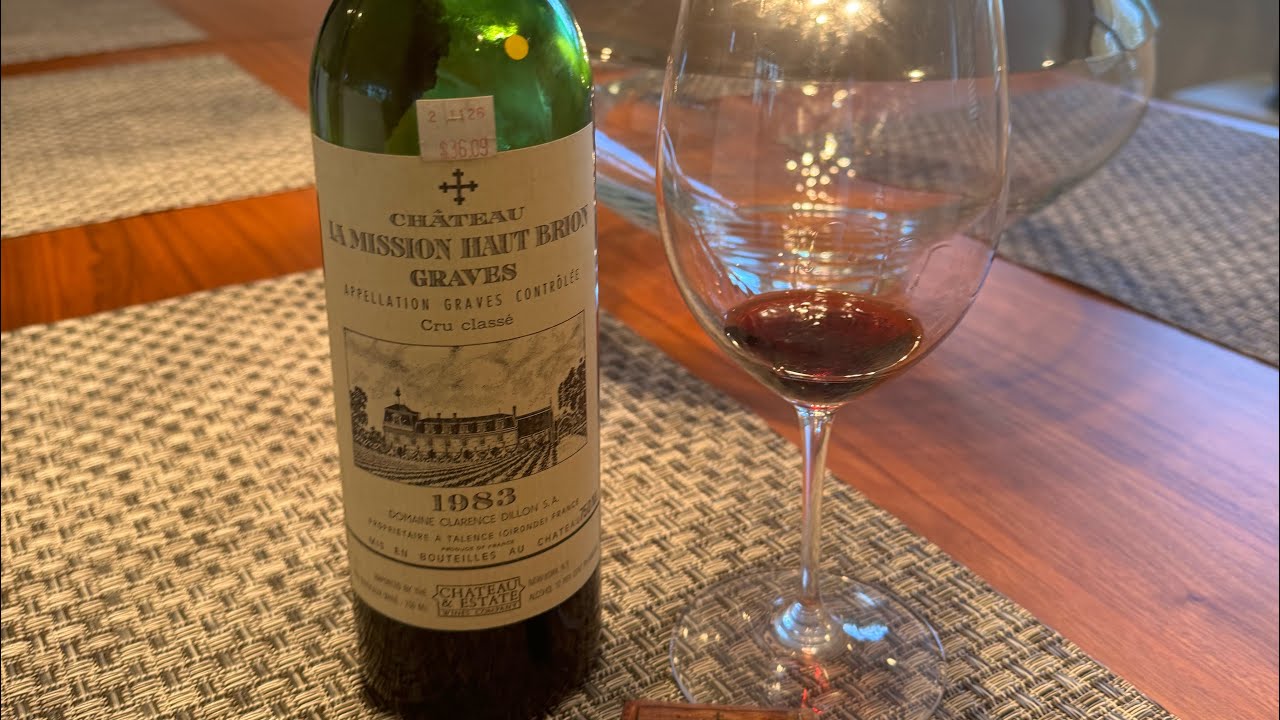
The property was originally purchased in 1533 by came into Jean de Pontac (who also owned Chateau Haut Brion). In 1607, it was inherited by Ms. Olive de Lestonnac, who bequeathed the property to the Congregation of the Mission. At that point in time, La Mission Haut Brion became the property of the Roman Catholic Church. The estate remained in the hands of the Roman Catholic Church until it was repossessed during the French revolution and later sold at a public auction.
In 1815, the Chateau was purchased by the Chiapelle family. The winery changed hands a few more time until 1919, when Frederic Woltner purchased it. The Woltner family remained the owners of La Mission Haut Brion until 1983 when the estate was purchased by Domaine Clarence Dillon. Once Clarence Dillon established control, they renovated the entire property starting with replanting the vineyards.
The winery has 27 hectares planted for red wine grapes and 3.7 hectares reserved for white wine grape varieties. The vineyard for red wine grapes is planted to 45.8% Cabernet Sauvignon, 43.8% Merlot, and 10.4% Cabernet Franc. There has been an increase in Merlot planted over the years.
The vineyard has a terroir of deep gravel over clay, sand, and chalk in the topsoil. Underneath, you find more gravel, which is less refined, along with clay and sand. The vineyard is well placed on 2 ridges of gravel hills that reach up to 25 meters in elevation at its highest point. The vineyard is perfectly situated between 2 streams, Ars and Peugue, which help provide moisture in hot, dry vintages. The vines are on average 27 years of age. Interesting note is that while most of the vines used by Chateau Haut Brion are in Pessac Leognan, the majority of the vines for La Mission Haut Brion are in Talence.
The wine is vinified in large, 180-hectoliter, temperature-controlled, stainless steel vats and aged in 100% new, French oak for an average of 22 months. The annual production of La Mission Haut Brion averages between 6,000 and 7,000 cases per year. The blending for Chateau La Mission Haut Brion takes place shortly after malolactic fermentation is finished. The chateau believes it is better to blend the wines before the influence of the wood begins to be felt in the wine.
La Mission Haut Brion wines are intense, rich, opulent and charming with smoke, tobacco, earth, truffle, spice, and cassis aromas. It is generally more tannic wine than Haut Brion and not as elegant.
Chateau La Mission Haut Brion as well as Chateau Haut Brion are currently managed by Jean-Philippe Delmas. Jean-Philippe is the third generation of the Delmas family to manage Haut Brion and the second to take care of La Mission Haut Brion.
For more information about the winery, please visit their website at https://www.mission-haut-brion.com/en/
hello everyone trophy one Hunter thought I’d just do a casual video on my coach on the 1983 Chateau the mission alri da de pontac and he actually purchased it in 1533 I guess he must have given it to his sister um and then his sister got married to a person called Arno de lonac and then uh when he died the estate changed in 1607 to uh Miss Olive the lonac and she eventually bequeathed the um Vineyard to the congregation of the mission which is a uh Catholic order and that’s how you got the name the mission Aron the mission Aron for a time period belonged to the Roman Catholic Church um only some of it was used for Vineyards about 10 hectars was used for planting a Vineyards and the grapes were sold commercially they weren’t used in the church at all it was still owned by the Roman Catholic Church up until the French Revolution when at that time um it was sold at public auction and then In 1855 there was a person um who bought an American called uh the Chappelle family and then it changed hands a couple more times and then in um 1919 another uh person Frederick walner uh P purchased it and the rotner family um remained the owners of the mission a on until 1983 and then the uh estate was uh purchased by domain Clarence Dylan who also owns chatau auon among other um properties and then once really uh the Clarence Dylan group got involved that was really the new start of the um Winery and the whole estate got replanted and this wine actually marks the start of this was the first vintage under uh the Clarence Dylan the domain Clarence Dylan group and also the new um wi maker which at that time was uh Jean Pierre uh Del Mouse so you can understand by the history of this why CH Bron was a much more famous wine because of the ownership changes because it was owned by Roman Catholic church because it wasn’t uh really mass-produced as much as aurion and its story um it wasn’t ranked um in the 1855 classification system although I think generally speaking it was equivalent to probably a second growth at that time anyways so the mission Aron has 27 hectars planted for red mine gapes and about almost close the four four hectars planted for white wine grapes uh the vineyard for the red wine grapes are planted 45% uh Cabernet song about 43% Mero and about 10% Cabernet frog but you’ve seen steadily an increase in the amount of Mero that’s been uh in the vineyard and a decrease in the amount of C Cabernet 7 and Cabernet Fran this is the technical part I don’t know if it and again I’ve said that in many videos I do the technical part cuz people like this type of stuff but actually it’s more a justification of why the wine is good it actually doesn’t make a lot of difference because we as consumers doesn’t matter how many oak barrels or how you talk about the terar the wine makers have so many techniques but people like to know more so I kind of talk about this part um so the vineyard is deep gravel over clay and sand and choc on the top soil uh and underneath you find more gravel um and then along with some clay and some sand uh the vineyard is placed on two Ridges of gravel that reach up to 25 M in elevation um The Vineyard is situated between two streams the ARs and the Peno and they provide moisture in the uh dry vintages the average age of the vines is 27 years and it’s planted uh to a density of about 10,000 Vines per hectar which is more than um chetto opon so that probably explains the difference between the two um wines uh one is of course the soil is a little bit different two is the planting of the grape varial is a little bit different and then three um this is planted a little bit heavier in terms of the density than chatau auon so you would kind of uh promise from that that probably chatau Ron is if you had to empirically judge a more refined or a better wine so although um The Chateau is actually across the retreat from Chateau aurion it’s funny because the actual Vineyard sites uh with auon they are in P Lan in uh for L Miss Aron only about I think two of the actual plots are in Pon the rest of them are in a p place called talents so the are actually uh vinified in a large um stainless steel bats and then they are aged 100% in new French Oak for an average of 22 months the annual production of the mission Aron is between 6 to 7,000 cases and um something that’s I think unique is the blending of L Mission opon takes place shortly after Baltic fermentation and um is finished before they are aged and bu arrows and I guess the property feels that it is better to blend the wines before the influence of wood has been felt on the wines so generally speaking L Mission Aron produces a um intense Rich opulent wine with a lot of charm it’s more full bodied and concentrated than oong um and so it often has um smoke tobacco Earth truffle spice and Cassis scents so uh you would kind of um describe it in terms it’s kind of a rougher version of auon orbon to me is a little bit more graval and minerally and earthy but um still refined in terms of its tannins uh L Mission generally speaking is a little bit more tanic a little bit rougher around the edges uh that changed if you drink um we’re going to drink this wine but if you drink pre 1983 it was even rougher and a more aair than it is now and I think it’s more developed uh through the current ownership and the why maker a much more um charming and opulent style um so again um it’s now currently managed by Jean Philip Delmas and he is the third generation of delass family to manage aurion and the second um generation to take care of Chateau sorry the mission opon uh so he followed in the footsteps of his father John Bernard Delmas who um was the original uh wine maker in 1983 that took over uh the uh management of the Vines for uh the mission opon let’s look at the Cork and the bottle so uh this is the cork it’s fully uh oxidized there’s not a lot of spring in the left but it’s 1983 so what do you expect cork is perfect um but you’ll find with some of these old corks they’re really kind of solid right now and almost a little bit they feel like they’re almost caramelized uh but it’s still an effective cork you’ll see on the bottle it’s kind of funny the original price of this was $36 you can see a huge amount of sediment on this uh this is a label and um look at the wine color it looks of course there’s a little bit of Aging the brownness around the the stem but it’s actually quite a nice color for 83 and still looks like has a lot of life in it so let’s taste the wine I’ll let you know that um this has been open it’s well irrated now this is the second bottle I’ve had of this wine so I’m quite familiar with this wine in terms of tasting notes I had it initially when it opened had it for a couple hours I’ve had it overnight now and so um one of the things that is not very highly rated by the um different U magazines and Raiders but uh again this is the importance of continuing to drink the wine and getting very um recent ratings because a wine that they rated 10 years ago is much different today so let’s taste and smell the wine so on the smell um very floral almost like a sweet like cinnamon ciss and anise um um very floral um in the aroma very sweet fruit some dark berry also this does not to me smell like an old or past its prime wine at all on the taste still lots of fruit lots of vitamin C um red fruit I would say red berries C dried cranberries um not as earthy and grally as oon but a little bit stronger in terms of the intensity it’s not again it’s a rougher type wine um and it’s got a lot of red fruit a calcium or minerally on the aftertaste that kind of reminds me of like rocks like red stones or red clay rocks or Stones very minerally actually in fact on the aftertaste um but still lots of fruit on this wine um I I really like this wine and despite whatever critics say to me it’s a 93o wine it’s spectacular it’s exceptional it’s drinking very nicely right now um could it last another five or 10 years I would probably think it probably last another five years easily but why wait there’s no really reason to wait right now it’s perfect right now um very vibrant good acidity good body I’d say medium body um medium tannins but but the tastes are all there so this is really when I think Bordeaux is classic because at this point all the tenons have been resolved so you’re really just if you’re not a big alcohol person like me and you don’t like huge tannins you’re just getting fruit and the the the um the secondary and tertiary um taste right now you’re just getting the taste of the wine and really the back the tannins are giving you a little bit of backbone and structure but it’s not bothering you in terms of The Taste profile so beautiful wine uh really happy bottle this is the second bottle I’ve had so pretty consistent notes and um really lovely wine hope you’ve enjoyed this uh review until next time happy drinking
3 Comments
Great review. I have also noticed that so many reviews of a wine happen right when the wine comes to the market and there are not many reviews of well aged wines on YouTube
Great experience. Cheers my friend 🍷
Cool choice of a wine- I've always wanted to try this producer but haven't had the chance. What do you think of the value here? La Mission is almost as expensive as Haut Brion- is it almost as good?