
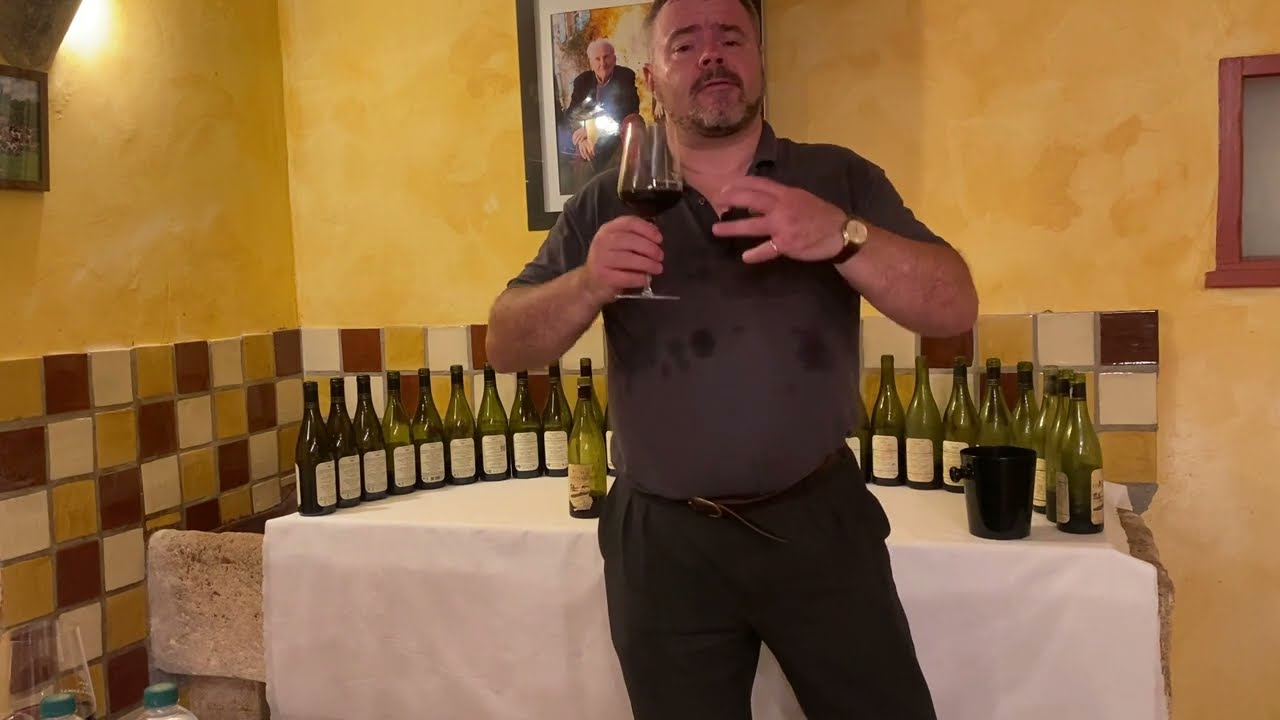
In today’s Wine-Searcher tasting our Wine Director, David Allen MW has the privilege of tasting the first ever vintage of one of the revolutionary Languedoc estate, Mas de Daumas Gassac. He is in southern France and in the first of a set of videos selected from a vertical tasting of 27 of their wines, he tastes the 1978 vintage of Mas de Daumas Gassac Rouge.
The estate also makes a white wine from Petit Manseng, Viognier, Chardonnay and Chenin Blanc. Mas de Daumas Gassac is a wine producer in the Languedoc region of France, around 40 kilometers (25 miles) west of Montpellier, near the town of Gignac. It is well-known for the high quality of its Cabernet Sauvignon-predominant flagship wine, earning the estate the nickname “the Lafite of the Languedoc”. The winery is built in the foundations of a Gallo-Roman mill and on the site of its former pond. Sited away from established, well-known appellations, the wine has been produced as a Vin de Pays, with recent vintages being classified as IGP St. Guilhem-le-Désert – Cité d’Aniane.
The first vines at Mas de Daumas Gassac were planted in 1972. Véronique and Aimé Guibert had found the property two years earlier while searching for a new rural home; in 1971 their friend, Professor Henri Enjalbert, a geologist with specialism in vineyards told them that they could make Grand Cru quality wines here. The renowned oenologist Emile Peynaud consulted on the first vintage in 1978. Aimé Guibert, who died in 2016 aged 91, was a champion of the Languedoc who became well known for his battles with the Robert Mondavi company. The estate remains family-owned and is run by four of Aimé and Véronique’s five children.
Wines are vinified in stainless steel vats with natural air conditioning provided by two springs running under the cellars. This slows down ferments, allowing complex flavor development.
The Mas de Daumas Gassac red is an aromatic, full-bodied wine made from around 70 to 80 percent Cabernet Sauvignon with a mix of 17 other indigenous and international varieties such as Merlot, Malbec, Pinot Noir, and Tannat. The wine is fermented in stainless steel tanks, aged for 12-15 months in oak barrels, and bottled unfiltered. It can be laid down for several decades, but is also approachable when young.
In exceptional vintages the estate has produced a limited-production wine made with 100 percent Cabernet Sauvignon called Cuvée Émile Peynaud. The estate also makes a white wine from Petit Manseng, Viognier, Chardonnay and Chenin Blanc, a Rosé ‘Frizant’ sparkling wine and a sweet wine called Vin de Laurence.
Discover more about this wine, see its pricing and find out where to by it on the Wine-Searcher website by following this link: https://www.wine-searcher.com/find/mas+de+daumas+gassac+igp+st+guilhem+le+dessert+pays+france/1978
#masdedaumasgassac #daumasgassac #languedoc #stguilhemledesert #masterofwine #winesearcher #winelovers #tastingredwine #winetasting #winesoffrance #frenchwine
hello there today I’m lucky enough to be tasting some liquid history I’m at maduma gasak in the longood do in southern France in the gasak valley and today the the estate has been putting on a tasting as it does every 10 years of its older wine so we’ve been fortunate enough to try 27 of the 47 vintages produced here with 1978 the original vintage being the first one in that tasting now the label under fortunately has seen some ravages of time this is a wine that’s labeled as a Vander delal and very quickly maduma gasak obtained the sub the LEF of the longu do I think possibly because of its Elegance it’s complexity its ability to age it’s a cabinet dominated blend normally about 70% at least the estate was set up by the gue bear family who’d come here in the late 60s looking for a home they bought the land that went with the home it was it was an area that had been Untouched by modern agriculture that the previous owner had done all his plowing with a horse there was no electricity here there was no running water and they discovered that the soil type here certainly in the lower part of the property is very much Ain to the soils found in the Codi in burgundy iron rich fractured glacy deposited Limestone soils that proved ideal for growing cabinet seral and the proof of the pudding I guess is in is in the tasting because as I say this this is a wine that will be 46 years old this year and from tasting it earlier still seem to be going strong so let’s have a look at it and see what we think firstly the color the color is the color is a medium depth of ruby red but at the same time actually it’s not particularly turn sort of brickish or brown at The Rim it’s you know kept a lovely vibrancy to that Ruby note the wine only has 12% alcohol which is very typical of wines of the 70s perhaps and there’s not particularly a density the wine isn’t clinging to the glass that easily so let’s see what we make of the nose shall we when I first tasted this my Impressions were initially of fresh ciss but then also of Barnard notes now this is an hour or so later and and the the developed tertiary Aromas have have taken over from the the fruit there’s more of a sort of a mushroom develop note but underneath that there’s still a vibrancy of fruit there is some sort of slightly juicy raspberry or malberry note so that’s for Taste shall we the wine has a lovely freshness the city is giving a lift to the fruits there’s an elegant perhaps raspberry perhaps to sort of a slightly stewed Plum note there’s a drying Dusty tanon the structures fine and smooth and elegant the structure is slightly taking over on the finish and there’s sort of SL slight charcoal note there alongside the sort of the the red fruit and the notes of mushroomy development I think possibly this is a wine that is now P its prime at the same time I don’t feel it’s a wine that’s in in serious decline I suspect if I was come back to it in three or 4 years time it would still be in very much this sort of sort of state so wine that’s aged quite impressively I did take a look at the wine search at aggregated score for this and I’m afraid that’s only 66 out of 100 but I suspect possibly other people had tried wines that weren’t in quite as good a condition I mean this has come straight from the producers Sellers and yes it’s a wine that’s complex it’s got plenty of tertiary around us and I could quite understand if people felt it was past its best however nonetheless fantastic chance to try the inaugural vintage of a wonderful estate so thank you very much for joining us I do hope you found the tasting interest if you have enjoyed it do please press the like button if you want to watch more of these tastings do please sign up and follow us do subscribe to our YouTube channel if you feel like sharing the video with friends that would be fantastic if you have any comments you want to leave please pop those in the comments box below we would love to hear your feedback on the wines we’re looking at the tastings we’re doing or anything else that relates to that I will of course leave a note in the comments box so that you can follow that to the wine Searcher website and there you’ll be able to find details about where the Wine’s available if it still is what its pricing is the critics scores background information about the wine and anything else relating to that so thank you so much for joining us and I do hope you’ll manage to take some time and come and join us for another tasting in the very near future bye for now
3 Comments
Hello. Have you tasted the 2013? I have half a case and drank one bottle last year. I was slightly underwhelmed but that might be because it needs another few years to develop complexity. What is your view of the '13?
Thanks.
Lovely!
This looks like a very interesting wine