
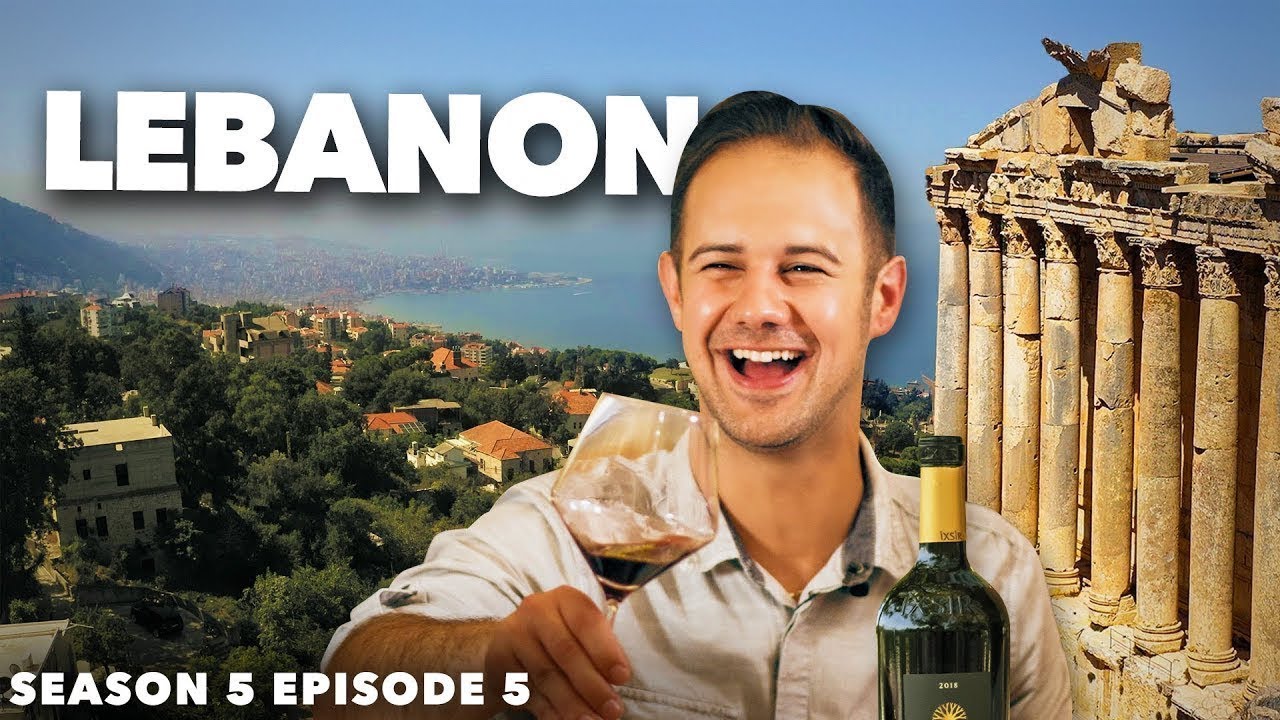
Lebanon is remarkable! It’s one of the world’s oldest wine regions, full of resilient people, ancient winegrowing heritage, and fresh cuisine that rivals any gastronomy on the planet! Besides having a robust winegrowing history, the country’s Mediterranean climate and mountainous terrain produce a host of delicious, fresh wines, from crisp indigenous white grapes like Obeidy and Merwah to rich, spicy blends of Cabernet and Syrah. Plus, the food is some of the most flavorful in the world, and the people have a zest for life. Join Vince and his brother Brandon as they explore Lebanon’s history, culture, food, and wine!
Enjoy the show? We’re independently owned and produced and would LOVE your support! You can also watch ad-free! Join Vino VIP: https://www.visforvino.com/vip
LIMITED TIME! Buy the wines from the episode! https://www.backroomwines.com/v-is-for-vino-season-5-lebanon.html
All locations, wines, and wineries are listed at: https://visforvino.com/lebanon/
DESCRIPTION: Get ready to explore Lebanon, one of the world’s most beautiful and misunderstood countries. We’ll start this journey by speaking with British author and journalist Michael Karam at Le Chef restaurant over breakfast. This place was a favorite of Anthony Bourdain, and the awarma (lamb confit) with eggs and foul mudamas is not to be missed! Next, I’ll head to the ancient Roman temple of Bacchus, a temple in Baalbek dedicated to the God of Wine. This temple is one of the most intact Roman temples in the world, and its scale is massive. Here, you’ll learn about the history and geography of Lebanese winemaking. Next, I’ll visit Château Ksara, the largest and oldest winery in Lebanon, before getting some succulent shawarma with my brother Brandon, who also came along on this trip! The grape segment will discuss the difference between old-world and ancient-world wines and Lebanese grape varieties planted, like Obeidy & Merwah, Cabernet, Chardonnay, and Syrah. We’ll then visit the homey family-run winery Château St. Thomas, where winemaker Joe Touma single-handled proved that the grape variety “Obeidy” was native to Lebanon. After that, we’ll head to IXSIR winery in the up-and-coming Batroun region to learn why Lebanese vines are often planted at high altitudes. The crew and I then headed for a night in Beirut, partying in its famous nightlife scene on Gemmayze Street. Our last winery visited is Chateau Musar, Lebanon’s most famous and unique winery. I then gather all our producers for an epic dinner with Chef Maroun Chedid at Ritage Garden before having an emotional meeting with some of my distant family in Zahle. Get excited to see Lebanon in a way you never have before on this V is for Vino episode!
WINES FEATURED:
Château Ksara Merwah
Château Ksara Reserve du Couvent
Château Ksara Le Souverain
Château St. Thomas Obeidy
Château St. Thomas Rouge
Château St. Thomas Pinot Noir
IXSIR Altitudes White
IXSIR EL IXSIR
Chateau Musar White
Chateau Musar Red
CHAPTERS:
00:00:00 Introduction
00:01:10 Welcome Lebanon
00:04:15 Breakfast at Le Chef with Michael Karam
00:09:19 Geography & History at Baalbek
00:13:09 Vince and Brandon explore Baalbek
00:14:14 Château Ksara
00:21:19 Vino VIP
00:22:44 Grapes of Lebanon
00:26:05 Eating Shawarma with Brandon
00:27:24 Château St. Thomas
00:34:38 IXSIR Winery
00:41:34 visforvino.com
00:41:58 Party in Beirut
00:45:11 Chateau Musar
00:52:45 Dinner at Ritage Garden Restaurant
01:02:06 Outro
01:06:12 Credits
___________________
And just because an episode ends doesn’t mean the fun stops there. Next, you can:
SUBSCRIBE to our YouTube channel! https://bit.ly/3xxH7eT
JOIN VINO VIP to watch episodes ad-free, get early access to new videos, exclusive VIP members-only content, virtual zoom wine tastings with Vince, and fun giveaways! https://www.visforvino.com/vino-vip
Follow us on Instagram!
https://www.instagram.com/visforvino
Let’s be friends on Facebook!
https://www.facebook.com/visforvino
__________________
© 2023 V IS FOR VINO ALL RIGHTS RESERVED
[Music] welcome to Lebanon the story of Lebanese wine is as rich as any other in the wine world it’s here in Lebanon that some of the earliest wine making in human history took place and the modern era of Lebanese wine does Justice to its past indigenous grapes interesting Blends unique wine making all preserved in a country that has had more than its fair share of ups and downs but nothing stops Lebanese people from enjoying life whether it’s paying homage to their Homeland partaking in some of the best meals on the planet or living it up in the Cosmopolitan city of Beirut the Lebanese are some of the most hospitable people you’ll ever encounter and a little secret for reasons you’ll see this may be the most meaningful episode of this show I’ve ever made so welcome to Lebanon and welcome to a very special episode of V is for Vino [Music] [Applause] [Music] what I’m about to say isn’t really how I wanted to start start this episode but I don’t really see any way around talking about it behind me is the site of the bayro port explosion from 2020 it was the largest non-nuclear explosion in human history and the wreckage is such a tangible visual reminder of everything people tend to associate with Lebanon Civil War economic strife and government corruption and every news story I’d scene sold this General narrative that Lebanon as a country and as a people were broken so while planning this episode I asked the Lebanese team helping us was this narrative true and is that the story I should tell resilience in the face of adversity and should I be worried about the safety of me and my crew the answer a resounding no because while all these things are true Lebanon is so much more than its ongoing struggles [Music] not only did everyone assure me that we wouldn’t have any problems filming they let me know we’d eat delicious food drink remarkable wines see incredible Landscapes and meet a people who were yes resilient but also welcoming Beyond Compare plus that the capital city of Beirut where I am now was vibrant and alluring and would feel right at home in the south of France this country really isn’t dissimilar from other travel destinations you know and love there’s Strife there is poverty and yes there has been War but the Lebanese don’t see any of that as what defines them as a people so many people in Lebanon choose to make wine here to raise their families here and to try and help the country move forward so we’re going to talk about the challenges Lebanon faces as a part of its story not all of it because the people and wine makers here deserve your attention not out of pity but because they’re making a product worthy of it oh okay so before we get started another reason this episode is so special and why I’ve always wanted to film here is because yes I’m half Lebanese my great-grandfather immigrated from Lebanon to the US passed through Ellis Island and all unfortunately no I don’t speak Arabic unless you count the words related to food anyway and I’m also not an expert on Lebanese wines so I’m going to be learning a lot right along with you and yes I brought my brother Brandon Along on this trip because him and I have both always wanted to get to know our heritage a bit better better but enough about all that I had an appointment to get to and you know that it revolved around [Music] food I’m admittedly not a breakfast guy unless it occurs around 1:00 p.m. which I guess technically isn’t breakfast anymore but I ate it every single day during my trip because Lebanese breakfast is criminally underrated and Le Chef makes a breakfast so great even Russell Crow considers himself a fan oh and so did Bourdain owner sharbel basil greeted us like he greets everyone here like you’ve been friends for quite some time my dining partner today is Michael Karam who may be the foremost authority on Lebanese wine he’s a British Lebanese author and journalist who not only has contributed to Major wine Tech books on the subject he co-produced a full length documentary wine and War and he wrote The Definitive book on the topic wines of Lebanon before anyone was taking this country seriously as a wine destination we say oh this guy wrote the book on Lebanon and we say it rhetorically but you actually did write the book on Lebanese wines 20 years ago there was how many wineries realistically about 12 but there was this history to Lebanese wine that also needed to be explored this five what 5,000 years between 5 and 7,000 yeah I mean depending on where you want to start I was telling people I’m going to Lebanon people would say oh they make wine there I say yeah they’ve been making wine for a long time yeah no we definitely punch above our weight in terms of reputation I think you need to go to other wine producing countries to appreciate for our size the variety of grapes that are used here and the styles of the wines breakfast was served aarma which is Lebanese diced and spiced lamb com feet cooked with eggs this is the bacon equivalent this is the full English equivalent and my personal favorite oh yeah this is the stuff full madamas which is fava beans with copious amounts of garlic lemon and olive oil I’ve been doing this every morning it’s so much garlic at 10:00 a.m. and Ian I’m totally here for it yeah yeah and and if you eat too much it sends you back to sleep yeah it’s some of the best cuisine in the world and I think the world has picked up on that if they haven’t picked up up on our wines yet which they will they picked up on the the the food well I think the food and the wine must be sold together not necessarily paired together because I think I think that Lebanese wine should not be a pigeonholed with Lebanese food it’s it’s wine and it should be paired with all food but I mean in terms of what the the international consumer understands about this country they got to replace the images of guys with beards and guns and bombs with images of food and wine and arach and mountains and guys with very big mustaches once you’ve sold Lebanon the idea of Lebanon everything else will will follow after that in terms of prosperity for the country in terms of Tourism prosperity it’s the wine industry it feels like most cities that I would love to visit in the world I feel safer in Beirut than I do in London in terms of crime against the person yeah I mean something could kick off here but yeah which wouldn’t happen in London but in terms of my personal safety yeah it’s a safe and that is one of the the kind of neat tricks that Lebanon plays on people it under promises and it overd delivers people arrive here they’re a little bit nervous a little bit tense you know well what’s going to really happen they get on the plane to go back and they are fully paid up members of the I love I love Lebanon F Club the Lebanese people we kind of go everywhere there’s Lebanese across the globe the people of this Coastline have been traveling thousands of years they’ve had to seek their opportunities abroad and they’re doing it right to this day and it’s made us quite smart people we we’re known as business people we’re as entrepreneurs entrepreneurs yeah we’re not known as particularly intellectual or artistic or creative as much as we are known for just transactional Behavior what is the mentality of the people here my own feelings on the matter is they accept that their lot in life is to always overcome the difficulties that are placed in front of them 45 years ago the Civil conflict since 2010 you had the Syrian Civil War so we had 2 million refugees infrastructure stayed the same 2019 we had the banking crisis savings wiped out overnight but yet they pick themselves up they dust themselves down that word resilience which is overused but when you supply to the Lebanese it’s it’s very apt and they just get on with it don’t you love meeting people who are more articulate than you are Michael is awesome his optimism for Lebanon and its wines got me excited for the week to come but before we head to The Vineyards we need to talk about the history of Lebanese [Music] wine I’m in the city of balbec and this remarkable structure behind me is the Temple of bakas this is one of of the best preserved Roman temples in the world was built around the 2 century and even cooler this Temple was made to honor bakus the Roman god of wine evidence includes ornamentations of grapes and Vines near the entrance and while a 2,000-year-old temple sounds ancient enough to talk about the origins of Lebanese wine you need to go back another 3,000 years well not the oldest wine region in the world Lebanon is close the Phoenicians of this area may not have invented wine but 5,000 years ago they’re credited with turning it into an industry bottling it in amrey or clay pots protecting it from oxygen with a layer of olive oil and using their Maritime trading Network to share and sell Lebanese wine across this part of the globe Cyprus Egypt Greece Rome even as far as Spain next came the Romans and the cians and Arab rule but when the Ottoman Empire took over around the 1500s wine production shrunk to almost nothing as the culture had strict rules around alcohol but in the 1850s around the end of that period wine production started up again when French Jesuit monks planted Seno Kera as well as a little ganache and white uni Blanc in the Becca Valley then in 1920 Lebanon which had been ottoman territory was officially mandated to France after World War I until its independence in 1943 this influence is why so many grapes here are a French origin and why many Lebanese still speak French all was on the up and up and wine production was growing until the Lebanese Civil War in 1975 by the end of the war in 1990 there were only five wineries left in operation but since then that number has climbed back up to around 60 Wineries and between 10 and 11 million bottles per year 10 million bottles for an entire country isn’t a ton especially when you take into account that a single large Winery in France Italy or California may make more than that single-handedly but you’ve got to give this small But Mighty Country Credit it’s no bigger than the state of Connecticut has a smaller population than New York City and yet Lebanon has a reputation for wines worthy of international praise the reason it can produce such Fine Wines is a combination of persistence from the people and an extraordinary Mediterranean climate Lebanon is blessed with 300 days of sunshine per year and while it’s in the Middle East it’s probably not the desert landscape you’re picturing in your head it’s Coastline to the west and mountainous pretty much everywhere else there are four wine growing regions including the upand cominging area batun in the north but the majority of the grapes come from the Becca Valley on the east side of the country like a lot of famous wine growing regions on the planet this area is a valley sandwiched between the Mount Lebanon range and the anti-lebanon range the mountains provide natural irrigation from the water runoff a warm growing area protected from Ocean breezes and Limestone soils plus most grapes are planted at higher elevations between 900 and 2400 M they’re among the highest in the northern hemisphere which helps slow down the hot dry growing season that would otherwise over rpen the grapes as I mentioned the modern era of Lebanese wine making started around 1850 1857 to be exact by Jesuit monks in an area not too far from here [Music] almost overwhelming because it’s it’s so large it’s all inspiring is the best way to put it these columns are cut into sections but they’re 6 M by like 10 m yeah so they got to weigh 20 40,000 lb I’ve seen stuff in Greece and in Italy and in Rome like this Rivals any of that even if you don’t know know anything about history or you don’t care about the architecture you still show up here and you’re just like wow everything was so detailed oh look up oh underneath oh my gosh you wouldn’t even notice unless you look up that’s that’s a good call say I mean those are I think those are taller I think than that it’s crazy but what do the Italians think about that of this is this is amazing this is as impressive as some of your own Homeland ruins I would say this is worth the price of admission without a doubt Eternal question of how did they make it [Music] aliens located in the Becca Valley shatara is not only the oldest Winery in Lebanon it’s also the largest albe it still small by global standards founded in 1857 by Jesuit monks on the site of an ancient Fortress or casar it includes one of the middle east’s first observatories a bell tower to Signal meal and rest time for the monks and of course a chapel but the real treasure of this Winery was buried beneath the surface quite literally undiscovered for centuries my friend Ellie tells me more 1857 the J with acquired the estate and they had a school and when you have a school a lot of mouth to feed so they have a chicken house a poultry and one day it was attacked by a fox so they had to track the fox and they had to kill the fox and this is how they discovered they followed the fox who entered between those two rocks so they had their Vineyard they didn’t even know that underneath the vineyard existed these oh that’s wild so right above the exactly it’s 3,600 years old the uh cake we did the carbon 14 how Wild is that built millenniums ago used by the Romans lost for thousands of years and found Again by a fox Ellie told me that during World War I 400 families took refuge for 4 years at casara and during that time turn the caves into the cellar you see today I’m I’m Blown Away by how like I’m looking I’m at this Crossroads now I mean every direction almost as far as I can see the cave keeps going exactly it’s 2.1 kilom wow yeah which is the seventh or longest caves destined for making making the one naturally yeah in the world we have 1.1 million bottles in these caves oh my gosh the particular thing about this this cave is that winter as in summer the temperature is steady yep 13° and the hydrometry is 75% which is the ideal hydrometry and the temperature for aging the wine so you ended up with this natural seller you show me how the humidity created a white mushroom likee mold that eventually turned black with age but didn’t affect the wine inside the natural ventilation from whoever built these caves installed in the ceilings how they kept track of the wines with notes and Bottles so The Damp air didn’t destroy the labels and how they’re still discovering new areas of the caves wines daating back to the 40s 50s know I’m not supposed to and the oldest wine the oldest wine that we have this one 1918 it’s a complete rag but these Beauties they aren’t for sale this is the treasure that we inherit from the Jesuits and we intend to keep it this is really the the real asset of Sara next was a tour with a third generation family owner Camille he explained to me all the sustainability measures they take because they’re on a natural spring they use that water in the winery and then pass it through a purification system for use on property to keep it Lush and green the grape intake is 70 M higher than the bottling line so they can use gravity rather than pumps to move the wine around repurposing the old concrete Jesuit fermentation tanks by lining them with stainless steel for use in modern wine making and solar panels are here not only for the environment but to deal with the frequent power outages that occur in the country after my tour it was time to taste 100% Lebanese gra po called Mur 90 years old vans they use in marage meaning you have the mother and then they launch the the branches and then they bury it it’s it’s inuma it’s at 1600 M of altitude and we will see it has really nice crispiness nice acidity nice freshness because of the heat the altitude is what keeps these wines fresh from from getting overbearing exactly there’s a particular thing about this one you have this slight saltiness the the clean minerality is the first thing I get exactly like really ripe juicy Citrus medium bodied but for a country like Lebanon having acidity like this natural yeah I’m shocked at the freshness of all the wines I love that it brings some of the elements that we like for multiple wines that clean slate that we like from breeling but maybe the Citrus character that we like from light Italian wines body a little more weight there’s not really anything you can directly compare it to exactly the minerality and the saltiness stands out first and then after start discovering more and more mango in it and it’s coming up now keep longer Le and it has complexity is you start with something and finish with something something else we got to see some of the Harvest today here the winery is at 900 M of altitude at the center of the Becca as you saw the Harvest is done by hand we tried to maintain this traditional way of harvesting so we have mainly Sia okay and the r bordeau marriage which you don’t get to see in France you have to come to Lebanon for thata the reserve of the Covent the wine that he used to drink on a daily basis in the coven the the Jesuits the daily Drinker is what we call it the purpley S comes out right away exactly you know the S is well adapted to this type of climate so I smiled as soon as I had a sip because the the pallet is completely different than what I expected so I got the blue fruit right away so I was like okay it’s going to taste like SRA and then I had the the Sip the spice component is spiced but it’s almost like exotic spice you have this Ley from one side and then you have the spices of the two cabinet and and also some of that floral component Violet is very present Violet is beautiful gives more length to it and of course the red fruits and black fruits are really present it’s got some tannins it has some some Tann and this is really beautiful with with lamb this is what 14% and I mean that’s yeah that’s Bordeaux esque we don’t have 15 14 is the maximum and this is the altitude there’s very few wineries on the planet with the type of history that that you have here so honored to to share it with you thanks for showing me around thank you very much for coming you’re always welcome if you come to this country you’ll learn what I learned you’re not going to leave any visit without a lavish spread of food presented at some point lunch with the crew was grilled kebabs fatou hummus babagan Falafel and lots more casara wine because in this country feeding guests isn’t just for sustenance it’s a love [Music] language hey everybody I hope you’re enjoying the episode I wanted to talk to you briefly about Veno VIP which is our members only Club you see we’re a small team and we’re completely independently produced which means we can only keep making episodes with your support so if the show has helped you or helped you pass a wine exam or if you’re just enjoying it please consider supporting the small business that provided it and join Veno VIP which is full of a ton of benefits anyway you get full episodes ad free and you also get early access to all our episodes including our YouTube videos plus you get members only videos like behind the scenes sces and commentaries and F length interviews in our members section on our website every quarter we do a zoom hangout where you get to hang out with me and we taste a wine together we do Raffles once a month for our members and we do a big yearly raffle plus if you’re a gold or platinum member you get your name in the credits of an episode and all our members get access to our members only Facebook group which is a great Community membership starts at just $5 a month which is less than the price of a Starbucks coffee everybody thinks somebody else will step up and support and their support won’t matter but I promise you it does so please consider joining if you have the means and thank you so much to our existing Veno VIP members now back to the episode we often use the terms old world and new world to describe wines and while these labels aren’t without controversy in General Old World refers to wines from Western Europe such as Spain France and Italy while New World refers to the US South America Australia pretty much everything else a lot of times wines from their respective worlds will have similar characteristics similar flavors similar wine making techniques and labeling practices but there is a third category the ancient world and this refers to Far Eastern Europe North Africa and the Middle East places like Georgia Greece and yes Lebanon places on the planet that predate or avoided the Roman influence of Vine planting the places where wine itself was born what are the Hallmarks of ancient world wines I see it as wines that borrow from the past and present they utilize modern wine making techniques and international grapes but can also reach into their Heritage and use grapes and methods from their ancestry and more and more these styles are gaining recognition take orange wine for instance AKA skin contact wine very popular right now but originated out of the country of Georgia thousands of years ago using indigenous grapes also very popular right now and by using Blends and grapes that other places won’t or can’t these ancient world wines can yield unexpected flavors I’ve seen tasting notes of kumin sumac rose water carob kersch banana and incense sometimes they just have unique structure and flavor combinations like a high acid fresh wine with a dried fruy character which is a bit of an oxymoron or sometimes these wines simply drink like the wines you know and love from other places in the world they’re usually at a much better value my point is that ancient world wines are exciting and Lebanon is no exception because of its historic French influence French grapes and wine making techniques are common in Lebanon the most popular white grapes are chardonay savan Blanc VI Simon and moscot while the most popular Reds are Bordeaux grapes like Cabernet saon berlo bati Vero and Mediterranean varieties like SAR Sun so Kyan and granach but something unique you’ll see the Bordeaux grapes and the rone grapes Blended together something you would almost never see in France Cabernet saan with Seno and Kyan for instance there are no hard and fast rules in regards to grapes planted and Blanding giving wine makers freedom to make interesting combinations because of the warm climate here wines tend to be fairly full bodied and the Reds with strong tannins but these are generalizations lately lots of wine makers are making light to medium bodied Reds using Seno or planting fresher whites at higher altitudes and tons of wine makers are dry Farming Farming organically hand harvesting and using native grape varieties all things we love to see happening in wine regions whenever possible two native white grapes in particular are common creamy honeyed oiti and nutty floral Maroa in general as the modern Lebanese wine industry continues to develop wine makers are doing more and more to Define their identity and style [Music] look at this this is what I’m talking about it’s so big is the biggest I’ve ever SE oh look at him shave it off look at that thank you first bite sir thank you sir Eve said we haven’t had schwarma until we’ve had it in Lebanon oh yeah good she’s not wrong mhm the garlic sauce is literally perfect so garlicky it’s it’s bright though mhm all right so for those who don’t know what schwarma is it’s basically [ __ ] either beef or chicken all sorts of spices and then they layer it and they do it on that spit and they slice it off and what he did was really cool he dipped the Pea in like the juice you saw on the bottom like all that juice that’s on the bottom he dips the p and then he slathers the garlic sauce the fries the pickles the lettuce and then he slice he shaves it off the meat is so juicy even though it’s cooked like the meat is literally perfect all right we got to trade cuz I got to try the beef Francisco I got one for you El I got one for you I mean I could have like 10 of these [Music] [Music] one Family Winery in Lebanon chatau St Tomas worked tirelessly to restore one of these ancient indigenous Lebanese grape varieties so I had to visit them at their Winery just south of South before we got into the nitty-gritty they had laid out a spread homemade zatar bread the Zar is awesome that’s what I told him is you could tell they make it leban olives local cheese vegetables from their garden and grap leaves the grape leaves are so good I felt like one of the family already so we’re three sisters and one brother and one brother okay brother so he’s outnumbered are you guys all close in close in age yes I’m the oldest one but with this oh oh yes I understand cuz they will kill me you know there’s knives here I didn’t ask specific age I never do I never do our family started to make in 1888 we had a lot of Wars World War I World War II the Civil War you know but still we we were planting and making after the war everything was different initially my father actually he started the business here beginning of the ’90s he bought the land here he planted The Vineyards he did a small Chapel the chapel is beautiful to have on property we’re strong Believers we from the Tuma family and Tuma is th we wanted to commemorate St Thomas we celebrate St Thomas’s day October 6th every year so we’ll have like a big celebration and actually at the beginning of the Harvest also we do a a blessing as well to bless the season and to bless our work so Micheline you have another role you work with the the uvl right yes we work mainly to promote Lebanon as a wine producing country we participate in um International wine fairs all together representing Lebanon to help kind of further the reach of Lebanese wine so more people know about it [Music] yes so you’re the wine maker I take their opinion of course because if not you’ll hear about it later yeah I’m lucky to have them we have this Bond actually and this is related to my mom and dad who raised us to be close to each other but it’s also challenging to be or woman in wine my father encouraged this as well he gave a role to each one of my sisters because they believe in woman empowerment my grandfather actually he passed away when my father was 8 years old he left my grandmother with five kids and she was like 36 years old she had to to work in The Distillery and back then in the’ 40s for a woman to work in a in a man’s world if you want wasn’t easy at all she was like a role model for us you were raised with it it wasn’t strange to you when other people might think strange or taboo that was just normal life the women can do anything the man can do exactly down in the cellar I sat with Joe to learn about how he single-handedly brought a Lebanese grape variety back from obscurity it is truly a family affair I think this is the biggest audience I’ve ever had for tasing Francisco show the audience what a fans we have we have fans I have seen now that I walked around the photos of your father everywhere kind of the the patriarch and got to start what you’ve done today so tell me about what you have today it’s a beautiful story The that I told you I studied in France when friends they they always tells me why our variety like the French variety and why you’re not using your own variety that thing pushed me to go and find why why we’re not using local varieties in Lebanon this Association in in France actually it’s called wine Mosaic and they helped me to analyze the DNA of this s it showed that the genes are unique and it belongs to the Lebanon section you know I did it by myself and that’s why I’m also proud of doing it now the whole country has this grape that they can kind of be proud of this is this is their grape it came from here nobody else can lay claim to it and I had a lot of critics when I first did it but but you know they when it was recognized outside lanon and the wine fairs get it got very good reviews so that’s why made this making a come a comeback exactly exactly it looks like you do it pretty pure in in stainless it’s in stainless because the idea is to show the the real character of this variety so the first thing it hits me is a floral component it has a mineral also taste this is the the main character and the floral side kind of a bitter minerality which I love in wine because that really helps imp pair a little bit better with food makes you want to take another Sip and you can find as well at the back like white peach or like fruits you know you can’t compare it to any other wine or to any other variety it’s it’s really like it has its own character All The Grapes of this bottle comes from The Vineyards around the winery and here it’s a blend of three varieties Melo Cabernet of course it’s this is the traditional let’s say Bordeaux but s gives a different taste this nose makes me smile yes chocolatey some vanilla maybe mhm dark fruits the spice from the oak character the baking spice get the that ripe fruit character but in a really fresh FR wine it is although it’s a 2016 wow vintage and you can tell from the age the tannin has mellowed out a bit can it could go more but this is pretty perfect right now I’m going to be honest like this is drinking really really lovely black cherry kind of dipped in Pepper you get some of that leathery it’s plush but it’s it’s still fresh the spice component is what I keep coming back to there’s such an interesting spice on the Finish it’s a very complex wine for me fruits the spiciness the the the oak the vanilla yeah God this is good I I really really really enjoy this let’s ask the family what did he miss hit him later on off camera after yet another Feast Joe brought out a very special wine from the first years of his family’s production there were only a few bottles left in existence and he chose to share one of them with us I couldn’t believe I didn’t get it on camera until I realized he didn’t do it for the cameras he did it because he and his family exemplify exactly what I know to be the best parts of Lebanese Hospitality I couldn’t help but see my own Aunts Uncles and cousins in the tumas and their warmth the crew and I left with so many gifts and goodies from them wine candles homemade zatar as much as we get stuff into our packs so while other wineries in the world may have grander Estates I guarantee you won’t walk away feeling quite like this not all wine in Lebanon comes from the Becca Valley eir Winery is located in the upand cominging vatro region and with some of their Vineyards at up to 1,800 M they sort grapes at some of the highest elevations in the Northern Hemisphere at the 17th century house and wine making facility I met wine maker Gabby to chat about the challenges and benefits of growing here Gabby like many here speaks French so we were lucky to have marketing manager AR Lee to help us translate Gabby’s actually from Spain where he got his anology degree before moving here to help Revitalize lebanon’s wine industry also he used to be a professional rugby player and funny enough he isn’t the first ex-rugby player turned wine maker that we’ve had on the show anyway we took a stroll to chat about exir really high up I mean when we drove here we kept going up and up and up tell me about where we are tell me about how this Winery got started I also know that sustainability is really important to you right a quick stroll through the Sleek modern Winery which was spread across multiple levels the restaurant the wine making area the barrel room and finally to the rooftop Terrace for tasting you know I thought this was high this is 400 m you have properties that go 1800 M and they probably all require different viticulture different grapes right you’re essentially getting a little slice of Lebanon here right a little bit from here a little bit from there you you kind of represent a lot of the country I love floral noses like this Jasmine White Flower I Ros yeah roses and I think roses a lot when I think of Lebanon and Lebanese culture anyway because there’s that rose candy rose water is used sometime on the Finish there’s a nice kind of bitter minerality lots of citrus on the pallette more than I expected because sometimes especially VI can be oily can be Stone fru this wine is similar to the white in the sense that it is a blend of both plots and grapes right very different soil types in addition to the the different grapes and elevations that’s some of the highest elevation in the northern hemisphere like the only other people who are planting at that are like some places in Argentina I think and then that’s in the southern hemisphere so that’s pretty amazing nose plus red fruit Cedar Oak character and then on the pallette it doesn’t taste hot at all it a nice like medium body sometimes I would expect these fruits to get into dark black fruit land really extracted of that’s why I preach so so much that the place is so important because people a lot of times will drink by grape oh I like this grape I like Cabernet or something like that but if you have it from different places it can be completely different and so the toir is just so so important and it’s evidence here you probably have other Wines in your portfolio that are ready now this definitely will be better I think in in 5 10 years I think it’ll really really shine you agree how great to see a modern Winery still respecting and utilizing Knowledge from the ancient Phoenicians who used to export their wines via boats just over the hill [Laughter] [Music] did you know that on our website each episode has a page where you can find listed all the wines we had as well as the places we visited and while you’re there you can join venol VIP and visit our membersonly section with a ton of behindth scenes videos and bonus content just thought I’d let you know in the daytime Beirut is tranquil as the Mediterranean waves crash on the shore and until the late afternoon people seem to stay indoors or undercover as they run their errands and tend to their shops around 4: the Bluffs start to fill people fish children run and play and everyone prepares to watch the sunset over the sea and when I say everyone I mean everyone because it’s something you notice Lebanon is about 60% Muslim and 40% Christian and everybody enjoys the same restaurants the same bars the same beaches in a region defined by religious conflict Lebanon is as close to a model of peaceful cohabitation as you’ll find and speaking of restaurants you’ve probably noticed by now that Lebanese Cuisine is perfection and Beirut offers no shortage of dining options there always mes sharable family style dishes you may know like humus and tubuli but there’s so much more spiced rice and meat dishes kibbe grilled kebabs and schwarma the dishes are all fresh with lots of olive oil and lemon juice and so many herbs and spices and Grains and sauces I grew up with these foods but Brandon and I agreed so many taste better closer to the source you know in the 1960s and’ 7s before the Civil War Beirut was a European Hot Spot destination and when the sun went down I got to see [Music] why Beirut after dark is a scene a cacophony of car horns wakes up the city and it comes alive as everyone Ventures for a night out after dinner with dinner at the bars on the Bluffs are Gile which you might know as hookah or shisha this is the Arabic water pipe used for smoking flavored tobacco and it’s a communal activity done almost everywhere here restaurants serve it for a few dollars a pipe and servers refresh your coals and change your tobacco something about being in Beirut told me it didn’t feel right not to have a full-blown Arabian night so the crew and I head to the world famous GES Street to let loose on a Saturday night I often feel too old for the club scene in the US but abroad that never seems to be the case groups of people young and old gather together and buy a table and bottle service the Lebanese nightlife seam seems to work well no matter what the country’s economy is doing the Lebanese forget about whatever ills they or their country may be going through and instead celebrate what they do have the company of others and their Joy Joy of living better than any souvenir that sense of gratitude is something the crew and I will be bringing home with [Music] us most people don’t know many wine producers from Lebanon but if they only know one it’s usually chatau muar when the Lebanese civil war broke out and the domestic market for Lebanese wine collapsed Serge hhar took his family’s brand across the globe to find international buyers simultanously introducing these markets to wines from a strange country far far away at least that’s how it was seen at the time but his actions helped put Lebanese wines on the map across the world and his sons Mark and Gaston now continue the family Legacy at the winery which is in a bit of an odd location this is an interesting place for a winery we’re kind of on a mountain in a city that’s correct my grandfather wanted to produce the wines in 1930 and he thought that putting the winery here in that location would be easier at the time the main grapes were coming from Mount Lebanon and not from the B and so having the winery here was easier and also they thought it was safer in 1930 Lebanon with its actual borders only existed for since 10 years cuz who knows in a couple years where the border is going to be exactly but here I guess you’re fairly close to Beirut right so you’re very close 25 km north of Beirut and we’re at an altitude of 450 M which brings us a little bit of cool weather and cool temperature there were unique challenges that needed to be overcome as the winery grew in this small space they even had to install a truck turnaround in the main loading zone and the winery being unable to extend outward instead expanded up and down on multiple levels which Gaston happily showed me they still use concrete fermentation tanks which is important for their signature style they even bought a bunch of stainless tanks in the ’90s after the Lebanese Civil War only to decide it’s not for them some things are better traditional like the method in which they make arak the traditional Lebanese Lor which I promise we’ll talk more about later because the real Gem of shatam musar wiery is down in their Sellar our wines are stored below and a natural humid and cool temperature wow this is absolutely wild not just in quantity but also you just kind of let what happens naturally happen down here you have mold which naturally comes due to humidity then we have insects which arrive and then we have the natural predator of all the insects which are the spiders which develop the these cobwebs and then they protect our bottles our cks our wine we don’t remove them we like them sometimes some people ask us ah but this is dirty and so we say yeah but it’s may be dirty but this is the spirit of this area and then this is for us a protection my wife would hate this place but she would be terrified but for me they’re they’re part of your your legacy too I suppose definitely your father he’s known for really helping put Lebanese Wines in the minds of consumers across the world he made his main target to have the world get another impression of Lebanon the impression of Lebanon was war and so he was touring the world doing tastings doing interviews and he effectively put Lebanon on the world map up the elevator and into the barrel room for tasting we produce three ranges of wines and chat mizar is the top range three varial in equal proportions today the current vintage is 2017 and we are in 2023 6 years later Winery sitting on bottles means that you’re not selling inventory right so you have to wait that’s a challenge to do but I think it’s important for you as a wiy that people experience the wine the way you want them to experience it 6 years after the Vintage and it used to be 7 years after the Vintage 7 years is the age of reason for people but also for wine although we recommend to seller them and to drink them after 10 to 12 years of age the wine needs time to open up our wines don’t open easily so they always benefit from decanting this is one of the things people love about your wines what’s fun about them is the evolution if you’re going to get these wines have them at your house and really see how they change I 100% agree and you see now we’re got starting to get some dark cherries notes where before it was closed and it will change every minute for the first 3 4 hours developed and fresh fruit it’s really hard to explain until you try it you can get some of those dried fruit characters while still having a wine that is in the leaner side of fruit there’s a balsamic strawberry character this is a red that to me has a minerality our wines are quite concentrated because we have very low yields I mean I had one sip a minute and a half ago and still still on the pallet so I notice you want to try the white wine second The Chateau white has such a complexity and such power that it overcomes the red so here we have a blend of two local varieties OED and so we’ve had both of those grapes on this trip but just on their own the wines we had were light crisp I think very opposite from what this Wine’s going to be we ferment them directly and the barrels and then we store them 6 years before release now let’s taste this wine it’s a wine which has a lot of character and a lot of complexity which you must not imagine as a white the first thing I get are nuts nuts and almonds I would say smoke smoke a bit of mushroom oh sure sure mushroom if I was looking for the traditional fruits we would get from white wine that’s not the first thing I get by any means this is why I said forget what you’re seeing concentrate on the smell on the nose on The Taste waxy and it’s starting to switch a little bit to hone there’s a fermented fruit character a bit uh Jammy maybe like orange fruits orange marmade yeah I just noticed is this really 11 and 1/2% alcohol this is 11 and 1 12% alcohol the amount of flavor that you get the amount of weight the amount of complexity and those those Savory notes it’s absolutely wild that that’s coming through at 112% because that’s like off dry reasing territory that’s no nobody’s making wines white wines like this at this alcohol percentage this is for advanced tasters it’s to uh unorthodox know what you’re getting into you need to know what you’re going to have so that you appreciate it any episode I make I look for what makes these wines unique to hear and if people start tasting these Lebanese wines they will see that they really are unlike anything in the world and and that makes me really happy happy indeed mustar doesn’t equate what they do as leban these wines but rather wines from Lebanon they don’t aim to be the definition of the country but rather a different experience from any wine you may ever have and that is the joy of [Music] it I’m sure it’s obvious by now that Lebanese food is delicious and it’s much more than quaint family run restaurant and Street stands Beirut is a Cosmopolitan City and Chef Maron shadid has dedicated his career into making sure that his restaurants reflect that he grew up in the Becca Valley and spent 30 years honing his craft before opening rage his restaurant brings the garden of Mediterranean ingredients together with International culinary influence sustainability and respect for turre and modern sensibilities it was the perfect place for a final meal with my new friends before the meal there was one manner of business left to attend to all right so who has aric for me real everybody’s got it everywhere you go everybody has has arak my family produced this arak since 1888 AR is the national drink of Lebanon it’s made of from grapes and an seeds does somebody want to show me the proper way to pour it because I was setting up over here and everybody lost their minds when I almost did it the wrong way so show me how how do you serve it you pour in the glass then we take the water and the traditional mix is 1/3 of arak and 2/3 of water and you see the color change the color has changed then you add the ice cream and the way to have it is that you have different glasses once you finish the glass you don’t use it again it’s almost like the fresh fennel fresh Anis kind of taste both of them you have you have cheers gentlemen thanks for joining me cheers and with that it was time to start the meal wine number one we’re away white 2008 vintage in one of the I think most iconic age worthy whites on the planet Thank You Vince it’s a wine which needs to be cooled but not chilled taste it as a red don’t taste it as a white Savory is the the number one thing I would say about this wine it has all these flavors that one sometimes Associates with red wine hence why you said drink this like a red don’t really think of this like a white from the 5 minutes that we’ve had it it’s changed it’ll change again the smoke character comes through a lot it’s going to change a lot in the next seven days I like the apricot and the peach and peach cusy lime side very fresh very vibrant 15 years later so vibrant we’ve talked about the fruit we’ve talked about the sav we talked about the mineral that’s what’s fun and right on Q Chef maroon was here to present the first dish hello thank you for coming so this is a shrimp baklava so inside there is a shrimp shm rolled with baklava D and baked with a green bean sauce chives and babo which is shrimp eggs the crunch on the filo typically used in Paka and the dessert but he did it with the shrimp this Rich intense white wine stood up to the weight of the shrimp Paka and because it’s a Savory wine went great with the Miso and caviar in the dish and because this wine has acid and the perception of Sweetness from its honeyed character it worked well on a lot of other fronts too next was a wine I didn’t expect out of Lebanon a p Noir that was my dad’s idea because he was a big fan of P Noir but he insisted to find the good ter to plant the ponir in Lebanon we found the right one in the south of the Bea higher altitude Limestone soil and what’s good in the pon Noir is that it’s different than the other varieties it makes you work more challenge yourself more it sucks up that trir that’s why people love the grape exactly but for me it’s on this has ripe dark red fruits but it doesn’t have the the weight and the alcohol that you would sometimes need to get that in other places it’s still so fresh Kuno is when you smell it it’s dially it’s a Pino I think it’s great that you’re unafraid to do it so that other people will say oh look we can make penino here yeah and you need to be courageous or you need to DARE and and try all right so next time I come I want all your penos it’s a ravioli truffle simply served with cream and truffle inside and some parano when he told me his truffles I was like oh yeah great we’re bringing penino Pino Noir and truffle anything is a classic pairing because the earthy flavors of the wine match the earthy truffles plus the acid and the wine cut through the creamy sauce and complemented the salt from the cheese next was the same couvet from the other day LX Seer only this time a 2011 vintage with 15 years of [Music] development when we say Tero driven wines a lot of people say it but you get that here and it’s still very very fresh because you have this slight acidity and this is due to the the altitude it doesn’t exist anywhere else around lot of spices I get a lot of spice right away chocolate chocolatey cushi leather as well Gabby then went on to tell what was apparently a very funny story in French but since my French is rudimentary at best I wasn’t a part of the cool kids table don’t worry about me guys I’ll just hang here with the wines tomato tatan tomato obviously is peeled baked for 3 hours balsamico olive oil garlic then we put in mold with caramel bake a puff pastry with go cheese honey scented with lavender served with a small salad with Hut vinegret the high acid wine matched the acidity and salt in the Tomato Comet cut through the fat of the pastry and the g flavors from the sarra worked great with the savory comited tomato this was an intense dish and the intense wine was a good fit finally with a casara wine made from a French grape I never heard of well I brought the Su which I called the the Big Boy made from two great varieties AR NOA which is a a cross between cabin and tanat and from cabin and the AR was brought by one of the priest and the just with on very small scale we brought it back I I have no idea what this Wine’s going to taste like I’ve never had this grape let’s put it on the test that tar Inky nose that is really really fun you’re not seeing much of a color change after 15 years after 15 years having this this color you see you see the the rim but you don’t see the color which is really wild because you taste some of the development and the tannin is still there now you see why I call it the big boy the we’ve already had it in the decanter for an hour and a half 2 hours this is still going to change more you took the Blackberry that was this big and you smashed it to this big and then you took that Bight concentr that’s the best way to describe it I get Olive character black olive the chocolatey side green pepper this stunner of a wine needed a stunning dish to pair wagu beef anyone wagu mb6 plus grilled sliced served with a very simple mashed potato vegetable and beef Jew with wine reduction rich full body tanic Reds and steak are classic pairing because the intense beef flavor works with intense wines the Savory flavors from the age wine mat the meat and the tannin of the wine blends with the fat of the dish where do you see Lebanese wine going from here the sky is the limit the demand is here and it’s increasing year after year so much of what I think consumers love authenticity indigenous grapes dry farming sustainability is found here we have to focus on quality wines and I think this is the future for Lebanon we can never compete in volume but we can definitely compete in in quality so many people still I think associate Lebanon with things that it isn’t I hope they see that it’s just so much more than what their previous assumptions were what they see on the news it’s it’s this wonderful beautiful place with not only amazing toir and amazing history but amazing amazing people so I’m honored to be here with you guys here I sat at a meal with four gentlemen who each embody a part of the Lebanese wine story The historian the Trailblazer the innovator and the Contemporary together they’re helping shape the future of the Lebanese wine industry but more importantly they’re helping to show the world why Lebanon is worthy and ready to be in your thoughts and sellers for generations to [Music] [Music] come I’ve had some important meetings in my life some sometimes you don’t know when they happen the day you meet your best friend or your future wife and sometimes you know a meeting is going to change you this was one of those meetings this is Ellie and his son Allan and daughter Elite and they are also aners my I love it this is your I know this is my well technically they are an cars with an a instead of an e because the immigration official misspelled our family name when my ancestors came to America but regardless their family they welcomed us into their home and Ellie told me how there were dozens of antars in the area we tried to work out how we were related which like any large family tree proved complicated above him was but we got there in the end Brandon and I learned about their goals their life their jobs and where they find Joy it turns out it’s on a hill in the mountains overlooking the Becca Valley and it’s there with my crew my friends my brother and my family that I opened the most important bottle of wine I’ve ever had hey when I go to a new place I usually feel a sense of awe and wonder but I didn’t feel that in Lebanon I was more comfortable here than I anticipated at first I thought it was because I’ve seen so many new places in the world that maybe the rush was starting to fade and while it’s true that after 20 episodes I’m more of a seasoned traveler than I used to be I don’t think that was the reason I was feeling this [Music] way can a place place you’ve never been feel like home can people you’ve never met feel like your family is it too melodramatic to say I feel like I’ve been here before if you’ve ever gone back to your ancestral Homeland maybe you felt similar these people have the same values and beliefs you were raised with the same resilience the same Hospitality the same history the same optimism the same principles and yes the same Homeland as you so it’s no one I didn’t feel like a stranger but more like a guest to a home I visited a million [Music] times Brandon and I had one last stop to make before leaving s the city where my family the antars and the CFS came from where my ancestors grew up walked the streets and eventually planned their life in America remember that sense of awe I said I didn’t feel here well lucky for me Brandon had enough for both of us his first trip abroad I got to relive that excitement of having your world turn upside down through his eyes he was overjoyed for every moment every feeling every new taste and sensation I’ve known him 30 years and I’ve never seen him quite this happy so thank you to all of you for watching and supporting and allowing me to give him my family and myself this gift if I Never filmed another episode this ride was enough for a lifetime I may not have known what I was walking into when I came here but Ellie did before I arrived in Lebanon he told me this your Homeland is God’s heaven on Earth [Music] I sing about the nights with my friends drinking all the wine in the fridge I’ll sing about my love for their kids and I wonder how they’re getting so big I’ll sing about the odds that we met in the first place and how that I hope they know I’m happy we did hey [Music] and I can talk about the blues that I get from The Daily [Music] News predicate about a president presently being a fool but in aund years and probably even less no one’s going to Care they [Music] existed so in head I’ll sing about ours to the woods breathing all the fresh here we could I’ll sing about the smell of the fire and watching the flame till we’re tired I’ll sing about how I pretend when I’m warm in the tent how I wish this was real life [Music] hey Vince here hope you enjoyed the episode if you have a moment follow us on Instagram and if you really want to support please consider joining vov viip on veno.com it’s our membersonly club with a ton of benefits thanks for watching and see you soon [Music]
34 Comments
This episode is the most meaningful I've ever made, and I'm so happy to share it with you all! (Stay until the end, there are some surprises in store.) What did you think of the episode? Let me know in the comments!
PS – Don't forget to join Vino VIP if you liked the episode! http://www.visforvino.com/vip
PPS – For a limited time, the wines of the episode are available for sale: https://www.backroomwines.com/v-is-for-vino-season-5-lebanon.html
Great video, hope this won't be the last about Lebanon & its Wineries, keep up the good work oh and Welcome Home Boys 😉
Really nice episode! Was lucky to visit Lebanon and also try few of these wines. 😊
Well, you guys did it again. Your shows are, just like your main theme, just getting better with time. At this point it feels silly ranking the episodes, since there are a bunch of elite ones.
I don't know if it's a thematic choice for the year, but you've gone to almost every place that blends Bordeaux and Rhone varieties (Chile, Languedoc). Hopefully your next stop is either Priorat/Montsant or Uruguay…or Australia. I've always thought of Cab-Syrah as an Australian blend.
Your brother deserves an A+ grade by doing what brothers are supposed to do. I say it all the time: I quit drinking beer, unless I'm with my brother or cousins.
Those wines are available here! So those are enlightening tastings.
As a child of the eighties, I've always associated Beirut with war and bombings. To be able to see the city, place it in a map, see the culture and the people, that's so valuable. Great job!
Coolest shit I've seen in a while
Gorgeous.
Your videos are top drawer. Amongst the best available on YT and would hold their own on any media platform. Thank you for sharing.
Vince, this video is spectacular! I could almost taste the food and wine along your journey. The whole video was awesome, but of course the meeting with your family was my favorite part. And getting to see you and Brandon party, ha! Beautifully shot and I learned a lot about an area I wasn't familiar with. Cheers 🥂
Oh what a beautiful episode. Its so lovely and rustic.
Oh what a beautiful episode. Its so lovely and rustic.
Great, great, great content. Thanks for sharing
Lebanese people have a special place in my heart
Fantastic episode, really loved it! Very well made, great content, great people and really heart warming!
Greetings from Bushwick, Brooklyn, NYC. Born in Beirut, left my Heart in Lebanon. Thank you for making this episode. 💜🇱🇧💜 To many more successful stories. Cheers! Santé! Sahtein!
too bad there are not more Christian Lebanese, we could skip the ‘beuties of Islam’ there
I am always so eternally proud when I see people visit my home. Without fail, people just fall in love with Lebanon.
Amazing episode V. Your kindness does not go unnoticed.
Without a doubt, one of my favourite episodes. Thank you so much for the heart and integrity you show throughout this journey through not just wine, but community and culture. It's heartwarming, and fantastic! I always learn so much watching your shows. Just brilliant. Cheers.
Amazing video. You always do amazing job showcasing producers capturing more than just the wine and seeing this connection to your family is beautiful. You need get a show on Somm TV
Thanks so much.
A great presentation about Lebanon's food & wine making and its cultural and natural beauty. Despite wars, political instability and foreign interference, Lebanon and its people shall always live & thrive.
Looking forward to watching this episode. I'm glad to see (at least what appears to be) stability and people who are thriving.
The question made to an Italian about the dimension of the temple is so stupid ahah first Italians are not the same people from the Roman Empire and anyway there is a temple like that there because there were Roman engineers building that ahah moreover that place was not lived so intensely like other places of the Roman Empire that had such great buildings too that were destroyed to use the material to build other things like in Rome. Anyway I really love these videos I hope you go on with this fantastic project.
Just finished watching the episode. What a fantastic presentation of the country, the people, and the wines. I'm glad you and your brother were able to return to where your family is from. A lot of information to process on the wines, but the one that stood out is the focus to keep the alcohol levels in check. It is something that I have started to look for in wines. Thank you!
I hope the country continues to heal, flourish, and become a beacon for other countries in the area.
We enjoyed this so much!! We loved the history and the sights (and the maps too of course 😊). Love that your brother was with you and how extra special this episode was for you! Another outstanding episode!!
<3
Lebanon is a hidden gem, a unique country but in the wrong corner of the world.. May God protect & bless Lebanon
My goodness dude, always know how to end with tearjerkers 🥲 Awesome and amazing video!
Anthony Bourdain vibes.
What an absolutely beautiful episode. Thank you for taking us with you on such a personal trip. I stumbled across your videos looking up travel info on France and I am so glad I did. Not only do I learn so much, but it’s like tuning back into No Reservations where the food, or wine, is the vehicle that brings the viewer closer to the people and culture. Even the production value shocks me that this isn’t on Max or Netflix. Keep at it, I bet it will be one day. 🤍
Hi Vince we love watching your videos. It has become our bedtime story. Sending love from the UK and Amsterdam 🍷🍾
Wet eyes at the ending! Phenomenal work as always!
Very well done
Lebanon always a beautiful and will remain beautiful because of its people
An episode full of mixed emotions like I’ve just tasted the best wine ever. Thank you V
Big thanks to the Jesuits for the win
Big thanks to the Turks for the arak .
Isn’t it amazing what wine can do 🍷