
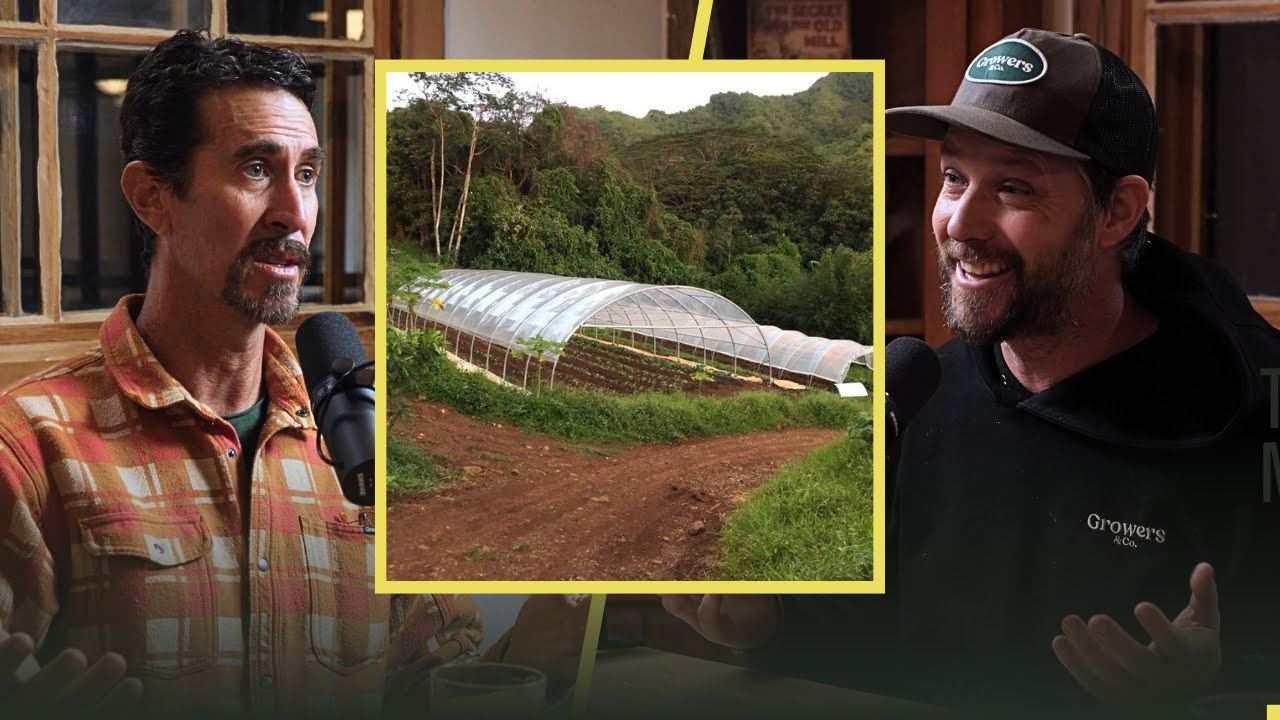
Thierry Lison explains some of the unique challenges of market gardening on a tropical island. Irrigation, weed management, wind/heat protection, and more.
If you like this clip be sure to watch the FULL podcast episode and subscribe to our channel to never miss future episodes!
Thierry’s farm:
SPONSORS:
Bootstrap Farmer: https://www.bootstrapfarmer.com/
Market Gardener Institute: https://themarketgardener.com/courses
Use promo code podcast15 for 15% off these select courses:
– Mastering Greenhouse Production
– 8 Most Profitable Crops
– Season Extension Strategies
– Market Gardening & Organic Farming for Beginners
– Winter Farming Strategies
LINKS/RESOURCES:
Market Gardener Institute: https://themarketgardener.com/
Masterclass: https://themarketgardener.com/courses/the-market-gardener-masterclass/
Newsletter: https://themarketgardener.com/newsletter
Blog: https://themarketgardener.com/blog
Books: https://themarketgardener.com/books
Growers & Co: https://growers.co/
Heirloom: https://heirloom.ag/
The Old Mill: https://www.espaceoldmill.com/en/
FOLLOW US:
Website: http://themarketgardener.com
Facebook: http://facebook.com/marketgardenerinstitute
Instagram: http://instagram.com/themarketgardeners
we have a lot of rainfall we we get some years we have four four meters of rainfall is it 4,000 mm per year is it considered a rainforest the forest or it’s yeah yeah yeah yeah yeah it’s tropical but it’s more equatorial than tropical you know it’s in the middle of the ocean every time we have some certain winds we get rain alino linia patterns are very very pregnant like how does how does all that affect the watering on the farm do you have to water much I mean I know you you were telling me before there’s a dry and wet season right we have 20 tunnels and we have double irrigation on on those tunnels we have tea tapes yeah Y and sprinklers like micro irrigation yeah permanent those two because when you transplant the it’s so hot especially summer if you don’t water them and from like overhead watering they die like quick in one day boom if you just if you just water with a tea tape it’s not enough it’s not happening it’s not enough so that’s one one thing that’s very different to I I think to hear yeah yeah yeah for sure and then we we use uh we we we plant crops that are very very resistant in Open Fields and we keep those those tunnels for very specific like five six crops that we rotate so mainly Tomatoes uh like high high high yield and cucumbers cucumbers um we do radish a little bit because we intercrop them with a with a mescla yeah mescan we we like the lettuce mix we never do that open field never never never it’s not going to work the the weeds are so crazy feels like an adventure to go there with your ho yeah yeah and it’s it’s hard to for someone that’s never like been in that to conceptualize it actually because it’s it is quite different I mean it’s it’s the same but it’s different in a lot of ways yeah and we did a lot of work on on uh SEL the selection of of varieties yeah see that’s that was the main work of three four years yeah because there was no information to go off of was there there wasn’t and the good thing was that the US has also Florida and Hawaii Hawaii yeah so there were some varieties that we found there that did well in our climate but most like I tested 30 38 varieties of tomatoes one did well wow wow did you have you been to Hawaii yeah I don’t know do you I don’t know if it’s it’s could you compare like like the cultural differences or some of the things that you see from French Polynesia with Hawaii just like big picture so that people can understand how these places are similar yet very different Hawaii is uh is actually there’s so many different hawaiis like big big island Oahu and Kawaii or Malai would be so different uh but Oahu which is the big island has the bigger number of people uh is very American okay like Polynesian culture has been lost and so there there are pockets of polan like culture still remaining which is in in French Pia it’s the opposite it’s very present very present yeah the culture is still very vibrant people celebrate each July for one month the Dan is the the the songs all that stuff yeah so it’s it’s it’s diff there there’s some similarities and a lot of differences also but mainly we are way less developed than Wahu would be okay uh and in terms of climate it’s very different very different climate Okay yeah cuz the the islands over there are bigger like higher uh less less less equatorial less tropical I would say less rain um the soil is pretty much the same well our High Island we we have low islands that they are called atols yeah and the soil is totally different it’s it’s from uh coral Coral origin so it’s Sandy white can you grow there you can grow there and people like originally the ancient Polynesian were growing in in uh uh in pits where they would put a lot of organic matter and then grow in there but the good thing is it’s it’s not as humid as the big Islands so there’s less problems with pests with um fungi and with bacteria like bad bad bacteria and less diseases H so actually there’s one Island where they grow uh raisin uh grape grapes grapes and they do they do wine no yeah nice W that’s interesting how is it is it have you had it is it a wine that it’s pretty good it’s it’s very different from a lot of the other wines that come from get imported yeah yeah but uh and and they get they’re going organic do they do a natural wine or no not yet but um they’re thinking about like they one one part of the the production is organic M yeah and they they also have a cane canes for uh for rum sugar canes okay yeah yeah and they’re organic also yeah there’s a lot of organic products like we we tasted he brought a bottle of rum we I had the pleasure of tasting it last night but organic super high quality yeah like you open the bottle and it’s like wao you you smell the canes yeah different oh nice uh you’re making really wonder if have you learned some very interesting things from the historic traditions of the place like old practices that you’re bring that you that you’re now trying to use or that you’ve learned from people I’m really curious about that you know what what’s funny I mean it’s it’s just history uh Bill mullison how he wrote his permaculture book He’s originally a marine biologist and so he used to travel all around the Pacific and uh Africa and all that stuff and he would record the old ancient practices like farming practices and that’s how we came up with a permac culture he said whoa they’re doing the same in the middle of the Pacific as in uh Indonesia and and equatorial Africa same practices and and so that’s how he came up with all those not ideas but insights yeah and so of course what what they were doing back in the day well things change obviously with you know global warming and climate’s not the same and all that stuff but there so many things that remain yeah it’s it’s a big inspiration especially for for traditional crops for for um for like uh uh legum yeah French Market gardening is is different it’s different yeah and and historically speaking what were the islands very kind of hurt by like globalization and you know the different colonization moments and history like was there a lot of ways in which like the the local just look at the the number of people that were living there it went from several hundred thousands to a few thousand people wow and then it’s coming back but uh they were hurt a lot by diseases by yeah well all all the things that are uh go with colonization
3 Comments
Serj tankian fait des légumes maintenant ?
Those conditions sound very familiar! Luckily, we are at 700 meters altitude, so don't have the heat. Would love to see more content about market gardening in the tropics, thanks.
Long time viewer from the South Pacific! So happy to see content about market gardening in the tropics. Thanks!