
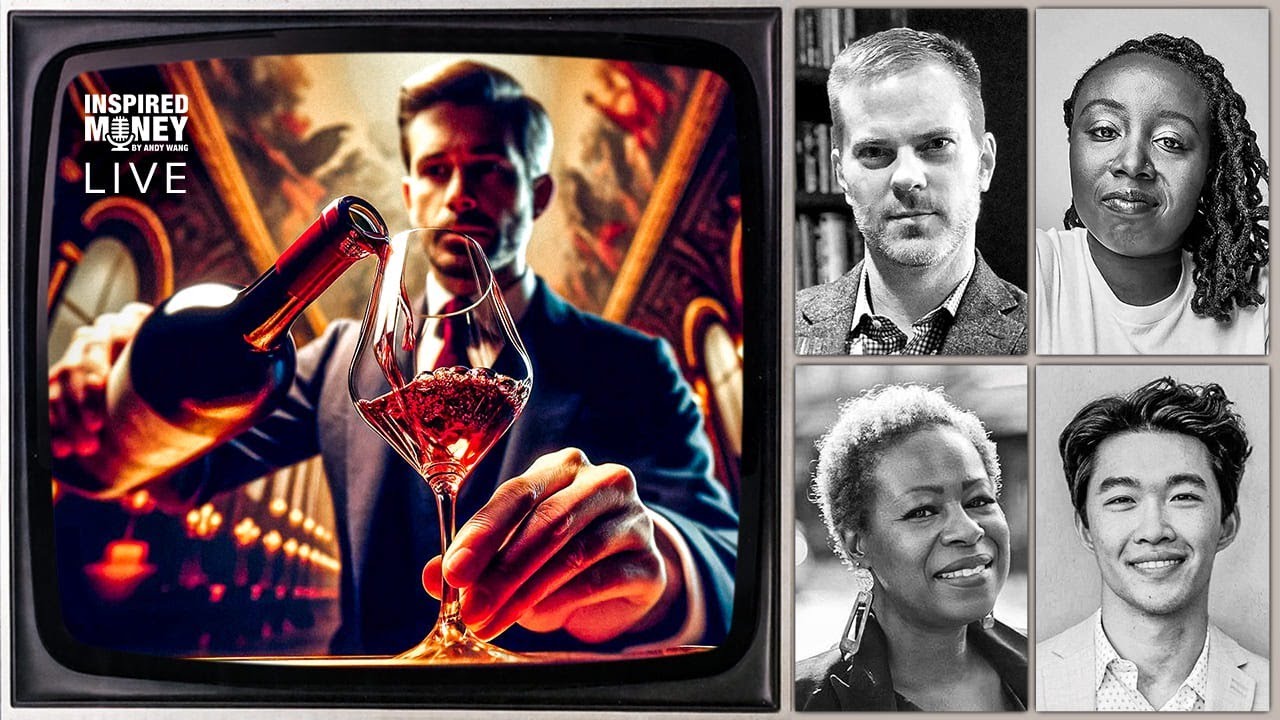
Welcome to Episode 34 of “Vineyard Chronicles,” where we dive into the fascinating world of wine regions and unearth exceptional investment opportunities. Join us alongside our distinguished guest panelists: Anthony Zhang, John Jackson, Tanisha Townsend, and Cha McCoy.
🕒 Timestamps 🕒
3:26 – Introduction of Guest Panelists
7:03 – Soil Composition, Climate, and Vineyard Topography
9:29 – Panel Discussion: What Makes Wine Special
12:18 – Impact of Vineyard and Winemaking Decisions
13:20 – Enjoying Wine with Friends
15:06 – Influence of Terroir on Consumer Preferences
19:30 – What the Wine Industry Can Teach Us About Sustainability
21:03 – Decreasing Carbon Footprint by Sourcing Locally
22:03 – Branding and Marketing for Hybrid Grapes
24:02 – Challenges in Labeling Sustainable Wines
25:00 – Sustainable Practices Impact on Wine Valuation
26:20 – Debating the Natural Wine Movement
27:48 – Defining Natural Wine and the Raw Wine Standard
29:29 – The Battle Over Wine Bottle Weight
32:06 – Technological Advancements in Wine Investment
35:04 – Emerging Markets for Wine Investment in Asia
36:17 – Shifts in Consumer Preferences for Wine
37:20 – Adapting to Fast-Changing Wine Consumption Trends
40:05 – Connecting Generational Trends in Wine
40:11 – John on Collectible and Traditional Wines
41:07 – Trends in Non-Alcoholic and Fizzy Wines
42:03 – Health-Conscious Wine Choices
42:25 – Up-and-Coming Wine Regions
43:33 – Affordable Older Vintages from Germany and Portugal
44:31 – Strategic Investment Models in Wine
45:44 – John on Wine as an Asset for Investment
46:44 – Tanisha on Wine as an Asset Class
47:13 – Cha on Wine Investment and NFTs
47:48 – Anthony on Vinovest’s Portfolio Strategy
49:06 – Vinovest as a Robo-Advisor for Wines
51:04 – Educating Investors and Engagement with Producers
52:12 – John on Wine Recommendations and Bordeaux Futures
54:08 – Importance of Second and Third Wines
57:21 – Liv-ex Regional Sub-Indices
58:04 – Tanisha on Misunderstandings of Wine Investments
59:19 – Cha on Diversifying Investment with Wine Industry
1:02:21 – John on Diversification Strategies
1:03:00 – Matching Portfolio with Drinking Preferences
1:04:14 – Anthony’s Favorite Wine Experience
1:04:56 – Tanisha’s Favorite Wine: Champagne
1:05:54 – Cha’s Favorite German Chardonnay
1:07:01 – John’s Favorite: Nebbiolo from Barolo and Barbaresco
1:07:41 – Conclusion and Final Thoughts
🌟 Meet Our Esteemed Guest Panelists 🌟
Anthony Zhang is a serial entrepreneur known for scaling businesses and securing funding from top investors. He is co-founder and CEO of Vinovest, the world’s first platform for investing in fine wine. As a mentor at WineUnify and former head of marketing and business development at Blockfolio.
https://vinovest.co
John Jackson is a full-time intellectual property attorney and a passionate sommelier, known on YouTube and Instagram as attorneysomm. He has obtained the prestigious level 4 DipWSET wine certification with merit from the Wine Spirit Education Trust (WSET) and a Wines of Georgia Certification. In addition to his formal wine education, John has visited more than 300 wineries in over 65 different wine regions worldwide.
https://instagram.com/attorneysomm
https://youtube.com/@AttorneySomm
Tanisha Townsend, Chief Wine Officer of lifestyle agency Girl Meets Glass, curates immersive wine experiences in Paris and beyond, fostering a vibrant community of oenophiles. With certifications from WSET Level 3 Advanced to French Wine Scholar.
https://girlmeetsglass.com
Cha McCoy, MBA, CS, LEED AP, is a Certified Sommelier, Public Speaker, and Beverage Event Producer, owning The Communion boutique wine and spirits shop in Upstate, NY, and leading Cha Squared Consulting, LLC. As Charleston Wine + Food Festival’s Beverage Director and Cherry Bombe Magazine’s first Beverage Director & Editor.
https://chamccoy.com
#InspiredMoney #AnthonyZhang #Vinovest #JohnJackson #TanishaTownsend #ChaMcCoy #WineInvestment #WineRegions #SustainableViticulture #WineMarketTrends #WineEducation #FineWine #WinePortfolio #InspiredMoneyPodcast #InspiredMoneyLive #Eaglesvision
🎥🌍📢 Co-Creating Podcasting Experiences!
Creative Collaborative Media Design
Visit: https://eaglesvision.co.za/
Episode Credits:
Transmedia Producer: Bradley Jon Eaglefeather
Live Stream Editor: Bradley Jon Eaglefeather
Show & Segment Scripting / Edits: Bradley Jon Eaglefeather & Andy W
Animation and Design: Chad Lawrence
Web Work & Social Media: Bradley Jon Eaglefeather
✉️📧 Subscribe to Andy’s email newsletter for investment insights and updates from the Runnymede investment team: https://www.runnymede.com/newsletter
🌐📱 LET’S CONNECT!
Facebook: http://facebook.com/runnymedecap
Twitter: http://twitter.com/RunnymedeCap
Twitter (Inspired Money): https://twitter.com/inspiredmoneyfm
LinkedIn: http://www.linkedin.com/in/andywang888
Instagram (Inspired Money): http://www.instagram.com/inspiredmoneyfm
[Music]
Aloha inspired money makers welcome back
to inspired money the live stream
podcast where we invite a panel of
experts to help Empower us to make more
give more and live more today we have a
really fun episode Vineyard Chronicles
exploring wine regions and investment
opportunities whether you’re drinking
wine investing or maybe a little bit of
both life should not be all work and no
play a couple months ago I was invited
to play music at a special dinner by
Chef koha Domingo visiting from Hawaii
and Chef chuncha of Narita in New York
City if you’ve been watching watching
this inspired money live stream live
stream series from the start I think it
was episode two featured Somalia and
co-owner of Narita Jin an the tasting
menu that night was delicious Chef koha
brought ingredients from Hawaii he
pounded fresh POI I think they served
three different types of tarot that
night it was so delicious at the end of
the night after all the guests had left
I was invited to hang out with the chefs
including
Tony Leu of the Queen’s burough and Chef
keeni kaha olopua of the prestigious
five-star St regious Hotel they have
this um they joke that it was like the
Hawaii New York connection but that
night really reminded me that food and
drink definitely taste better when
shared with people who are passionate
about it so whether it’s food drink or
music these are things that connect us
they bring us comfort and together they
really a way to elevate and enjoy life
so it’s in this spirit that I look
forward to spending the next hour with
you before we bring in our guests I want
to invite you to do a three minute plan
that it helps to calculate your max
retirement income when I work with a
client to build a financial plan we seek
to answer three questions where are you
on your road map how can we optimize
your strategy and how can your
Investments be improved upon of course
doing a 3 minute plan is not
comprehensive but it’s a great way to
get started in thinking about your
future often times getting started is
the hardest part but often the most
important part so go to inspired money.
fmet plan tell me how you make out I can
tell you that a little bit of planning
goes a long way and the earlier you
start the better again go to inspired
money. fm/ getet plan now let’s welcome
in our passionate panel of wine experts
let me start with Anthony Jang he’s a
Serial entrepreneur known for scaling
businesses and securing funding from top
investors he’s co-founder and CEO of
vinovest the world’s first platform for
investing in fine wine as a mentor at
wine UniFi and former head of marketing
and business development at blockfolio
Anthony’s influence spans Beyond his
entrepreneurial Endeavors earning him
accolades like the teal Fellowship award
and recognition on the Los Angeles
business journals 20 in their 20s list I
spoke hey Anthony welcome it’s good to
see you again good to see you as well
Andy thanks for having me on and I I
want to point everyone to um episode 190
I had Anthony on the podcast three years
ago and uh you can hear about how he
pitched Mark hubin and Mark Bernett when
he was still a college student he talks
about his spinal cord injury that left
him paralyzed and why he founded
vinovest we may cover some of that
tonight but for more you can go to
inspired money.
fm19 uh we also have John Jackson he’s a
full-time intellectual property property
attorney and a passionate somaler known
on YouTube and Instagram as attorney s
he has obtained a prestigious level four
diploma from the wi and Spirits
education trust and a wines of Georgia
certification in addition to his formal
wine education John’s visited more than
300 wineries in over 65 different wine
regions worldwide John so glad that
you’re here thanks very much for having
me on excited to be here looking forward
to it we also have Tanisha Townsen Chief
wine officer of Lifestyle agency girl
meets class where she curates immersive
wine experience in Paris and Beyond she
Fosters a Vibrant Community of Eno files
with certifications from Wine and
Spirits education trust level three
Advanced to French wine scholar Tanisha
empowers wine enthusiasts with knowledge
in confidence ensuring each tasting is a
memorable journey of Discovery Nisha
thank you for staying up late in par
thank you so much for having me no
problem and the
and rounding out our panel for this
evening we have cha McCoy she’s a
certified somaler with the court of
Masters Somalia and Wine and Spirits
education trust level three candidate
she also holds an executive certificate
in wine management she’s a public
speaker beverage event producer she owns
the communion Boutique wine and spirit
shop in Upstate New York where she is
broadcasting from this evening and she
leads ch squar Consulting as Charleston
Wine and Food festivals beverage
director and Cherry Bomb Magazine’s
first beverage director and editor cha
Champions change in the beverage
Community thank you cha so glad that
you’re
here thanks for having
me well I look forward to talking wine
with this uh incredible group this
evening let’s go straight into segment
one exploring the profound impact of
Tera on wine valuation we find that the
unique environmental factors such as
soil composition climate and Vineyard
topography play critical roles soil
affects grape quality by influencing
water drainage and nutrient availability
which in turn shapes the Wine’s flavor
profile climate controls the ripening
process affecting essential
characteristics like acidity and
sweetness the Topography of a Vineyard
including the slow slope and sun
exposure modifies the microclimate which
is crucial for achieving the optimal
balance of grape sugars and acids these
elements of Tera not only contribute to
the complexity and uniqueness of a wine
but also enhance its market value and
investment appeal wines from regions
known for distinctive Tera
characteristics often command higher
prices in the market this understanding
AIDS investors and enthusiasts in making
in formed choices recognizing that such
grapes offer not just unique tastes but
also potential for significant
returns so I’ve heard it said among
collector Somalia and wine makers that
what makes wine special is not the
alcohol but it’s the teroa so I want to
pose the question to each of you what is
it that makes wine so special
Tanisha you want to kick us
off okay I’ll start us off what makes
wine so special starting with the Tera
um I’ll speak specifically to France
since that’s where I am it is so
different from place to place definitely
from region to region but take burgundy
for for example you could have a
Vineyard in one side and then maybe just
across the street from that Vineyard
that toir is going to be completely
different the soil is going to be
different the exposure to Sun the amount
of rainfall so so with that kind of
difference and that close proximity
that’s something that makes it super
special um also just certain things
growing in certain places it’s not like
everything can grow everywhere you have
certain grapes that grow in burgundy
versus The Grapes that grow in Bordeaux
versus what grows in Champagne versus
what grows in the lir valley and that’s
something else that makes the wine extra
special so if we continue with ladies
first chop what makes wine so special
I think just what tiisha shared plus the
if you think about toar from that I
think the Step Up will be then the
Vintage correct so um let’s say an 08
champagne which is one of my favorite
vintages I think many others um they
didn’t get they didn’t have the same
response in 2010 correct so if you know
and understand this the climate um gives
us information about a specific time and
place um so tenishia talked about was
the place and I’m sure I’mma leave room
here for of course Veno vest to jump in
to talk about how the value now change
as well when we talk about a particular
vintage right so we know that each year
is going to be different it’s not going
to be the same amount of rain each year
or same amount of perfect sun um and
then the so the Vintage itself becomes
uh an investment it’s the same wine from
the same producer maybe even from the
same place but then now the time
actually um adds an effect of now a
price being driven up or even being um
diminished um so now I feel like I’m
going to just tag it on to Anthony kind
of jump in there talk about vintages
yeah go for
it yeah I think you know Place climate
time all that is super important I think
you know leaving um evening kind of the
last remaining part is looking at um how
do differences inir lead to differences
in taste in in price right in perceived
value um and you know most wine regions
deal with an appalation system you know
similar to how we you know have ZIP
codes in the United States right why
does a rly Hill ZIP code just mean that
the home is a lot more expensive than an
LA zip code even if the homes are
touching each other right and you see
the same phenomenon in many Vineyards
especially in in France right a gr crew
Vineyard in burgundy even if it’s
bordering a premier crew Vineyard and
they are literally a stone throw away
from each other and the toar actually
might be very very similar um even the
same right they’re going to lead to
drastically different prices and proceed
value when they are bottled and produced
and eventually
enjoyed John I want to hear from you
because of your extensive travels sure
of course I certainly agree with the
comment so far but I would add there are
some decisions made both in the vineyard
and also in the winery by the wine maker
that also have a tremendous impact on
the wine as well for example in the
vineyard uh they can make decisions
about whether or not to use sustainable
practices which I think we may talk
about later and make other decisions
that will have a direct impact on the on
the resulting wine similarly the wine
making approach will also have an
influence on the wine and one of the
things that I find makes the whole
experience of enjoying wine special is
also the the history and enjoying older
wines such as from birth year vintages
or just wines from you know 10 or 15 20
years ago or even more and then when
you’re enjoying it with your friends
just sitting around and even thinking
about what was taking place in the world
uh back at that time during that vintage
so I always enjoy that exercise as
well so that’s really thinking about the
stories associated with that time period
of the wine it is very much
so H anybody else want to weigh in on
this one before we move
on with love thinking about the stories
people who made the wine what the world
was like back then right it’s it’s part
of the joy of drinking
wine well I do love this idea of I think
that the people you spend your time with
drinking a bottle of wine that does make
an impact and as well as reflecting on
time periods places and all of
that very much so and that’s one of the
reasons why I enjoy it so much we
usually have a a tasting group that gets
together and oftentimes we’ll even save
our best bottles so that we can enjoy
them together and discuss them rather
than just uh drinking them at home with
with one or two
people Tanisha and Cha since you both do
events and curate wines um any comments
on Tera and how it’s influencing
consumer
preferences Char you want to go oh yes I
mean I feel like for me it definitely is
a everything that I think what we all
saying I guess I wanted to add is how
does it how does price being driven up
or how’s demand is being driven up and
toar back to your question usually plays
a role in how it influenced the price
and structure and if there’s even a high
demand for it or even like like scarcity
um so that can be the market is driven
on is toar back to your question is toar
influencing investment value not so much
kind of how we enjoy it in experiences
or with each other I feel like I think
that we don’t let’s just say the folks
that I am working with it’s driven very
little by um kind of who made the wine
and less I guess mean when I say that
mean big brands or is this a collectible
and you know what was the toar like is
more driven by what’s their pet um what
are we eating um I love the episode that
you had we talked about the Hawaiian
Cuisine and kind of pairing it with
German wines like in now we’re we get to
kind of forget all of the if you want to
say the the textbook um information and
really just kind of use your pallet
which is what we’re trained to do and be
able to put the two and two together now
there is some information what grows
together goes together that always helps
and I can inform that and when I’m given
experience is um whether we’re traveling
somewhere or if we’re hosting a dinner
party um that’s always something I want
to talk about but then sometimes I like
throwing out the rule book and really
having fun and one of them like one of
my top selling wines right now is a
sparkling Rosé from Brazil so most
people don’t know or have much um you
know interaction with toar from Brazil
so usually doing something unexpected
like how John mentioned about just
enjoying good wine with each other ends
up coming into play not not like oh do
you have any champagne from like that
kind of get lost and like let’s just
enjoy ourselves does this go well with
my dish um more than the producer being
the like the name or the brand like
carrying the conversation so um I seem
and I guess I’m trying to breed around a
bush by saying depends on who the crowd
is is it uh other wine professionals
that I’m drinking with or is it the
consumer the average consumer who just
want to have a great time and so that I
think there’s different types of wine
that I would pour for different type of
experience level um if someone’s a
rookie Wine Drinker or someone who is
more um knowledgeable about different
tars in different regions um so I hope
that an the question but I think is not
all one answer for that for me
Tanisha agree with everything you say it
as per usual um but speaking
specifically about TOA and the people
that I deal with whether it is a rookie
wine drink
or someone who is like a wine lover but
it’s like I don’t really experiment that
much or know that much about it what
they really want to know is how terar
affects the wine like what does one have
to do with the other and also how it
affects the pricing um why does wine
from this place cost a different price
than another wine from a place that
doesn’t seem like it’s that far away so
why does a Vine and Wine from a region
that grows in sand versus versus shist
why do these all taste different what is
the difference how does this lend a
flavor profile lend a different pricing
structure to the wine so that is a
question that I get asked a lot and
that’s after what grape goes with what
region so well thank you for that I I
will just State for the record that I am
the amateur in this group I am the
beginner not only in this group but
everywhere I am the beginner when it
comes to drinking wine um let’s go to
segment
two sustainable viticulture is
revolutionizing the wine industry by
combining environmental stewardship with
financial gain this approach involves
adopting farming practices that
emphasize ecological balance such as
reducing chemical inputs conserving
water and enhancing
biodiversity these practices not only
preserve natural resources but also
improve the overall health of the
vineyard economically Vineyards that
pursue sustainability are increasingly
attractive to Consumers who value
environmental
responsibility this shift has led to a
market where sustainably produced wines
can command higher prices reflecting the
consumer willingness to pay more for
products that are kind to the Earth the
environmental benefits of sustainable
viticulture include lower carbon
emissions reduced water usage and
minimal chemical runoff making it an
essential practice for the future of
wine making with both Financial
incentives and ecological benefits
sustainable viticulture offers a
compelling model for Vineyards aiming to
thrive in a competitive market while
contributing positively to the
planet so the wine industry has 8,000
year history of adapting to change what
can the wine industry teach us about
sustainability
John I think there definitely is a big
Trend towards uh sustainability and
using organic farming practices uh it’s
something that some producers have been
doing for a long time it’s certainly
easier in some wine regions than others
uh for example in in southern ran in in
the south of France the weather
conditions are are typically quite dry
during the growing season and they don’t
have a lot of rain but in places to the
north of France uh champagne and uh and
even Bordeaux we have the 2023 vintage
and uh that vintage is currently in in
the Bordeaux Futures process right now
and we hear that there’s been a lot of
problems with with mildew and a lot of
The Producers were struggling with
mildew then and so when you have those
sorts of challenges it’s more difficult
to to stay truthful to organic practices
but I know a lot of producers are still
doing that and doing the best they can
to take an organic approach despite
those challenges uh because it is it is
something that’s extremely important
both in terms of uh doing what’s right
for the environment and also producing a
high quality wine that that the
consumers will appreciate and be
receptive
to Chan do you see Trends observed in
consumer demand for wines from sustain
stainable
Vineyards uh yes um like I I mentioned
I’m between New York City and Upstate
New York and one of the key reasons is
to actually decrease the footprint um
for us to get local wines as well so um
good portion of our wines do our sauce
and spirits come from the fingerlakes
wine region and we’re about an hour away
whether that’s me driving to pick up
wines like I did this weekend um or just
even the logistics of bringing it you
know getting it here and then having
consumers to be able to consume so the
work of just track decreasing our foot
print when it comes to procuring Wine um
in spirits and then same when the
consumers come in they’re asking usually
when in upstate area their sometimes
their first introduction to wines from
upstate New York may be our shop and it
may be a novelty if someone’s visiting
like I I heard there’s a wine making
region nearby and they want to try out
um but there’s an opportunity for us to
start the conversation from basically
just shopping local and being able to
support in our local wine makers um my
most recent trip to um Italy was in
vetto and we talked about the same thing
in Germany about the what they
considered peeee wines or also known in
the states as hybrid grapes so that’s
part of the larger conversation I’m
having um in my world as a consultant on
how do we have The Branding and Market
marketing for grapes that folks don’t is
unusual it’s a hybrid between two grapes
they’ve never heard of or one they’ve
heard of just to give them you know
let’s say a shot uh most people wouldn’t
normally probably even purchase those
wines they only know the TP typical
large International grapes um but I’ve
been on panels um techs is one of them
where we had a big discussion on how do
we actually make these wines and you
know these grape varietal more viable um
part of our s work whether it’s creating
wine list wrapped around them doing more
events to give them exposure or in this
case with retail to to Market them
appropriately so I think there’s still
um some work to be done um there are
some conferences that are now being
developed to have conversation wrapped
around this as well and I think that
that is the future um for sustainable
Wineries and of course labor practices
is part of that discussion as well but
we’re trying to see what’s going to be a
viability for grapes with climate change
in different regions and so um Happy be
a part of that conversation
today how about Tanisha do you see um
lessons about sustainability from the
wine industry or things that your
clients signs of demand where they want
to purchase wines from sustainable
Vineyards they do want to purchase wines
from sustainable Vineyards they are
looking for natural wine things organic
things like that but I do want to put on
blast just a little bit the wine
industry and the fact fact that it isn’t
quite clear when it comes to labeling
what is what so a lot of people have
questions about what is sustainability
and then also when they go to a wine
shop or if they’re in their grocery
store or something like that looking for
wine what can they look for how will
they know that this Vineyard this Winery
uses sustainable practices so people
often ask what is the labeling like what
are some key things that they can look
for what is some verbus can use to ask
for these kind of wines and then also
what do they look for when they are
thinking sustainability is it
sustainable practices in the vineyard is
it organic is it biodynamic is it vegan
like what exactly it is that they’re
looking for and then I can direct them
to the right
place and a quick shout out to Gabriella
who’s tuning in live thank you for
applauding John and for the Emojis I
want to ask Anthony in what ways do you
see sustain well sustainable viticulture
practices impacting wine valuation on
vinovest
platform yeah before I dive into that
Tanisha don’t get me started on the
whole natural wine movement um I know
what you’re saying in terms of putting
some of the uh the CMOS of these
companies on blast for um you know
frankly what I think is pretty
irresponsible marketing oh yeah let’s
let’s go there first oh
okay I think it’s because of the the
vagueness of the definition right we we
all want to do better for ourselves in
the planet and others um and I think
natural wine bars especially where I
live in LA are extremely popular but if
you ask U people what it means to drink
a natural wine 99% of them are going to
tell you it means it has no sulfites
right I think um non-natural wine has a
connotation of having sulfites headaches
um whereas natural wine you know still
has natural sulfites they’re just not
added sulfites sulfites are a natural
part of the fermentation process um and
I think because of that sort of
vagueness around what that means there’s
a lot of Brands taking advantage um of
the term natural or sustainable which
don’t have any regulations on it versus
more stringent standards like vegan or
organic or biodynamic right there’s a
there’s a spectrum there um when it
comes to what we call sustainable or or
natural wine I think Tanisha also
mentioned are you talking about the wine
making process or the wine growing
process or the labor practices right
there’s a lot of different uh
definitions and layers to sustainable U
you know wine practices in our industry
uh but at least from the consumer
standpoint I think there’s a lot of um a
lot of
deception I’m kind of curious about the
sulfites because I’m told that the
amount of
sulfites makes a difference for for
somebody who gets red-faced Asian flesh
like I
do yeah I’m lucky to not have that Gene
that half half of us Asians get um but I
don’t think that has anything to do with
the actual sulfites it’s more of a
reaction to the alcohol um that that you
have and I would say Andy that um raw
wine um has a definition on what and raw
wine is a conference SL wine Fair maybe
I should say lean with that first
because it started out as a wine Fair
developed by a master of wine um who
goes around and basically feature
natural wines but they’ve created a
definition by this MW who has it in the
book kind of like this is what their
standard is so I think that if people
are going to say it’s natural and it’s
because they’re adhering to the
definition of or by raw wine I think
that gives everybody kind of like a
baseline right and then that helps us in
retail it helps uh wine directors when
they’re you know we are abiding by the
raw wine definition and so that’s
usually who I usually tend to When I
Look to how to describe um natural wine
or in this case raw wine and then just
to add another monkey in the wrench here
it’s like how do we actually think about
the like the visibility some people look
at as like oh it’s only natural if it’s
unfiltered and that’s even worse because
looking at it and is visibly look
natural what people think is natural
then there’s one wine makers who
actually are following what some would
call natural wine practices organic or
biodynamic or sustainable and yet they
may be unfilter um they may be filtering
their wines so they and they came up
with other ways to filter their wines as
not using egg whites or anything else so
it still checks the boxes however it’s
still it’s not visibly it’s still clear
versus being I call it the lava lamp
effect in the bottle where you see all
of the moving uh cloudiness haziness or
even looks like a let’s say a hazy IPA
in a glass um if you have an orange wine
specifically so I would say consumers in
my shop usually are looking at the
bottle and assuming is natural based on
color and if it’s unfiltered and I think
that I’m sure a lot of people are think
that’s like the basic standard for if
they was picking a natural wine as well
which is clearly um not doesn’t say
anything about the practices so John
what are your
thoughts I agree with the comment so far
the other thing I’ll add in an area
that’s becoming a big Battleground as
well is the weight of the bottle that’s
used for the wine I know that’s becoming
a big Battleground for a lot of people
concerned about the environment and a
lot of producers are are now starting to
reduce their bottle weight and that has
a big reduction on the the carbon
footprint for the winery for example I
know of one board o producer that
reduced their bottle weight by 40%
starting with the 2023 vintage and just
that from the production process alone
saved 30 tons of carbon and that doesn’t
even count all the savings once it
starts being shipped and so forth so uh
that’s becoming more important with
consumers as
well
interesting we’re really getting some
inside baseball anybody
else okay with with no more to add uh
let’s go to segment are we on two or
three the next segment navigating the
wine investment Market requires
understanding current trends and
identifying emerging opportunities the
Global Wine Market is influenced by
shifts in consumer preferences including
a rise in demand for low alcohol and no
alcohol wines driven by Health
Consciousness particularly in the US
furthermore the growth of e-commerce has
transformed how wine is bought and sold
although this trend has moderated post
pandemic Emerging Markets especially in
Asia with China leading in luxury and
premium wine consumption present
significant growth opportunities wine
investment funds play a crucial role
here enabling investors to engage with
the wine market through expertly managed
portfolios without needing extensive
knowledge of wine selection or storage
technological advancements are also
pivotal digital platforms enhance market
analysis and investment decisions while
blockchain technology improves the
authentication of wine Providence and
transaction security together these
elements offer a comprehensive picture
for investors looking to capitalize on
the dynamic wine
market so Anthony you saw vov vest there
in that segment and it’s also funny that
I learned that I cannot count up to
three uh I’ll work on that uh Anthony
can you talk about how technological
advancements are really transforming the
wine investment
Market absolutely Andy um I am a
relative newcomer to the wine investment
space I started collecting and investing
in wine only about 10 years ago um and
this is something that has been done
since our founding f
right um you know tomr Jefferson was
famously a a wine collector and investor
um and um some of his bottles from his
personal seller for the subject of a
very famous book billionaires vinegar
which is an amazing book um that was one
of the ones that actually got me into
wine um but when I first started
collecting wine um there was not a lot
of tech enabled companies that would
help make the process easier um a lot of
different service providers a lot of
different Insight or knowledge that you
need to know to be able to do it
successfully and what I mean by that is
a knowing which wines are um good
Investments I think that part just like
any investment can be a mystery to many
people there’s not a lot of content out
there especially free content out there
that talks about it uh second is access
to historical Market data right um
Andrew in your business obviously
looking at historical Trends is
extremely important um and at the time
there weren’t too many reliable um
sources of thirdparty Market data and
then thirdly um you know we’re still
talking about managing a physical living
fragile product right so things like
storage Insurance shipping right which
we talked about are all um you know can
all get very overwhelming for someone
looking to just invest in wine right
today when you invest in gold you don’t
even think about it but there’s a lot
behind the security the
authentication right and the storage of
gold um perhaps even more so with wine
because if gold is at a you know any 80
degree temperature 60 degree temperature
it’s still gold um that’s that could be
life or death for a bottle of wine um so
all of with all these factors um and
using about six different companies that
I was leing between I realized that
there was an opportunity to create an
easier way to do this and that’s what
vest is right we use uh a website that
has all of these services in the
background and makes it so that you go
to one place you talk to one company and
you can track your portfolio buy wines
sell wines just like you do um with any
of your stocks and commodities right
that’s what I think the experience of
investing in any asset not just wine
should
be yeah it’s it’s really interesting to
have to look at it as a potential
investment and comparing it against
things like more traditional stocks and
bonds John any thoughts on like an
Emerging Market maybe that you see as
the next big opportunity for wine
investors sure I know that there are a
lot of places in Asia uh where certainly
wine is becoming more popular and I
think the the taxes are a big impediment
to uh some of those countries and the
consumers in those areas because there’s
heavy taxation on Imports but certainly
in in Hong Kong I know that uh they’ve
reduced the taxes on on wine that’s
being imported and so there the prices
are about the same as what you can get
here I was also in Singapore last year
and they have a huge emerging wine scene
especially at the very high end they
have lots of wine collectors there and
they have a wine conference there
annually I think it’s actually going on
next week so uh certainly Singapore has
an extremely impressive wine scene as
well so I think Asia is definitely a big
a big emerging market or uh certainly
the case of China and Japan they’ve been
at it for quite a while but I just see
that uh continuing to be even more the
case going
forward Tanisha how do you see shifts in
consumer
preferences consumer preferences are now
changing from uh um I think a lot of
people when they first started drinking
wine they may have started drinking
things that were ler on the sweeter side
um and so changes preferences are now
changing to there are so many different
styles of grapes and styles of wine so
why just stick with the few that are on
the sweeter side and let’s move into
something else also people now I think
maybe as a result of covid and people
thinking life is short let’s you know
live better they want to drink better so
instead of just grabbing
this $10 bottle off the shelf they step
it up a bit and they’re like oh well
maybe this $20 bottle this $25 bottle
they are drinking better and looking
into what are the top producers um and
what are some of the best regions to get
wine from so that is definitely a change
that I’ve
noticed CH as a business owner and as a
curator how do you adapt to fast
changing Trends in wine consumption
the I think gen Z runs my life now so
I’m trying my best to let’s say keep up
with the Joneses as they say um so the
trends is um I think it’s important for
us to learn a language I think none of
us are in gen Z on this panel um so
danwood consumers um I actually had um a
current well she’s she just graduated
this past weekend one of the employees
at the shop is a gen Z Drinker and so I
think it was super important especially
with me teaching um ad junk at Syracuse
University just I feel like I was tapped
into this like world that the rest of us
didn’t know just having the way the
students would respond to the wines I
think it’s something that I’m like okay
I have to understand this language and
kind of their preferences from a new way
so I feel like they’re developing the
trends I don’t know if it’s on Tik Tock
or wherever but they they’re definitely
the ones developing the trends and then
we either can chase behind it or
understand it and so um just like the
video had mentioned about the U
non-alcoholic um options you know I want
to be able to make sure that even at our
events whether for whatever preference
Health Etc um life choice if someone’s
choosing I make sure we always have an
NA wine um available for events um I
have the attorney Psalm on so I’m not
going to tell you much about we don’t we
could do go down a rabbit hole on if
non-alcoholic wines are legal to sell or
not that’s a whole another segment um
but there is a lot of conversation now
on how we at least I would rather you
have na wine next to my wine at an event
versus US pouring iced tea for example
so for me I think it still allows me to
still have the conversation about wine
right I sell wine or even in a tequila
Etc because I sell tequila so I think
that’s why I’m not fighting it as a
retailer as long as I’m able to allow
you to I don’t want you to convert you
into drinking something else I’m able to
talk about that na saon Blanc and New
Zealand Etc so I’m appreciative of it um
as a category and yeah I think j z is
creating the trends and I’m trying to
keep up with them in this case but also
give them a little bit of Education
about tradition and understanding
whether it’s the you know VDP or the
pretty you know prettycat system for
Germany and you know I think they’re all
kind of like anti law they don’t want
any laws they don’t want to hear about
it they want to just think with drink
what’s fun and fizzy Etc but I think
there is a reason to at least be able to
incorporate what’s fun and kind of
tradition at the same time so I think we
all have the hard job for the generation
after us to kind of connect the two in
regards to the trends that’s happening
right now John did you have anything to
add to
that not too much I tend to focus more
on uh collectible wines and more
traditional wines so not so much on um
some of the newer emerging Trends but
more of the the classics and the and the
wines have been around for a little bit
longer so I definitely want to try it at
some point I just haven’t had that
opportunity
yet John you serving any ginz
lately not not too many no okay think
most of my events whether they’re
they’re wine events or my own wine
travels I I tend to be probably around a
little bit of an older demographic but
okay it’s definitely something I like
trying I like trying some of the newer
the newer wines coming out I just
haven’t tried the non-alcoholic wines
yet CH I heard fizzy any other trends
that you can share with us and I’m kind
of curious are the trends faster
changing or is it just
different some of them are like what’s
old is new like pette is not new for
example um and if you don’t know what
pette is it is the leftover skins that
have to be impressed out to make wine
it’s almost like upcycling if you want
so this goes back to sustainability so
the Skins that’s left over after already
making the wine they add water to it in
order to now make almost like a diluted
wine so a low alcohol wine um so you’ll
you’ll hear some and which is for me
refreshing right it’s hot you want wine
but you don’t need it to be 11 plus
percent um so you can get something
that’s around five or six% and it still
tastes like peo Noir right so I think
there’s something about just there
there’s a crowd for in this case whether
it’s no or low ABV wines and so just
keeping on trend on what the kids are
saying and understanding what like for
what reason right whether it’s health
because they’re more involved with
sports or are they doing whatever it is
they doing with it at this point we want
to be a part of the conversation as a
shop that especially is so close to a
university and understanding that’s our
demographic on top of also the dean of
the University too who can afford a Baro
so we have to be able to actually talk
to both um at the same time so I think
even your question you asked earlier
like what are some underrepresented
regions um I think that you know me
spending the time in understanding
Germany and some older vintages that you
can have access to at a reasonable price
point I think that’s a sleeper country
for a lot of folks if you’re looking to
actually get started into wine
collecting is you I can afford my birth
year let’s just put it like that you
know with some nice reasonings um
compared to if I was collecting um
Bordeaux where you know it I have to
take out an investment alone just to get
the one bottle I have to work with
vinovest basically in order to get my
birth year so I think that kind of gives
you an idea in this case if you want to
become a collector and you do want to
celebrate you know 10 years later your
anniversary 20 years later and actually
collect all of those back vintages you
can go purchase that today in certain
regions
um in Germany and I think that that
makes it an easy accessible point for
new wine collectors um and same thing
for Portugal one of my oldest uh wines
that I’ve ever tasted was a
1886 or 56 uh Madera um because they
held up and people can give you a little
Spoonful at a time you know so it was an
open bottle that um someone was
rationing out for us to taste so I think
that Madera you can still get a great
price and I actually lived in Port
Portugal before I opened the shop so
during the pandemic that’s where you
know kind of a lot of my knowledge base
comes from and I love talking about how
fortifi wies help plays a role in that
too whether it’s Port uh Madera or even
MH cadel St so when we’re talking about
the older demographics who still cherish
the um sipping and savoring of fortifi
wines I think Portugal is also another
country where it’s more accessible price
point for you to start a collection too
yes you’re speaking to the bargain
during me thank you for your insights
let’s move to segment
four in the wine industry Strategic
investment models include direct
Vineyard ownership wine investment funds
and Futures Trading each model offers
distinct advantages depending on the
Investor’s Financial capacity risk
tolerance and level of expertise direct
Vineyard ownership provides complete
control and the potential for
substantial returns but requires sign
significant upfront capital and a deep
understanding of vid culture this option
is most suited for those who can handle
the complexities of Vineyard management
and market dynamics wine investment
funds in contrast offer investors the
chance to participate in the wine market
through professionally managed
portfolios this model is less Hands-On
and leverages expert knowledge to
potentially mitigate risks associated
with direct ownership in investing in
wine Futures involves purchasing wine
before it is bottled capitalizing on
potential Market appreciation while it
offers Early Access at possibly lower
prices it also carries risks like Market
variability and the quality of the
Vintage I just want to go around really
quickly with the panelists do you
consider wine an asset for invest
John I think it certainly can be uh a
lot of people that I know tend to
purchase wine but then some of the wine
that they bought maybe 10 15 years ago
ran up in price a lot more than they
expected and so they may turn into kind
of an accidental investor and they may
take some profits in some of it because
it’s to the point where they don’t feel
comfortable drinking the bottles anymore
and they’d rather have the the money
from it so I think you can either do it
intentionally or you can end up getting
there just by buying things that you
like and then just having things go well
for you but uh I definitely think it’s
it’s something that a lot of the people
that I know and and chased wine with are
are aware of for
sure Tanisha should we consider wine an
asset class absolutely I think it’s an
asset class just like some people who
collect stamps or people who collect
coins or um sculptures or things like
that wine is an asset class like that
the only thing about wine though is it
is a oneandone kind of thing once you
open the bottle and you drink it well
that’s the end of your investment it’s
not something that you can necessarily
just enjoy by just having it it’s
something you need to actually
experience in order to enjoy
it CH what do you
think um hey I listened to your
interview with the nft club and let’s
just say I’m bought in so I guess the
idea of actually um having wine as
investment ended on top of that having
my bottle um even when I finish it to
possibly profit off of I think it sounds
like an amazing uh opportunity to um Pro
actually have as an asset post enjoying
it um I don’t know how we create the
value further so I’m I’m definitely
interested on what the future um May
hold for just saying that I own this
bottle and the original I guess art in
this case um but I do see it as a
possibility whether it’s you know you
you held on to a bottle by mist steak
and not and didn’t do it intentionally
or um for the potential collector who is
responsibly storing it correctly and
also making sure that they um are
tracking I think that is about what are
you storing my mom has old wine that I
tell her vinegar all the time so she’s
definitely also an accidental um uh
collector but is the wine that she have
worth anything um I don’t think so so I
think there is this knowledge gap
between folks who are let’s just say
collecting um but not actually knowing
how to store or collect or the best way
to do it and then if they actually if
they bought wines with that intention is
it wine that will ever have value 10 to
15 years you know away from when they
originally purchased so um they have to
do the work or I guess hire us to do the
work for them Anthony as CEO of inovest
I’m assuming it’s a resounding yes is
your answer and I do want to ask you can
you shed some light on how
vinovest puts together a portfolio
because I kind of view vinovest almost
like a robo advisor for wines you can
personalize a portfolio to match a
user’s investment goals so how do you do
that yeah I think that’s exactly right
because when I started investing um I
used a investing in general in the stock
market um I used the robo advisor when I
was in college um I didn’t know much
about the stock market um I knew I
wanted to have a diversified portfolio
I knew how much I wanted to invest in
for how long but I knew nothing outside
of that right um and that company what
it did for me was build a portfolio um
also helped educate me on what they
bought for me what what they’re holding
for me and also actively managed that
portfolio buying and selling stocks and
bonds helping me rebalance according to
the market conditions as they fluctuated
and I had a really good experience with
that company um and when I sought out to
to create Veno best I wanted to recreate
that same experience of EAS and
simplicity right you don’t need to be a
wine expert um to be able to invest in
the wine market but what you do need to
know is where it fits in your overall
Investment Portfolio right no one’s
putting a 100% of their net worth into
wine um at least I hope not and uh is it
is it 5% of your portfolio is it 10%
right once you know that then we can
help you right and how our Robo advisor
works is that it’s a combination of our
uh investment Council uh which is
comprised of you know anywhere from you
know X Wall Street quantitative analysts
to master smas masters of wine right and
master distillers on the whiskey side so
we use both numbers and human brains to
be able to construct our algorithm and
based on each person’s personal
preference based on the market and based
on where they are in their investing
Journey we help them purchase wines so
we buy them we authenticate them we
store them we ensure them make sure
those wines are aging gracefully and
beautifully and along the timeline and
also I think perhaps most importantly we
educate our customers we want our users
to still feel a connection with the wine
um so for example even next week we’re
doing a live event with u chatau orrion
uh it’s a first growth Bordeaux one of
the most uh incredible wineries in the
world and we invited every single Veno
best investor that holds a bottle of
chatau obon in their portfolio no matter
what vintage and it was an opportunity
for these uh these customers or
prospective customers to be able to
listen to someone who you know is a
director at the company right same way
that a stock investor would listening to
an earnings call at a quarterly report
and really get to know all right other
than these price fluctuations in these
critic scores what makes this Winery
special what makes this bottle of wine
special and really deepen that
connection and I think that leads to you
know more educated more informed and
ultimately more confident investors and
that’s that’s our goal if you invest
right we want you to have good returns
but we also want you to feel good about
those returns and know where they came
from John I want to ask you because last
year I saw that you published a YouTube
video entitled $150 Bordeaux wine
I’m buying now can you reflect on what
worked and or what hasn’t
worked sure I think um another video
that I do is uh annually on the 2000
well on the on the Bordeaux Futures so
for example last week I just released a
video on 2023 Bordeaux for example and
that’s the the current Futures offering
right now and last year I did one on
2022 but I also do video with wines at
various price points because what I
found is that people who do uh
intentionally buy wine for their
collection uh many of the wines they’ll
continue to gain complexity and improve
with some additional bottle aging
oftentimes with Bordeaux it’s at least
10 years or so uh in some instances a
little bit longer like for Chau aurion
it would take longer than 10 years for
it to reach its peak and so in the
meantime you could have people who spent
a lot of money and have a lot of wine
but may not have anything to drink
because everything that they have or a
large percentage of what they have has
to be stored and aged further to get the
maximum benefit out of those wines and
so I came up with this uh what I call
seller Defenders which would be wines at
lower price points that are ready to
enjoy at a younger age so people can go
in and and have those on hand to drink
rather than risking pulling one of the
bottles that they should be aging
because it would be much better if they
can exercise some straint and let that
wine reach its peak so some examples of
that would be like Roha which is age for
an extended period of time at the winery
for ground reservers for example uh
those are pretty much ready to go on
release even though they will continue
to get better and there’s other examples
of that well as well but then also with
Bordeaux uh most of the producers will
make not only their top wine which is
the most age-worthy wine but they’ll
make a a second and in some instances a
third wine as well and those wines are
made in a more approachable style and so
that those wines are ready to be enjoyed
at a younger age and then you can drink
those wines without having to worry
about dipping into your your stash of
your more collectible and your more
prized wines that need more age on them
before you enjoy
them I like that approach anybody else
want to chime in before we move on to
the next
segment I’m getting so carried away with
all of you enjoying hearing you talk
about wine okay let’s bring it home and
go to segment five mastering wine as an
investment asset Demands a deep
understanding of market dynamics and
careful strategic planning investors
need to assess key financial and
logistical factors such as the methods
of acquisition options for securing
storage and optimal timing for
transactions to maximize returns
effective risk management including
diversification across different
vintages and regions and ensuring
adequate insurance coverage is critical
for safeguarding these assets
integrating wine into a diversified
portfolio requires detailed analysis of
each Wine’s potential for Value increase
driven by market trends historical data
and scarcity Financial benchmarks such
as the Liv X fine wine 100 index are
essential tools for investors providing
a snapshot of the market and guiding
invest
decisions this index helps in
identifying top performing wines and
predicting future Market movements
enabling investors to make well-informed
choices that balance potential risks
with expected
returns Anthony you mentioned how I as a
financial adviser am familiar with
looking at market trends and historical
data to predict future movements uh in
stocks or bonds how do you measure the
performance of wine investments in
comparison to more traditional
assets yeah well Andrew you mentioned or
the video mentioned the livex fine wine
100 which is a useful Benchmark um it’s
functions similarly as an S&P 500 where
uh from a methodology standpoint they
take the top 100 Vineyards in the world
um and then what they do is they measure
U the average performance of their last
10 release vintages over time creating a
broader index so to say of the fine wine
market now this is not a tradable index
so um unless you bought a thousand wines
thousand bottles of wine it’d be pretty
hard to recreate the performance of that
index but it does give a useful
indication of where the wine market is
headed um perhaps more useful is the sub
indices that IEX produc es so they have
What’s called the burgundy 50 the
Bordeaux 50 right the the California 50
right um so those give you insights into
Regional Trends and that’s where um at
at vinovest uh we have benchmarks for
performance on looking to beat out these
Regional benchmarks that livex publishes
every single year so when we when we’re
looking at performance there’s certainly
one of the market leaders in terms of
data sophistication um there’s a few
other sites out there wine searcher wine
de cider a lot of the major auction
houses have publicly available Auction
Sales data as well um and at voves we
use an aggregate of all of it as well as
consumption data to be able to make our
decisions Tanisha in what ways do you
think wine Investments are
misunderstood by the general
public I think they’re misunderstood
because people still think of wine as a
tangible good because it is a bottle of
wine you can see it you can touch it you
can feel it they don’t think about it
the same way that they would think about
a stock or a bond which you know is
technically just some words on the paper
or something on the ticker tape or
something like that but if you are
investing in wine while it is a thing
that you can hold in your hands it’s not
yours technically it is an investment so
it’s not something that you will get to
enjoy or look at or anything like that
um and also I think it goes back to
something that John mentioned you have
to exercise some restraint you can’t
pick this bottle up and drink it this
isn’t something that’s going to be in
your seller necessarily for you to look
at and say oh one day this is going to
make me a lot of money no we can’t think
about it like
that cha what advice would you give to
somebody looking to diversify their
Investment Portfolio with
wine yes I think that a lot of uh ways
that I talk about having um you know a
foot in investment is not really in the
bottles it really comes to just having
accessibility through Equity um I did
the same by investing in a uh upand
cominging Community um I would say in
downtown Syracuse with my store so
there’s other ways to talk about
investing in wine and it may not be by
purchasing or you know with like one
bottle a particular region it may be by
actually let’s say buying a Vineyard or
starting your own wine label or in my
case opening a shop so I think this part
of investing in wine I think people
forget to talk about as well but you are
investing in the industry every time you
add another category or if you in this
case open a brick and mortar and you’re
doing more than just investing in wine
you’re also like helping people develop
um a part of that Community as well when
we having the conversations I’m in a
market that did not have a boutique wine
shop in the area and being able to have
the conversations that me and my staff
have every day is without consumers it
allows them to like I said choose
anything from Moscato or bolo you know
and I think that is making more folks
interested in wine will now get people
to even take the trips to whether they
starting in the fingerlakes and one day
making that trip to bolo in the future
um so we’re actually helping and
cultivating um more wine lovers um in
the future so I do think that that’s one
way to have an investment in wine that’s
not that’s beyond the bottle and um and
I hope that some of the brands that I
represent since they are so small I
don’t know if you know when it comes to
Black own wine makers women own wine
makers some of the Native American wine
makers we have here um they they may not
be ever on the you know being compared
to S&P 500 Etc but can age really well
they’re buying grapes probably from a
farmer in Napa Valley that maybe right
on the other side of the road from some
of the Opus ones Etc that’s out there so
I think that sometimes the brand
recognition I think understanding back
to doing the history of the toar knowing
the history of the toar of each bottle
and seeing how you want to be a part of
it I think is definitely important too
um I think in Chile as well as in Napa
there is this Co-op idea of buying
Parcels of a larger Vineyard where you
can be able to start your own label um
and then also working with local
cooperatives as well so we can have more
voices diverse voices um have an equity
stake in the wine industry at
large that’s great we hope to see more
diversity and I love seeing a small
business because small business owners
are always so involved in their
communities John you talked a little bit
about having a strategy of like having
wines that age a little quicker so that
you can drink sooner can you discuss the
importance of diversification in a wine
Investment Portfolio because I’m
probably it requires going Beyond simply
buying what you enjoy
drinking I think that’s right and to
some extent it depends on people’s goals
and so I always uh tell people that it’s
good to decide if you’re buying wine for
investment or for uh collecting and
personal enjoyment or kind of a hybrid
between the two and a lot of people will
do the hybrid but in in that situation
or if you’re just buying primarily for
uh collecting purposes with an eye
towards enjoyment what I typically
recommend commend is to diversify your
portfolio and I would say make your
asset allocation somewhat comparable to
what you like to enjoy and so if you
find that you drink Bordeaux one quarter
of the time and burgundy one quarter of
the time then 25% of your portfolio
should be Bordeaux 25% should be
burgundy and you don’t have to be quite
rigid with those numbers but uh when I
first started for example one of the
mistakes that I made is I bought 100%
California wines and then I did that for
three or four years and then I started
discovering wine from other regions as
well and I realized that I really liked
wine from all over the place and though
just because of those initial purchases
my portfolio or my collection is still
not quite in line with my drinking
preferences and so to the extent people
could get in front of that and take that
into account at the beginning I think
they’ll definitely be better off for
it uh do we want to just go around with
a quick final thought Andor favorite
wine right
now
Anthony yeah apologies for having to hop
off a little bit
um I mean favorite
wine that’s a dangerous question um I
think I I went to a burgundy event a
couple months ago in La um called LA and
it was
attended the auction there and I think
one of my favorite things about the wine
Community is everybody’s generosity um
you everyone’s bringing some of their
best bottles to share just like John had
mentioned um and I had a bottle of um
tomain Thea Leon 2009 and it was one of
the best wines I’ve ever had and I I
still think about it from time to
time thank you Tanisha
okay so I’ll go with my favorite wine
right now to stay out of trouble right
now I have to say champagne um because I
don’t think people drink champagne
enough I think they just wait for a
special occasion and that shouldn’t be
the case it is Wednesday you made it
drink some champag tonight um but I like
the diversity that you can get in
Champagne Champagnes don’t all taste the
same from a blun de Blan to a Blan to
Noir from a brute to a demc from you
know region Shou to you know further uh
down in the C Blanc or the um Mar Valley
you have so much diversity in flavor and
tooa there for it to just be this one
thing using kind of the same grape so
I’ll say champagne right now love it
cha um to to sick on my uh Germany High
I’m GNA say for right now um I
definitely had the Becker um chardonay
um is underneath the mineral label um
that he has and I think that German
Chardon is gonna you know move over
burgundy you heard it here first and
let’s I’m ready to fight Anthony John if
you want I’m ready to go toe-to-toe on
any wine list with some of these German
shones I tried um and mainly because of
the price point I think I’m all about
accessibility and bringing more people
to the table and we can’t be drinking
burgundies like we were you know and I
feel like has something to say about how
um Becker Chardonnay you know just was
singing when I was there so that’s what
I’m drinking right now and last but not
least John yeah this is really hard
because there’s pretty much uh every
category that I like it’s just a
question of finding a A Soulful and and
quality producer from from every region
but I’ve learned that everyone uh all
around the world has has one region or
at least one or two producers in it that
are making extremely high quality
Soulful wine but something that I’ve
been enjoying a lot lately has been
nebiolo both from bolo and U
barbaresco and so I was there in in
November and uh had that with some
Truffles and some pasta and the local
Cuisine and it also ages very well and
with some of the expense on the
burgundies that uh have run up
dramatically probably since I started
collecting in 2008 or so a lot of
collectors have have shifted a little
bit in started also collecting uh
especially bolo and the nebiolo also
tend to show a sense of place much like
Pino Noir does from burgundy so I think
that’s a good category as
well well thank you to all the panelist
this evening thank you to the inspired
money makers for tuning in we covered a
lot we got inside baseball in the world
of wine we learned about Tera and how
that impacts valuation of wine the
flavor wine but I love that it comes
down to the basics you can talk about
the science and the complexity but
ultimately just follow your pallet see
what you enjoy drinking and tasting and
um I enjoyed sustainability and learning
about diversification and how a lot of
these um traditional investing ideas can
apply to a wine collection so I
encourage everyone to follow and learn
more from all the panelists this evening
Anthony Jang you can find him at
vest. John Jackson the attorney s he’s
on Instagram YouTube and other places
look for attorney s and you will find
him Tanisha Townsend is at girl meets
glass.com and Cha mcoy is at Cha
macoy.com thank you to the panelist for
this really inspired discussion about
wine I encourage everybody to join us
next week we’ll be back on Wednesday May
22nd we’re going to be talking about
building we Building Wealth with real
estate say that 20 times fast um
strategies for success until next time
do something that scares you because
that that’s where the magic happens and
enjoy a glass of wine thanks everybody
[Music]
4 Comments
Traditional for me.
Thanks for having me on the show! Enjoyed the discussion. Cheers!
I just finished watching this episode of “Vineyard Chronicles” – and I think it was an outstanding deep dive into the world of wine investment. The discussion proved to be insightful, engaging, and interesting – thanks to the expertise of all the panelists involved and the excellent facilitation from start to finish. In particular, I enjoyed how the episode dissected complex topics like the terroir’s impact on wine value and the significance of sustainable practices in vineyard management. The segments on current market trends and investment models were highly informative, presenting key strategies for those looking to enhance their financial portfolio by way of wine-focused investments. In particular, AttorneySomm John Jackson’s exceptional knowledge and extensive experience, highlighted by his Level 4 DipWSET certification and global vineyard visits, greatly contributed to the authoritative tone and quality of the conversation. I think this episode is a must-watch for anyone serious about wine investment and those who consider sustainability an important matter in the rapidly evolving wine industry.
Just a few additional thoughts on AttorneySomm John Jackson’s participation in this episode: it was truly impressive as it further enhanced the profound value of the whole discussion. His extensive knowledge as a sommelier and intellectual property attorney, along with his prestigious level 4 DipWSET certification, brought a unique and authoritative perspective and quality to the discussion. John’s formidable experience, including visits to over 300 wineries in more than 65 wine regions worldwide, enabled him to present firsthand insights into the nuances of vineyard quality and market trends. His contributions on the topics of sustainable viticulture and the complexities of wine investment were especially enlightening, showcasing his ability to bridge the gap between technical expertise and practical investment strategies. Moreover, his exceptional passion for wine as well as his thorough understanding of the industry’s landscape have made his insights not only informative but also inspiring for audiences looking to delve deeper into wine-focused investments. I learn so much from John through content like this and, of course, from his YouTube channel and Instagram page!