
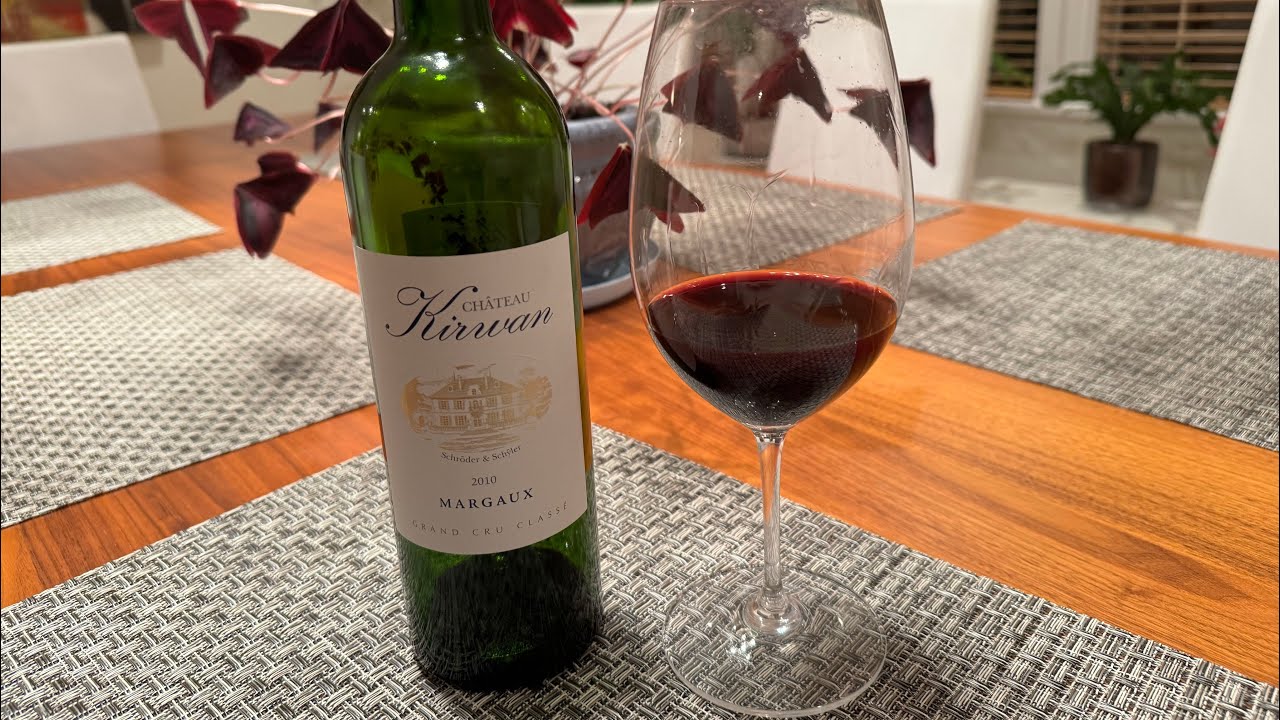
Chateau Kirwan is one of fourteen 3rd growth wines in the 1855 Bordeaux Classification System.
In 1710, the vineyard was bought by Sir John Collingwood. His daughter married Mark Kirwan after their marriage, the property was named after the Kirwans.
Mark Kirwan passed away in 1815 and the estate was passed to Camille Godard, the future Mayor of Bordeaux. In 1882 Godard gifted Chateau Kirwan to the city of Bordeaux. However, the city did not want to manage a vineyard so in 1902, they signed an agreement with the negociant company, Schyler, and Schroder to produce the wine and manage the estate. In 1907, the city of Bordeaux sold Chateau Kirwan to another negociant, Georges Guestier, who eventually sold the vineyard to Schroder and Schyler in 1925. Schroder and Schyler continue to own and manage Chateau Kirwan.
Chateau Kirwan is a 40 hectare vineyard planted to 45% Cabernet Sauvignon, 30% Merlot, 15% Cabernet Franc and 10% Petit Verdot. I believe the winery intends to increase the amount of Cabernet Sauvignon and decrease the amount of Cabernet Franc over time. Chateau Kirwan is essentially the same size as it was at the time of the 1855 Classification of the Medoc.
The terroir of Chateau Kirwan is gravel, sand, and limestone soils. The terroir of Chateau Kirwan is located on one of the highest points in the Margaux appellation with their peak elevation being in the Cantenac sector that reaches 21 meters at its high point. On average, the vines are close to 30 years of age but some old vines are closer to 60 years of age. The vineyard can be divided into 46 separate parcels.
In 2016 Chateau Kirwan completed a renovation of its wine-making facilities. they replaced their old stainless steel vats with 37 new, cement, tulip-shaped vats that vary in size from 40 to 50 hectoliters that allow for a parcel by parcel vinification. At Chateau Kirwan, they prefer co-inoculation in the fermentation process, which means that both the alcoholic and malolactic fermentation take place at the same time in vats. The wine is aged in an average of 40% new, French oak barrels for between 18 to 20 months, depending on the character of the vintage before bottling
For the 2010 vintage, the blend is 50% Cabernet Sauvignon, 35% Merlot, 9% Cabernet Franc and 6% Petit Verdot. About 14,500 cases of wine is produced each year.
For more information about the winery, please see their website at https://www.chateau-kirwan.com/en/vin/chateau-kirwan/
8 Comments
great video as always. as a side note, it is somewhat wrong to equate soil with terroir. like mentioned many times before, soil is just one part of the terroir😊 also having many vats and many parcels is important but there is a significant difference between vinifiying and releasing single vineyard or parcel wines or having hundreds of vats so you can blend a cocktail at the end. a clear, fundamental and almost philosophical difference. another also, amount of new oak and duration of new oak is not really dependent on how concentrated the fruit is. its a stylistic choice of the winery, lets not forget thin, almost rose Pinots from Burgundy get as much oak aging as some powerful Shiraz from Australia. in other words, you can not deduct anything by amount of new oak and months its been aged. all you can deduct is that you are drinking a conventional red wine😅
Perhaps the off aftertaste/finish is due to the high petite verdot percentage (I think you said it was 6%?). While it might help with the wine's structure, aging and fruit flavor I do not like its aftertaste so I prefer Bordeaux blends with low to no petite verdot.
Kirwan has been available in Finland for quite some time but their price is a bit too high compared to their quality in my opinion
Thanks for the info! I have a case of 2016 and 2 bottles of 1996 landing in Summer of ex cellar stock. Excited to compare the 2 vintages
Great video- I haven't had Kirwan, though I do really like wines from Margaux. You mentioned that there are others than you think are better. Any specific recommendations for Margaux producers to look out for (other than the obvious Ch Margaux and Palmer)?
The higher the alcohol, the more it will suck up the oak, maybe that happend.
Thanks for another great video. I would love to see a video that speaks about how to build a portfolio/collection of trophy wines. Buying at a store/auctions (the a re a few in Canada every month)/or any other way. Pros, cons and prices. Buying in BC vs Alberta, and so on. Thanks
Very nice video.
I always appreciate your insight and sincerity.