
For more winemaking content and to help support the channel, swing by my Patreon page: https://www.patreon.com/makewine
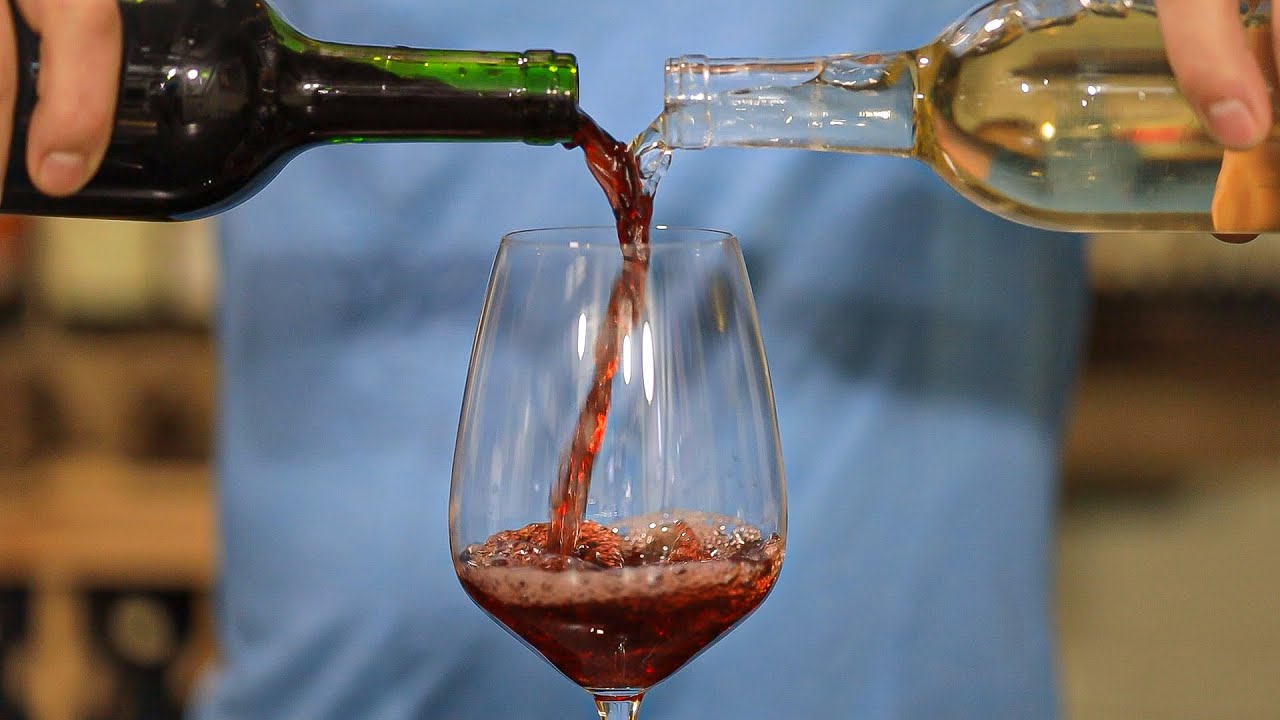
In this video, I will discuss the dramatic differences between red winemaking and white winemaking. Red wine making is an extractive process. The grapes are fermented on the skins and pressed after fermentation. White wine is pressed into juice before fermenting. Red wine is fermented warm, where white wine is fermented cold. Red wine is put through malolactic fermentation and oaked, whereas white wine is generally not put through malolactic fermentation and not oaked. These are just a few of the differences between red wine and white wine.
Please checkout my website, https://www.smartwinemaking.com/ for even more winemaking content.
Today on the home wine making Channel I’m going to talk about how shockingly different red wine is from white wine and what I mean here is the process to make it it’s wildly different and it can help explain why there’s often a pretty big price difference between a red wine
And a white wine and also why they just taste like they’re not even from the same plant so first we’ll take a look at the grapes most wines you’re going to buy from the store are the same species they’re from a grape species called vidis vinifera that’s your classical European wine
Grape so they shouldn’t really taste that different you would think and to make matters even more maybe surprising is a white grape is really just a genetic mutation from a red grape so for instance Peno Grease is a genetic mutation of Pino Noir it’s virtually the most identical grape but
Pino Noir has these genes that create the color pigment it’s called anthocyanin it’s also contributing to the body of those big red wines if you look at these grapes you also might be surprised that we call them red grapes and white grapes when in fact they’re green and dark purple bluish blackish um
Um but it is what it is we call them red grapes we call them white grapes let’s take a look at the vineyard in the vineyard for the most part you’re doing it pretty similarly the trellises are similar you’re looking for these Southern facing slopes you’re looking
For good draining soils what you’ll see more often with red grapes though is that they’ll thin the Clusters so if each grape uh cane on that vine is going to make three clusters they might thin it down to one or two they’re getting a lot less tonnage per acre then but it’s
Helping to really ripen those grapes and build that dark Rich color and um you know complexity in the wine where white grapes you’ll more more often see pretty high tonnage per acre so you can see right from the start that you start to see this a little bit more cost going
Towards the red wines now when it comes time to harvest you’re looking at different things a white grape is often picked at a pH of around 3.1 or 3.2 where a red grape you’re usually harvesting somewhere in the 3.5 range maybe even 3.6 and some of these grapes
You might even see it Harvest up into the 3.7 range and that doesn’t sound very different Until you realize that the pH scale is logarithmic so a pH of 3.0 is 10 times more acidic than a pH of 4.0 so pretty dramatic difference right from the start there
And once you’ve harvested these grapes you bring them to what’s called The Crush pad so with a red wine you’ll run it through what’s called a Crusher D stemmer it will separate the berries from the stems and it’ll pop all those little berries and what you want to do
With the red wine is ferment on the Skins it’s an extractive process you want to extract all that color from the Skins a lot of these red wines if you were to just press them without all that skin time what you’d have is what looks like a white wine sometimes you’ll see
This with um Pina Noir uh sometimes you see this with Cabernet Fran where it is essentially a white wine but it’s made from red grapes more often than not all that color is coming from those skins a white wine is almost the opposite it’s not extractive you really don’t want to
Extract from those skins so what you’re going to do is right off the vineyard if you have the equipment to you might actually whole cluster press no Crush just squeeze that juice out it takes a tremendous amount of pressure to do this and basically that juice inside Those
Grapes has had very little extraction time with those skins what happens a little bit more often is you’ll do a crush and then press and you might even give it maybe 20 or 30 minutes on the Skins to get just a little little bit of extraction give that wine a little character but
For the most part you’re trying to minimize the things that are coming from those seeds and skins instead of trying to maximize the things that are coming from those seeds and skins like polyphenols and tannins all these kind of maybe harsher more bitter compounds as we get into the fermentation process
A red wine is kind of a air friendly thing because it has all these tannins which are essentially antioxidants it can take on a massive amount of oxygen and this is kind of part of building this character that oxygen helps kind of create these chemical reactions and help
Build that structure and Body in that wine so it’s often done in open top fermenters it could be a simple bin or Barrel just out in the open uh the Skins are floating to the surface and you’re pushing them down and you do that two or
Three times a day just float up push P them down float up push them down and you’re extracting them just like you would extract a tea if you’re making a tea or just like you want to extract your coffee grounds to encourage extraction you’re often fermenting at pretty high temperatures up towards like
85° Fahrenheit that’s pretty warm now take a look at white wine fermentation before you even get to fermentation you’ll cold settle it or you’ll run it through a kind of a gross filter just to filter out a little bit of of those that pulp cuz again not
Trying to extract you’ll ferment it cold instead of warm often down to like 55° fah because what you’re trying to do is you’re no longer trying to extract you’re actually trying to preserve those volatile Esters so the things that smell fruity you’re trying to trap them in the
Wine not let them heat up and blow away so things you really don’t care to keep in a red wine you don’t want this weird fruity red wine you do want this kind of fruit on the nose of a white wine so you ferment it cold you’re also often
Fermenting it in a more um you say sealed but it’s not sealed because it would build pressure but a closed top container where Oxygen’s not really coming in quite as freely as during a red wine so pretty pretty much completely different so different that it’s almost
As different as wine making is to beer brewing so when fermentation is over on a white wine you pretty much just you’re waiting for that wine to clear up you’ll get it off the the yeast particles that have settled out they call those the leaves and give it some time to clear up
A red wine remember it’s still on those skins so now you’ve got to press the wine and now the Fun’s really just getting started it’s time now to put that wine through something called malola IC fermentation so it’s not the fermentation where the yeast eats the sugar it’s fermentation where a bacteria
Eats the malic acid and converts it into lactic acid so that kind of sour tasting acid that you’ll get in an apple well also in a grape and it will become be metabolized into lactic acid which is smooth kind of adds some texture to the
Wine and it’s not that you can’t do this in white wine it’s just that more often than not it’s not done in white wine unless it’s maybe like a Chardonnay so again we’ve talked about why there’s a little bit more cost in a red wine we keep racking up the numbers here all
These things are kind of labor intensive you’re monitoring things you’re testing things um you’re hoping you’re adding bacteria that’s not cheap um and you’re just hoping that it you don’t have to intervene to keep things going smoothly at this time you’ll also begin to Oak the wine which again on a white wine
More often than not it’s not going to be Oak so it’s just a stainless steel tank all relatively speaking pretty inexpensive compared to the cost of these French Oak barrels and American Oak barrels which cost a fortune and you can reuse them but it’s no longer a new
Oak Barrel so you’re not getting that Oak character you’re just getting the the what they call Micro oxygenation that happens in Oak so this brings me to another point so your aging this in an oak barrel and what’s happening is that wine will evaporate through the pores of
That Oak and then you’ll open up and top it back up with more wine and do that every month and you’re basically concentrating that wine remember this is primarily done for red wines jacking up the price and kind of explaining why these are just wildly different animals
And the red wine can take it the red wine again I’ve mentioned has all these antioxidants so this kind of oxygen not perfectly sealed environment of a barrel a red wine it kind of helps smooth things out if you’ve ever drank a really young red wine I mean like three
Months from Harvest it is Harsh um it needs that time it needs that oxygen to smooth out to where it can kind of level off and become where you want it to be to drink it now some stuff that you’ll see in white wine that you don’t often see in red
Wine is I’ve mentioned it’s a little bit more acidic we often have to cold stabilize it to crystallize these um if there’s like an oversaturation of the acids so it crystallizes the potassium or the tartaric acid into potassium bitartrate you may know that as cream of
Tartar and drop it out before we put it in the bottle because we don’t really want that in the bottle it just doesn’t look nice another thing we’ll often do with white wines that we don’t so often do in red wines is We’ll add some sort of fining agent often We’ll add
Something like Bentonite which is a clay during the fermentation process and it will help bind up these proteins and drop them out because if the wine heats up in storage it can get a haze you don’t need these hazes often in a white wine you’ll add something called pectic enzyme you’re
Adding it not because you want to extract but because you want to break down the pectin because that could create a haze whereas you might add an enzyme and a red wine but you’re adding it because you want to break down that fruit and you want to extract as much as
Possible so that’s an interesting case where you’re using the same product or similar product for completely different purposes now for these big Mass produce wines they’re probably mostly going to be filtered but as you get into these smaller more Boutique wineries what you’ll often find is that white wines
Are being filtered especially because they often have malic acid it makes them a little bit more friendly to a lot of bacterias that might want to eat that and you don’t want them to start doing their thing in the bottle where red wines because there’s no malic acid
There’s often really little to no sugar remaining um it’s pretty naturally anti- you know has powerful antioxidants you’re often not going to filter those I personally will never I never filter a red wine I really honestly never really filter a white wine but that’s a unique micro scale
Problem once you get into these big wineries you kind of have the power to effectively sterile ferment or sterile filter so you’re probably going to do it please make sure to smash that subscribe button and go to patreon.com makewi for more wine making videos this is now my full-time job so I’m
Pretty scared I’m going to go book now if there’s something I missed here which I’m certain there is please mention it in the comments below I love to hear what you guys have to say I can’t tell you how much more I’ve learned about wine just from reading
Your comments and thanks for all your support and thanks for watching
20 Comments
Thanks for the information. Very helpful.
Thanks for showing the difference and the tips! We will be trying a lot of varieties this season. Including red and white Grapes, Mulberry, peach and fig wines. 😎
This is really an excellent video. I have two questions if you would be so kind to address them for me. When you talk about fermenting red wine in an open container, doesn't this violate what I thought was the rule of keeping things as clean and sterile as possible to avoid bacteria from the outside getting into the mixture? Number two, you say malolactic fermentation smooths out the sour taste. Is this the reason some wines, even high quality wines have a bit of a sour taste? When in Temecula, CA recently we did a lot of tasting and some of the reds exhibited a bit our a sour taste. Others didn't. Is it because the sour tasting ones didn't go through malolactic fermentation? Thank you kindly.
Good video that covers all the major difference! Curious which you feel is easier to execute consistently at a high level as a home winemaker and why?
Great editing and cut scenes!
Well done, great editing and good info presented in a basic, clear manner.
Suggestion: Instead of saying "Drink it" say "Enjoy it" at about 10:10 🙂 Thank you for your videos…
I've been following you for a while and the quality of this video is great, you've come a long way since your earlier videos. You are appreciated and I've learned a good amount from you.
I'm a country wine guy, mostly grape but I'll grab any fruit and throw it in. As a country semi-purist, I only add yeast (LOL) and tannin. During the summer if I think the heat might get up there (Northcentral Idaho) I might add some Campden tablets when bottling. Sometimes I'll use cherries, blackberries, blueberries, prunes, or Asian apples. I would really like to make dark wines (haven't perfected that yet). Playing around I have managed to get and replicate some hot batches, 18%, though my average is 12-14%. Cheers.
I open ferment everything. It was a game changer for me. However, I do rack at SG 1.015 so it finishes fermentation closed. I get no off flavors this way.
I once fermented white grapes on the skins. Horrible wine initially. After three years of aging in the bottles, it tastes great! I don't recommended doing it, though.
I don't clarify. I bulk age it so most stuff settles out. I always decant before serving.
I break up my white grapes before pressing. After watching this video I will manually destem and press them whole. I think this will give me a smoother white wine.
Good video.
Thanks for the info and the mini-rock show. Question – I have a small vineyard and my reds lack the shine or polished look in the glass that I would like to see. Not hazy, just dull. They drink just wonderfully though. Do fining agents help with that?
I never knew how metal you were dude. 🤘
I just recently found your channel & am glad to see you're still posting new content. Been trying to step my game up these days & you have really helped with an archive of great content on the more intermediate to advanced home-scale processes. Thank you for all you do.
Congrats on being able to retire from whatever you were doing before to give us content full time. Your videos have been very helpful for me as I take the plunge from kits to grapes. Murphy's Law, a really bad cold snap in BC wrecked this year's crop already, so sourcing grapes is going to be a chore, unless I can find one that has some buckets of frozen grapes they are willing to sell.
I'm starting off with some blueberry wine, since frozen wild blueberries are on sale, and it gives me some practice fermenting on the skins. I spent all day yesterday mashing thawed blueberries and getting the brix/s.g. right where I want it. Going to start small with a 3 gallon batch to make use of my 3 gallon carboy that has been collecting dust since I was in college 13 years ago.
If there are any brew masters here, below are my ingredients for my 3 gallon batch. Any feedback is appreciated. The ph is relatively high, so I don't think I'll be adding any acids to it unless someone where can convince me otherwise. I also opted to use some blueberry juice concentrate in addition to whole fruit. I have read in other places that blueberry concentrate adds more body and flavor than just the fruit and sugar alone.
3 Gallon Blueberry wine
8.8 lbs of frozen wild blueberries
64 fl oz of wild blueberry juice (Patience Fruit and Co is my local brand)
3.3 lbs of white granulated sugar
1 gallon of spring water
1.5 tsp pectic enzyme
3 tsp yeast nutrient
1.5 tsp bentonite
3 Campden tablets (to kill wild yeast 24 hrs before pitching yeast)
1.5 tsp white tannin powder
1 packet 71B yeast
Initial S.G.: 1.092
Initial ph: 3.6-3.7 (using brewer test strips)
I've got about another 12 hours before I can pitch the yeast.
This is awesome video! Question though: why majority of wineries selling grape juice recommend closed fermentation (ie no oxygen)?
Thank you for putting out a new video! I have learned so much about wine making from your videos. Th,and you!
You are adding bacteria that is not cheap. With out context that is so weird to hear.
if you want to gap the bridge between white and red, you need to try amber aka skin contact aka orange wine😅
When we were in Niagara on the Lake, we saw a skin fermented vidal. Thought that was interesting so we brought a bottle home. Now one of our favorites today
Best wine making channel on youtube, for sure. I love your technical information because I use it when I make my own mead
Hi, my question is a little off topic, but you might be interested in what I am doing…
I make apple jelly, when experimenting with varieties and recipes, I have failures along the way.
I've started making fruit wine and drinking my failures, some are very tasty.
Last season I made a very nice "citrus apple jelly" but the jelly did not pass the shelf life test. Still tastes ok but the color has browned.
About 2 1/2 months ago I started fermenting the jelly, with a ratio of 20% jelly to water and used a dessert wine yeast (AW4). Total volume is 24 liters.
Nearly 3 months later, the air lock is still popping away at a steady rate.
What are your thoughts?
Should I wait for the airlock to stop popping?
Or rack it now?
If you make a suggestion and the end result is good, I'll send you a bottle.