
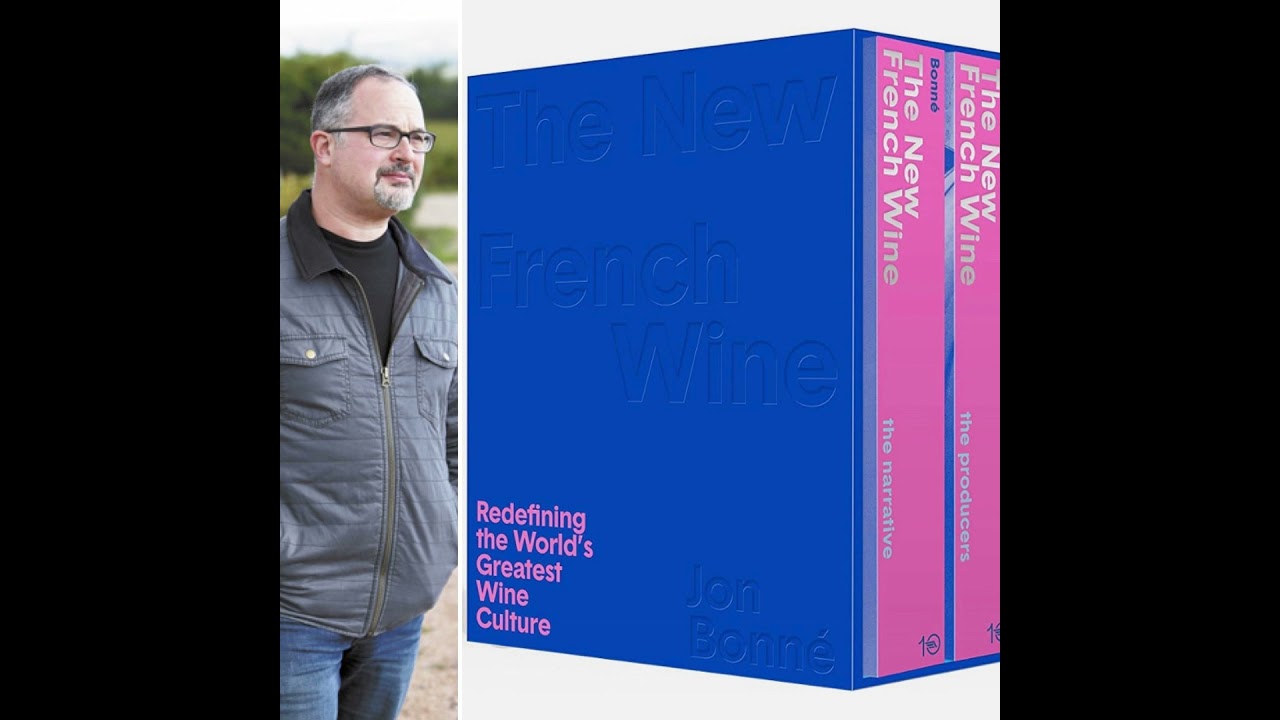
Jon Bonne is no stranger to The Grape Nation. This is his third appearance on the podcast, and he’s here to discuss his new and third book “The New French Wine (https://jonbonne.com/the-new-french-wine/) ”. Jon is an award-winning author and journalist; his background includes MSNBC, Decanter, a decade as Wine Editor and Chief Critic for the San Francisco Chronicle, author of “The New California Wine, and “The New Wine Rules”. Jon is currently Managing Editor at Resy covering dining, restaurants, and wine pretty much everywhere it’s served!
Heritage Radio Network is a listener supported nonprofit podcast network. Support The Grape Nation by becoming a member (http://heritageradionetwork.org/donate) !
The Grape Nation is Powered by Simplecast (http://simplecast.com/) .
Hi hrn listeners as we celebrate our 15th year we are deepening our commitment to giving voice to the next generation of food system storytellers and we need your help our internship and fellowship programs help activate new possibilities for underrepresented and underestimated young people through experiential journalism audio engineering and production training
Through these unique programs hrn helps food Equity stewards build essential Workforce Readiness skills that expand their potential and Foster economic Mobility please consider supporting these critical programs and with a minimum donation you can be entered to win a dinner for two at an amazing restaurant in one of eight cities and
Tickets to a concert at a great venue in one of those cities we have incredible Partners across the country who have donated as they also share our passion for helping to educate the next generation of food system storytellers check out heritag rwork and make sure you donate before March 31st thank You you’re listening to Heritage Radio Network Heritage Radio network is food radio supported by you learn more at Heritage Radion network.org this episode is brought to you by Roberto home of Heritage Radio Network for 10 years learn more about Roberto at robertto pizza.com Welcome to the gra Nation your weekly wine Journey Our Guest is John Bonet we’ll talk to John about his new book the new French Wine and More I’m your host Sam Ben Ruby stay with us for the great nation on the Heritage Radio Network we bring wine to the People John
Bonet is no stranger to the great nation this is his third appearance on the podcast here to discuss his new and third book the new French wine John is an award-winning author and journalist his background includes MSNBC decanter a decade as wine editor and chief critic for the San Francisco Chronicle author
Of the new California wine and the new wine rules John is currently managing editor resi covering dining restaurants and wine pretty much everywhere Wine and Food iserve there you go welcome back to the Grave Nation John hey Sam it’s great to be back we’re talking to John in
Person um which I like because it’s more fun than a remote we’re in Bushwick Brooklyn we are not at the Heritage Studios we are down the block at the Heritage offices um John I know you’ve come up for a little there so I’m excited to
Talk to you about the book when I saw some post you know that you felt TimeWise it was safe to release I think I sent you a note the next day and said you know we have to talk about this so I was excited to see
That um all right before we get into the book you came from a food and wine loving family I did um which you can get into that for a second you eventually uh took work in journalism but here’s what I’m curious about took work like right I didn’t know
How to I became I became of age and I took work in journalism so you took work that’s like an old uh Colonial expression um but here’s the part I’m interested in you didn’t get into wine writing right away if if I tagged it right it was around the Millennium you
Know in the early 2000s yeah exactly tell me a little about why at that time and just you know give me the trajectory which takes us to today or you know the first book so before I got into wine writing I actually had to get into wine
Or back into wine because I grew up which is why I said as a kid you were exposed but yeah so you know did did all the all the all the culinary things when I was a child uh and a teenager then forgot all about it and yeah somewhere I
Mean late ’90s turn turn of the Millennium I was starting to get back into wine uh I moved out to Seattle and I was getting really into the wine industry there and that was that was the beginning of the Boom for fill in the
Blank why did you go or why were you in Seattle as you mentioned MSNBC okay so that was the MSNBC job I I visited The Newsroom out in uh Redmond and decided that I very much wanted to live in Seattle and asked the right people until
I managed to transfer uh so I was living in Seattle and getting into wine there and uh I’d done hard news for probably 15 years or so and was looking for other things I at that point it sort of shifted to be a business reporter and uh covered the airline industry covered uh
Travel a bunch of different things and started occasionally sort of taking on a food or wine story and I really like the wine stories and I was already into it and suddenly I realized like wait a second so you know the day job will like
Pay me to write about this stuff and so yes I need this full time yes but not even full time like I you know give me yeah a couple of stories suckered my editor into giving me a wine column basically and you know on top of my
Other stuff and uh ended up building sort of a Beat Around food and wine but not just kind of the I taste cherries and blackberries but the science and The Business of it uh so that that’s where it started uh and then the full trajectory so I was doing that at MSNBC
For about 3 years years and then the San Francisco Chronicle reached out and they were I mean you had built up a name and a reputation the nice thing about you know sort of you know stumbling into a wine column at a national and international publication that has very
Big names behind it is that has that has very big names behind it you know so immediately you have a you have a national readership and Beyond and uh and that was extraordinarily fortunate uh on me on my end and so yeah so the chronicle sort of had noticed I’d won
Some awards for writing and uh and they were looking to to hire a new wine editor and so uh that all kind of clicked and you know was the person you replaced was it like the Frank prel type guy or somebody who hadn’t been there I
Mean the person who was there before me was a woman named Linda Murphy and she had been a longtime writer in C California she had done wine PR she actually as many wine writers did she started as a sports writer I think I think for the the Union Tribune in San
Diego and you know it’s I mean she she had been in the chronicle a couple three years but quite honestly as I would come to learn it it was a relatively grueling job I mean you can never complain about uh being at a newspaper and having a job
At a newspaper certainly in the early to mid 2000s was like a miracle as it was uh given the the the contraction of the industry but uh but you know it was it was a lot of work and especially at the chronicle that job wasn’t just to be the
Wine person it was uh the chronical is the only us newspaper to ever have a full Standalone wine section and so the job was to not only be the chief critic and you know write the big stories tell the big stories but also to run the
Section get a section out and so you had a yeah so you had a you had a production schedule you had Freelancers you had um I think when I got there I had two staff and so it was it was a you know capital J job yeah but you got right into it
Pretty heavily you know in a good spot um couple things on that and then I want to get into the book because of proximity were you limited to write mostly about the Northwestern California or you had free reain to go anywhere um well at MSNBC I could write about whatever uh Chronicle
Now I’m talking chronicon San Francisco there there was clearly a there was a focus on California no surprise uh and Northern California to some extent but the chronicle had always covered wine internationally uh I mean we honestly were we when I got there we’re we uh syndicating janis’s column oh really so
Uh that was a good idea yeah so so it was um you know I I took all the latitude and probably then some in terms of not just covering California uh I came in with a fair amount of skepticism about where California wine was in the early
2000s and as you know that was that was the substance of my first book which was the new California so I wanted to ask you about that so that skepticism and getting embedded into the market and you know writing about it you realized this is really not the type of wine the way
It’s made the people the vibe I mean you you didn’t like where it was and where it was going and you kind of recognized who was there and where it could go I mean the end of the the end the be the end of the 90s but
The beginning of the 2000s was the end of a life cycle of a certain type of wine and a certain philosophy about wine that I’ll say had started let’s say late 7s early parkerization it’s parkerization but it’s but it’s beyond that it was a sense of immediacy it was
Simplifying wine so that it had a much bigger within within the United States a much bigger consumer base this is where KJ grew up this is where the fighting varietals came up in the 80s and parkerization was much more just a matter of style and being like well if
People like it okay at 13 they’re going to love it at 15% alcohol and certainly when the rise of cult wines began in the early 90s it was this this arms race if you will I mean in the new California wine I called it the big flavor but uh
But so so by the you know by the early mid 2000s it was really at the end of that life cycle and I don’t think anyone quite knew what was going to come next I think it was kind of a natural end like like were people tiring of it it wasn’t
As important I think it was that it had gotten saturated all the wines that people were really into in the early 9s the you know the Screaming Eagles the Harland had become stupendously expensive and ridiculous to get and and so it was like this incrementalism of
How many more cult wines can you add to the can you add to the Heap and frankly the people were buying them like you can’t drink those wines that fast or or that often and so it was just a sense that uh you know a lot of California had
Fallen into sort of a a bit of autopilot in terms of very commercial industrial wine making the stuff at the top end had really sort of jumped the shark and so what what I saw eventually sort of you know late late in the 2000s toward the beginning of the global financial crisis
Was that there were these seeds of change and people who had either never given into this this more is more philosophy or they had you know they had kind of gone through an arc and realized that that really wasn’t the best expression of California and this is
People like steeve Maas Ted lemon those who had been walking the walk and still were walking it yeah were folks like the guys at arnard Roberts who just like they were coming up in the world out of the the you know late decadent cult wine era late decadent parkerization if you
Want it uh and we’re just looking for a different path so that that became for me that became this this Catalyst for telling a very different story story about California which uh which obviously in the end was very fruitful for me and I think was was a remarkable
Uh uh Boon of timing but uh was for sure at the time uh not well received by the mainline industry in California so which which for sure made that and Jasmine’s Pino thing you know it wasn’t well received you know people don’t want to hear it’s funny now to think about I
Mean I in pursuit of balance feels very quaint in the sense that you know the the the the question has been definitively answered but at the time yeah it was there was a lot of anger at this notion that that people wanted a sense of restraint a sense of nuance and
And the thing is not just me but like you know could have been Raj could have been all sorts of folks you know Ted lemons of the world you know the the accusation was that we were a bunch of francophiles who just wanted to impose our Euro standards on the the Abundant
Sunshine of California and again like the the irony being that uh We’ve somehow come out of this process alive and there is now enormous interest in that style it has become I think among sort of an elite level of of uh a buyer and of of Drinker like that is now the
Default um and so meantime I I finally gave every one of my critics in California who thought that I was just a Frenchman in Disguise uh as you can tell from my accent I’m not um but uh you know I finally gave him the gratification of of quote unquote going
Going back to Europe yeah really I mean that that’s how it played out um all right so you leave the chronicle you write your first book you come to New York we’ll get into that you know kind of as we weave but you know let’s use the book as a backdrop
Um so I want to jump right into it and as I mentioned off Fair answer a few vital and obligatory questions let’s get them out of the way um how did the idea of the book come about now obviously a similarish the new California came about
So the notion wasn’t you know I just changed one word no no no I’m not even implying that but but at some point you know no so so the new California was out and it was 2014 so uh new California came out in late 2013 it
Was 2014 and I was starting to poke around for the next thing and had some ideas about the old world and this this book notion of quote andot the the the the new old world uh which given the time it took just to do France thank
Goodness I didn’t do that 40 40 years later I’d come back but uh but so it was the sense that you know there is there is change happening elsewhere and it would be great to capture it and I was having uh drinks um at a natural lne bar
In Oakland with my editor of the first book Emily Emily Timberlake and we same publisher then as now same publisher same everything okay um but and we were chatting gressly as one does after maybe a little too much game um some sometimes happens the French know this uh and she
Alcohol too yeah uh and she was like so what about France and you know standing you know belly full of bileet looking at all these kind of funky interesting French wines around me I was like yeah sure let’s do it and we thought yeah you
Know we can it’s it’s going to be lots of interesting fringy stuff and um kind of natural and uh you know we’ll wrap it up in two years and that’ll be that and so forget the two-year part for a second was what you just described pretty much what happened was your original
Assessment of what it could and should be what it wound up to be no no not at all okay uh simply in that I mean yes all of those things were were elements but the the thing that I I don’t think that I had quite processed was that the
Change that was taking place in France and in French wine was not in any way on the French it was everywhere and some of it yes was like no sulfur and natural and you know going up to the OV and finding weird volcanic wines and all
Kinds of stuff but I mean all of those things were true in some sense uh but and and there’s a book in there’s a book there’s a chapter in the book called uh in search of a new game Wonderland which was actually me kind of coming to terms
With this dream I had about the ovar which is part of the Massie s trial the big mountain in central France and thinking that it was going to be this this this wonderful place of of transformation and change and it was the most recal centering place ever oh
Really and you know the folks who are there who are trying to make wine are doing remarkable work but it was just this this moment of realizing that all of you know you sit in California and you dream your dreams of you know of French hipsters and evolution and you
Realize at some point that that’s not not not true it’s not completely untrue but it really is a very narrow prism and what in fact was happening was that there was change taking place in every single region of France in every single significant appalation and in a way this scale was so extensive
I mean and when you say the scale of France it’s it’s hard at times for people to to Encompass in the sense that like California has now maybe 8,000 wineries or so France conservatively has somewhere between 40,000 and 880,000 I I didn’t even realize it yeah so just like
In a you know in a in a in a like in a very conservative way you’re talking about 10x Jesus uh which which really isn’t even true there because just you know the the the history and the magnitude of of everything in France the importance of these regions is so much
More pronounced we should say this is this is no skin off of Napa Valley uh which has its own extraordinary history but it’s not Bordeaux and when you actually dive into Bordeaux and it’s it’s ironic because bordeaux’s history turns out to not actually be that ancient as things go
But you could pick any any region and you start digging in and you realize that all of the changes that are happening in the 21st century are built on hundreds if not thousands of years of predicate but that’s that’s amazing um all right let’s stay with the vital
Stuff so what was French wine on your radar or your your editor Emily kind of sparked the interest I mean you weren’t walking around thinking you know maybe down the road I mean French well for sure it was on my radar in the sense
That I was not as a book you were aware I was writing about it a lot you were more of a global San Francisco Chronicle editor I mean writing about it a lot thinking about it a lot you can’t in some way be wine without France always
Being there uh hovering but I I don’t think that I it wasn’t immediately in my mind like well I clearly need to just go dive deeply into France in in part because I don’t think in general like no one in one can even think at that scale in the sense of like
I’m gonna get really into champagne I’m gonna get really into burgundy and you see there’s like you know the the like deep wine enthusiasts um and collectors whoever like they tend to choose their place and that’s their focus like I’m going to be super into class growth
Bordeau I’m going to be super into Northern Rome we new grower champagne people or whatever so so it’s just you know to to suddenly be like yeah all of those things and you know but I’m going to really look for The Cutting Edge of what’s there and the change of what’s
There right so how long did it take to write the book uh so 2014 we signed the contract late 2014 and we shipped it in late 2022 so eight years back um that’s obviously longer than the new California yes substantially longer but new California to be fair I was sort of hanging around
For a long time before I realized that it should be a um I don’t know if this is a silly question but if you had the choice of power today which book would have been better to have written first did did the new California help
You in writing you know this more of a it did so the order is good this way the order the order was actually the correct order one just in terms of scale but two like I don’t want to say that the the story of California is simple because it
Is remarkably complex but it could be simpler but it’s just it’s definable it was a very specific thing or set of things that was happening at a moment and so I think it gave me it gave me the way to start framing these stories and
These Notions yeah cuz um I I think the story and that’s what we’re going to get into I just want to get like I said these vital things out of the way so you wrote upwards of 900 Pages for this book does that mean you left left a lot on
The floor or that was pretty much everything uh yeah so it was it was pushing 900 Pages uh we cut probably 75,000 Words which is I which is a book another book oh so sub Jesus CH the book the book landed somewhere a little shy
Of 600,000 550 570 so we we cut more than 10% is that frustrating it made sense is there something you could do with that or it’s it was onward and forward right you know a I write long maybe excessively long well that’s listen I love it and I told you before I
Mean that’s your style and you know you really get into it so I could see how it could go on and how it could be tough you know you have to shorten it and how you have to cut stuff um I’m assuming crazy travel right I
Mean just in the midst of writing this book which wasn’t the first year the last year but when you were really I mean what are you talking about going to France three four times a year living there I mean six times a year usually six times a year sort of living there I
Mean we we bought an apartment but I wasn’t really living there so much as like I would go for a couple days and then head out to wherever I needed to go a lot of airbnbs um what’s pick a region for me um and tell
Me how long you spent there and if you went back a few times yeah it would depend on the region like alas alas I I spent about two weeks in and I probably unfortunately did not go back it was a place that I struggled with when I was
There um just in terms of what was or was not happening and the progress that I didn’t really see there I think there’s more of it now that I I’m sure that I would have gotten more more flesh on the bone if I had gone back it just at some point
Became a question of you know I can only do so much travel and so much travel makes sense that’s why I said because it’s not somewhere somewhere north of somewhere north of 30 trips uh over there which were usually around three weeks a piece uh and so you
Know like is it enjoyable and thrilling or does it get do you get weary and it’s like work and two and a half weeks into it like get me the hell out of here or it’s I don’t even know if it’s get me hell out of here so much as just you’re
Doing usually four appointments four four appointments a day or so six days a week that we thing and it’s just I don’t want to say it’s monotonous because look every time you visit a new vineyard own there’s something new there’s a reason that I’ve found my way to their doorstep
Right at the same time it is there is a pattern to it and at some point you’re just like I have spent so much time in the past few weeks just absorbing information tasting wine kind of in this routine that uh you know I my my body my
Brain everything needs a break yeah um all right let’s finish up the vital obligatory question so let’s talk about the physical book before we talk about what’s inside um I think it needs um some discussion because um it’s it’s a beautiful book it’s an interesting
Design um it’s a slip case it’s a little different so it’s two volumes two door stops in a slip case um two door stops to the price of one right I I was going to describe I’m like why am I doing it just describe the physical part the
Colors you know because it’s it’s very eye-catchy in that sense I mean this is not you know I mean I love Peter Liam and I love his champagne book but this doesn’t look like that well and and look it’s you know Peter and I had you know
Same publisher same agent uh and and I think the the starting idea for new French wine was going to be somewhat much closer to Peter very somber very official and I challenged 10 speed and I challenged our our book designer uh Lizzie Allen and was like I I get why
You’re going there but you know we you’ve done that book already uh and they did it again with a book on Bourbon uh that is also a remarkable book and I was like this is meant to send a different message and and it needs to it
Needs to be an object like I want to see it on the Shelf at restaurants and recognize it I want to I want people to know immediately when they see it what book it is which there’s surely some wacky ego stuff in that but is what it
Is uh it’s also as I’ve said before like it’s living in the Instagram era so the slip cover uh and the uh the uh the monotone on the front and back covers of each of the volumes is uh is very particular shade of blue don’t ask me
What it is I’m sure Li Lizzy Lizzy you don’t have the panone number Liz knows the panone of it um my I had a lot of prompts about the colors uh and you know you haven’t mentioned one word yet well there’s pink we’ll get there okay um but
So the blue like you know there’s Eve Klein blue there’s uh there’s SRA blue or blue Celeste which celest blue a very specific color that was used in Ceramics in the 18th century so I had had my boot board I sent all these things but in the
End what I said to her was look my my prompt to you is this I want I want electric blue and hot pink so the spines of the uh of the volumes and other accents are for sure hot pink and they jump don’t ask who Pantone on that one
Either but uh but it was very much this I mean for sure sure we are not the first people to use that particular palette but it was just a sense of uh this needs to be absolutely distinct it needs to not on its immediate face look
Like a wine book The Slip case uh the title of the book is actually deboss so if an mboss comes up eboss goes down right and so it’s not printed so much as it is imprinted it’s on the volume yeah you know spine whatever you call it yeah
So it’s it was meant to it was meant to be a very sharp turn away from where wine books are aesthetically I I think it is and I think to your point you know if it sits on a table or on a bookshelf it’ll attract people um let’s talk about
So there’s two volumes in the slip cover there’s um describe each volume the second Vol I’ll help you in the second volume is producers which is pretty self-explanatory I mean there’s really three elements you know kind of a lead in of the region um Benchmark wine makers and all the
Other people that you feel are making the right contributions is that a fair yeah or anything else to the producer no it’s I mean we we knew that a portion of what people use wine books for is as a reference they want to look up the the
People who are making the wines they’re drinking and the wines and so when you were writing this was that in the back of your mind that this will sit as a reference book when we started to talk about structure it was very clear I mean originally it was just going to be the
Back of the chapter and then it was like well why are we doing that versus people use this in a random access fashion they they they want to look up chatau Ras they want to look up dend FR and Sho they don’t they don’t want to like be
Flipping through this enormous and they want to see who you’ve identified as the top of the Heap The Benchmark guy and all that you know what you do um I I think I know the answer to this but in volume one and volume two and we still
Have to describe volume one you know you talk about regions like champagne alas burgundy and all that what’s the difference between the lead in in the narrative chapter and the lead in in the uh producer chapter the producer chapter was just meant to very quickly recap the
Geography that is in a section of the narrative called the place right uh just so that you have a sense of here’s the basic geography and the layout here’s it for the for the regions where we did sub regions we broke it out here’s what those sub regions represent and many of
Them people will know some of them they will not for instance in burgundy everyone knows the coat to Bone and the coat toi most people do not know the kot dianz right which is the historic Vineyard land around dong uh or the K the cushwa uh which is sort of old old
Land uh west of the shanz so it was just sort of saying like maybe you know it maybe you don’t here’s our Cliff Notes kind of geography lesson all right so I think a good segue to talk about the narrative volume is to talk about the narrative but first
We just have to take a quick break so we can uh let our Underwriters sponsors and subscribers um jump in here so you’re listening to the grape Nation on the Heritage Radio Network we’re talking to John Bonet we’re talking to John about his new book when we come back we will
Uh get into really The Narrative of this book so we’ll be right back this episode is brought to you by Roberto home of Heritage Radio Network for 10 years robertto was founded in Bushwick in 2008 and has become one of the most iconic restaurants in the country hrn made its home inside of
Robertto in 2009 and together they have become part of the DIY fabric of the neighborhood Roberta’s the pizza restaurant is open for lunch and dinner 7 days a week and serves much more than just the famous Woodfired pizzas their team dreams up new salads pastas and sandwiches on the regular Roberta’s
Tikki bar is Alive and Well in the back Garden serving up frozen drinks in the summer and hot totes in the winter stop by the bakery and takeout spot next door for fresh breads sticky buns and pizzas to go but Roberto also extends Beyond Bushwick with multiple locations in New
York City and now in Los Angeles you can also find their frozen pies and grocery stores around the country the spirit of Roberta’s like Heritage Radio network is everywhere here’s to many more years of pizza powered radio learn more about robertto at robertto pizza.com okay we’re back we’re back with my guest
John John Benet he just published uh his new book the new French wine uh you could use a lot of adjectives about this book like seminal Bonkers Bonkers huge you know but I mean mine are all good all right so let’s talk about really what this book is
About we talked about that it could be a resource and there’s a ton of information um but I’m curious you said you were a skeptic of Cal California wine in the 2000s did you have a similar skepticism or you knew more about California wine than French wine I mean what what was
Your so you mean when I started writing the the French book The French book yeah I I don’t think I had skepticism in the sense that you know I have had always loved French wine still loved French wine I probably had some skepticism about a little bit of The Fringe and
Where quote unquote natural wine was headed which in the mid 2010s was an odd place different subject today you could argue it’s still there but but it was certainly then like I think there was uh there was a bit of a a a a a a u a yop
From the natural wine World about how much they wanted to rebel and be different and when we talk about natural wine the writing the natural wine chapter became sort of trying to catch that at the right moment but I don’t think there was skepticism I think
It was more that I I just I I I had a a vague sense of what was happening but that’s what happens when you’re 6,000 miles away you you can’t really know the magnitude of what’s taking place until you get on the ground and and ironically
That was a lesson that I probably should have been too Ed from New California right that I didn’t quite put two and two together on in that the reason that I was able to tell the story I did about California was because I was very much
There and living it and I I won’t say that I was there and living it in France but I certainly had to get close enough to be able to find the substance of the stories well eight years worth um all right so here’s the setup question and
This is going to run everywhere to all the good places um so it’s fair to say what’s been happening in France the last 20 25 years you know caught your attention and correct me if I’m wrong became the thesis of the book here’s what’s happening and here’s what
I’ve kind of learned and figured out you may not know and here here’s why um can you is this a fair question can you explain that thesis sure and you know the transformation I is the thesis the transformation of French wine it is but it has a more specific context so
That’s what I want to hear and and I I’ll be honest it took me a long time it took me years to really finally get my head around it and then in in the in the first chapter of the book I describe the moment when I like pull over to the side
Of the road cuz I’ve like finally kind of figured it out wait did you know but you couldn’t get your head around it or you didn’t know when it dawned on you which one I had like you know hundreds and hundreds of pages of notes and I you know I would take time
To sort of sit and think my big thoughts and take you know write lots of stuff down and I couldn’t quite now of course it’s obvious but I couldn’t quite like get my head around it probably again just because the magnitude and so yes it was transformation but really different
Transformation ations in every single region uh and it was not just so it wasn’t a universal well yeah it was a universal there was some Universal universality what if there’s a word but each region had its own it it did um and we’ll we’ll get to the universality so
Each region had its own transformation uh they were not all the same they were for the most part based on historic regions and not kind of you know Fringe areas that were net new so the change in Champagne you know for whatever anyone wants to talk about the
OB which is important but it’s not that it was happening down south in you know what I call the rebel South it was it was taking place in the heart of historic champagne it was taking place in the heart of historic burgundy but what really was the case was this wasn’t
Simply an end parkerization and the internationalization of wine in the 90s and this kind of overwrought wine making it wasn’t even the uh the the success of getting past the sort of the the the over cropping of the 70s and 80s the really bad chemical farming of the
Postwar years uh and a lot of sort of narrowing of practices and traditions which was the downside of the AOC system which again you know everyone in France thinks that everything has been Eternal but the AOC is really only date to 1936 and they were the AOC is an
Organization so these are the Appalachians which is a regulatory it is an official regulatory body it’s written into French law for that region or that for any region there’s 400 odd aoc’s yeah uh for for wine there’s there’s there’s aoc’s for cheese for lentils for all sorts of things but it they’re very
Strictly governed uh Agricultural and production uh rules that that these follow and they were created not out of some great cultural thesis they were created to stop fraud uh that that really began in the late uh the late 19th century and went wildly through the early 20th century and almost killed the
French wine industry and so you know so thinking about the history again so aoc’s back to the back to the 30s and if you go a Step Beyond that earlier than that you have felox which was the vine louse that really again almost destroyed the French
Industry in the late 19th century and so there was this a approximately 150e Arc of the French wine industry just going through enormous pain and evolution and growth and change and trying to find its identity and what I finally realized was that the 21st century like two decades
Into the 21st century is really the first moment since the mid 19th century when French wine uh as as a as a total is very very self assured and clear about its identity and its strength and and it’s one reason why in the book The the the one of the threads that that
Goes through the whole book is this image of what the french Vineyard was in the mid 19th century kind of the the the the beginning of republicanism uh the you know the the sort of you know end of Napoleon thei and um and and really the the great
Study and classification of the French Vineyards which some of which went you know in the end horribly arai like the classification of 1855 and Bordeaux but on balance it was this sense that that here was truly and and I don’t use the words lightly here was the world’s
Greatest wine culture in a moment of of absolute blossoming and then getting hammered for 150 years and trying to find its way back and so my ultimate takeway was all the things we’re seeing now the the revolutions plural that I I tend to use in describing what’s
Happening are the result of this Arc coming to completion of this this remarkable wine culture that had a lot of things really wonderfully figured out in you know the better part of two centuries ago and then just had all of this institutional knowledge and all of this culture wiped away and had to
Rebuild and the reason for me now that we’ve finally gotten to this this state of grace is that that great Mission I don’t want to say it’s completed but it has come full circle so when are we talking about I mean you know you mentioned felock or industrialization the aoc’s I mean are
We talking things started changing after the second world war or later into the 70s maybe when you say change you mean toward what we have today towards what you’re describing you know to that end of the fair question back to me towards the end of that Arc yeah so I I would
Say the the the final rounds of change that I think have brought us to where we are today I would take them maybe back to the late 9s I don’t know that they would go too much farther back I’m thinking about the rise of grower champagne I mean you could argue the
Early 80s if if you want to look at anel solos and where he started you could you could make a case that mid90s and say MUSC where they started doing geological studies right or the early 80s with the gang in BO that wanted to make natural wine and farm differently
But it’s it would be hard to put it too much farther back than that and in some cases let’s take burgundy the the the the success and the um the quality that we’re enjoying today is really recent which is to say Burgundy wine making even in the 9s was
A hot mess to to in not not in an abstraction but like if you look at the like cold soak and the Gia Cod method that God us these sort of big oy California style right Peno noirs and these you know very rich creamy buttery chardonay that were again sort of
California style and you know pre moxed and uh you know just became sort of a a disaster for a lot of Vine own burgundy like we’re talking about a timeline that is maybe 20 years tiny bit more and so I mean that wine making was continuing in
Burgundy well into the 2000s can you tag that to generational change some or not entirely some I mean but generationally there was a better I me you look at burgundy and you see how many 25-year-olds are working with some of the best Vineyards in the world this is
The thing that’s mindblowing it’s like you want to talk about the the quote you know the star of California pinoir the star of Argentinian panir whatever it is and like you know you have a 25-year-old wonderin there great like that’s awesome land is expensive Etc but it’s not grung
Fu burgundy and then you like you see these like these these you know the these these Vine who are like 25 28 30 years old and like oh yeah they’re making shamber tan and they’re making they’re making bard and you’re like so so this is I mean I
Can’t imagine the the the pressure that that you know the new generation is under in the sense that these were always important Vineyards but then you add in the the the price spikes from The Collector market and you know it’s like 25-year-old making a 10,000 $20,000
Bottle of wine it’s crazy I know like it’s fundamentally crazy and and the the the way in which they’re able to handle it with with a certain elong with a certain Grace is remarkable cuz again like this isn’t the region that wants to be the orig the original this is the
Original right and and that’s what’s really stunning in terms of the change in France which is like this is when you look at the quote unquote New Generation this isn’t like oh well you know the new the next Mavis are coming whatever it is this is like you know this is the
Generation that’s taking over making champagne and making burgy and making the classic well that’s what that that’s what makes it so unique I mean that’s what makes you know the the story of this book so unique I’m just curious things like fxra you know how they were forced into using herbicides during
Industrialization was that I I think unique as the wrong word but was that something they were doing more of than anywhere else Italy the US I mean focka had a big impact on you know what happened to French wine I I would say yes mostly because the French
Wine culture was so much more developed and commercialized than almost any other which is say the reason FX spread so widely there was because the industry was so welld developed that people were circulating and they were planting things in different places and there was there was regular trade uh and when uh
Systemic pesticides and and synthetics began being used after the world second world war it was because the French government had a very official system of agricultural advisers who took the the gospel of chemicals out into the into the countryside and and it hard yeah and and made it sort of the default practice
So in some ways the the depredations of the industry as they came were because the French industry was so well established and so Central to French national identity it’s just crazy the history of the region the length and you know just the changes so recent and just
Kind of a lot of screw-ups but there there are I mean there the again this is we we we enjoy this this myth that to be fair the French largely created and they they love more than anyone else that you know theirs is a Timeless culture and
Things are as they have always been and you know this is tradition and when you when you so we were talking about the aoc’s the AOC is each AOC is governed by what’s called a Kay disar and Kai dis charge is literally an offici legal document it is written into French law
And it is the rules of how that Appalachian wines are made what’s interesting about the kishar is that in in in every Kish charge it has a specific sort of narrative passage that describes the Natural Factors and the human factors that contribute to the appalation and so it is the local lore
If you will written into he geography and literally into French law about why things have always been as they have been wow and so did you get a chance to read a lot of them read more of them than any human being ever should uh but
But they are I mean they are an interesting sort of you come across some cool stuff well they’re a really interesting sort of literature in the sense because they’re like when you think about French myth making this is the distillation of French myth making writt into law so myth making and a
Sense of the culture too I mean you know all of that not so much the science and technique some of that that’s all sence the guidelines are there but it is this there’s a lot of color there yeah I mean this what the French call patum one so
Which is sort of History I want to talk about patrion all right cuz one of the earlier chapters in the book maybe at the beginning is on Patrone and I think it really sets up what the book is which is what we’re talking about you may have to go backwards a little to
Talk about Patrone and then bring us forward but um you know what is it and you know the the evolution to new wine I mean talk to me about that because people will look at that chapter and what is this me mean patrimony lost me already on page one
Yeah no I don’t want to even imply that because that’s not what happened but um yeah so it it is the first chapter uh and it’s called patan or what’s old is new again and it’s largely what we’ve been talking about what’s old is New Again is really a big statement of what
We’re going to see in this book for you know for sure and and it’s exactly what we’ve been talking about which is this sense that all of the things that are quote unquote new now have strong and very clear basis in the past and maybe not like orange wine but even there you
Can go back and you can find you know the um you know what was once called aroa Ros which we now think of as like Jah Reds right was just was a long-standing tradition it was like this barely red red wine that was kind of a
Like dark Rosé that you know was being made 120 years ago so you know you you you see that there are always parallels in the past with French wine and patan which again is this this notion of cultural heritage SL history that is intrinsic to to the French identity
Is really defines it it’s also what ends up allowing a lot of mistakes to happen because it’s that that difference between appreciating the role of culture of the past and being prisoner to it and I would argue to some extent the ways in which French wine were held back for
Much of the 20th century was in the industry being imprisoned by or or or drawn back by this notion of Patrone this this notion of of History being everything even as there was always a push for Progress not sometimes not good as within pesticides but like sometimes you know adding sorting tables in
Bordeaux and reducing yields so that the quality of great Bordeaux actually started to go up in in the mid to late 80s for instance and so this was this was I mean again this was me having to figure out how to tie all these pieces together but
It it was this sense of um change happening in a France that is not the old France it’s a more diverse Place culturally uh it has evolved it’s part of new Europe uh and it you know it it has had to jettison a lot of myths that
To be fair a lot of Americans and Brits and the Anglo-Saxon world still likes to dabble in the you know when you get to the braal chapter it is very much about the myth of braal uh but you could you could write that almost anywhere is that
Is that the consumer or the audience grasping on to it like the older Drinker collector you know for provance or Bordeaux I think I think there is certainly a generational aspect um and but look like we we’ve all I mean with provon specifically it was something that started certainly in the 60s moving
Into Alice Waters Richard onlyy Julia Child like all of the the American culinary greats who all had this uh this Mythic Provence that they traded on moving through Peter M and you know lavender sachets and everything so it was this sense of like there’s been you know at least a generation’s worth of
Myth making around about the provansal uh Idol that a just doesn’t exist anymore but B like has really contributed specific to Wine to like this you know this trade in sort of mediocre Rosé uh that that doesn’t really I mean Ross is one of places where progress is truly hard to
Um uh to to to locate um I I had a whole sort of um uh analogy at some point in the the in the uh text to Lotus Eaters and I was like this is you know I the moment when you’re starting to quote Homer is the
Moment you need to stop uh but it was it was the sense that like there’s you know there’s no one is addressing reality which when you see the that have progressed the most in in France I would say they are the ones that are the most cleare eyed about the reality of the
21st century what are some of them I mean be specific with me I mean so again burgundy champagne for sure o most of the lir or much of the L certainly the W um Rous not but R yeah I mean they’re very different stories is the jur up
There or not the J is like off in its own world really um the subis to some extent I think is very contemporaneous in understanding how the the 20th century view of French wine didn’t really help it um and you know in a somewhat different way you could say
Bordeaux in that the progressives in Bordeaux have an acute sense of what modernity needs in part because they’re in one of the most uh the word that that uh Vine there used to me was feudal they’re in one of the most feudal wine regions in the world that’s a good uh
Way to describe it if you look at the way the market for class growth bordeau operates like it’s it is there is nothing modern about it uh and again to my point about history it’s it was something that was really built up as a as a Mercantile um the the literal word is
Privileged privilege uh the privilege of Bordeaux that for hundreds of years even though Bordeaux wines were generally inferior they had the right to sell their wines for anyone up up uh up River yeah I remember that um yeah Bordeaux is interesting in this whole thing um so so
To your answer this your your question about like going back so I went back to bordeau three times because I really wanted to dig in and find signs of Hope and and what I felt were opportunities for the region to uh to progress compared to what you were seeing and
What was going on in other regions yeah and well because again like you know even in Champagne where there is again a very sort of strong established mainstream mertile culture yeah like the the rise of grer champagne and What What In the book I called Vine own champagne is
Is absolutely distinct and it is where all the energy in Champagne is focused right now and even the sort of even the Forward Thinking big houses like rotor acknowledged that being a vineall is really where the future of champagne is in Bordeaux you almost everyone is still
Living under this um this curtain of the classification the of the medok but also in camilon where you know finally with the 2022 class classification uh OS and you know most of the big uh top gross and cinam million uh opted out of the classification because the classification had gotten so
Ridiculously irrelevant that it wasn’t worth it to them to continue and everyone was suing everyone um but you you live in the system in which you’re um I mean it’s it’s almost if you don’t want feudal I would say it’s almost cast likee you you rise to the rank that you
Are accorded in society and you will never rise Beyond it is the most undemocratic place that I have ever seen just in terms of Commerce uh and so you know the the folks who are legitimately pushing for change in Bordeaux are doing it in a system that truly does not want
Them to ever have a fair shot right right it’s um I don’t think it’s going to change much for years um let let me segue into something we talked about Patrone a little um that I think is a thread that goes through the book
That I want to talk to you about um and my listeners are very aware of natural wine we’ve wrestled to try to figure out a definition and realize why you know Alice firing is going to tell me one thing and you know Jorge rier is going
To tell me you know whatever it is um I feel like Alice would probably tell you that you’re you’re you’re on a Fool’s erand but yeah yeah for sure you know she would definitely have definitely where I would land um yeah that whole thing is interesting it just shows you
How all over the place it is um but what I realize with how who you write about what you write about how natural wine is such an important part you know of this I don’t know if it’s part of the timeline or you categorize it as natural wine came but I
I think a lot of um what what’s important to the new wine Embraces what natural wine is is that fair to say farming you know the type of thoughtfulness and intervention in the cellar all of that I mean that’s kind of what seems important in the book what
Stands out and what is you know cited over and over yeah and I would say those things are all tremendously important to Wine in the postmodern world uh whether you think that that defines natural or not is well I just realized cuz you think of that natural you know
Orange mousy wine and the practice of making wine thoughtfully and naturally right and then you get into this question of well is is doand romanti is it natural wine which it’s funny so before I ever wrote biodynamic well before I ever wrote new California I had a whole book proposal we’re talking
About 2009 about natural wine which thank goodness I never wrote that book cuz uh I would have immediately would have been the world’s quickest dating book ever uh like you know obsolete before it came out but one of the things that I was looking at was why the
World’s best Estates were quote unquote turning natural by the 2009 definition but it was here’s DRC it’s all indigenous yeast there’s no additives in the seller it’s all biodynamic like it’s by the the quote unquote benchmarks like even by the charter that there’s now a natural wine Syndicate and France
That has actually created a Kay dish AR for natural wine uh which did you get a chance to look at it yeah so I mean it’s you know not not wildly surprising it is very much this mix of farming and uh and wine making but then it’s things like
Manual harvesting which uh is you know is that really a definition of natural uh such such as it is uh and look I mean there’s without getting too too deep into the weeds like some of the reason that natural is very much where it is right now is that it is
Ultimately in its origin French as a concept and the French are very good at cartisian ISM which is making Rules and Breaking them or well well it’s it’s the making of the rules the breaking of them they’re also good at but it is it is this ability to
See things in in axes you know and you either are or you aren’t and so you know are you natural or are you not natural which again for something that doesn’t even really have a definition like so there is this sense of identity wrapped up for a lot of French fine in natural
Wine that um that became a Trope in the book when I wasn’t really thinking in terms of I’m writing natural or not natural but like every time I’d go to a quote unquote natural vural and visit them they would say oh it’s the book about natural wine and I say well it
Will be in the book but I wouldn’t say about natural wine what was why did they ask that were they a book about well yes but they also wanted to know if like I was one of their people it’s like do you know the secret handshake and so um and
I and I knew from the start that like I couldn’t I couldn’t live with that binary because a it just doesn’t work because there’s no real definition but B like there are there are so many wines that technically would qualify but that’s not their own that’s not their self identif well I was
Going to say I think a I realized when I asked the natural wine thing to me it’s not about the defining of it but what the right practice is and how people want to practice and it brought me to the part on certification because everybody seems to
Want you know that rule book but a lot of people don’t certify that are you know Uber practitioners of what you and I would believe is you know the best way to do it so it’s really how everyone approaches it right or just to some extent again it’s this you know it’s
This question of how how how cartisian are you and the cartisian way to to go about it is well you get a Organic certification you go to Deiter you get AIC certification but then and there’s there’s a there’s a sidebar in the book on whether to certify or not and there’s
A lot not a lot but there’s a number of very Forward Thinking V wrong who were saying you know I was okay with this idea until it became a um until it became so so prescribed and so rule driven and especially in the case of uh
Of Deiter like so like essentially so so commercially driven where you you know demer was thought as the authority and now it’s being questioned right you know you pay the equivalent of a membership fee and so I mean the quote from Pascal Min is it would be like paying to be
Buddhist or Christian right do is this your religion or which we could you know that takes us down a whole other road but um what wait there was a funny thing to that point I think it was a Deiter participant where he got a letter and it was like dear subscriber what was
It subscriber de customer yeah de customer it’s like wait I’m a practitioner and you know yeah so it’s you know it it like you know like I said this this is yet another layer on wine natural is so complex uh and so knowing that I had
To write a chapter on natural wine uh it is probably the most impressionistic chapter in the book uh it invokes some complex analogies as to where natural is uh but the the two-c takeaway of it uh without going down the rabbit hole is you know when you accept the
Precepts of natural in their sort of broad Strokes how inclusive are you willing to be and are you willing for instance I mean one of the examples in the chapter is domain Vine Bach in alas which biodynamic one of the pioneers of of organic and biodynamic farming long long
History you know everything in the cellar is completely traditional and you know would be natural by any circumstance and like now they make an orange wine because everyone inalas is starting to make an orange wine so like are they part of the Cool C club like they’re not you know they have old
Labels and they’re a very traditional uh sort of oldfashioned label but like if if you actually follow if you actually follow the rules like if you want to follow the the the you know the checklist like they tick all the boxes but they don’t hang out with the
Right people which is again like this very French thing of like are you in the right click and so this thing with natural for me came down to like you know how much of it was this very specific reactionary kind of neo-marxist uh movement came out of
Largely out of Paris in the 80s and evolved into to what natural has become and how much is how much is looking for like Minds how much is really about process and practice and if it is ultimately about great processes and great practices then are you willing to
Let other people into the club and are you willing to are you are you willing to to like are you willing to acknowledge that what would be Normcore wines like wines that present as just wines that they can be natural and they don’t have to be weird and funky and all
All the ways that you know food magazines like to describe natural wine right now that’s kind of what I meant all you know when we started the discussion to me it’s more about practice and process not the definition and I think you and I would agree that there’s things seem obvious that these
Are the right practices in farming and all that um but isn’t that what we want everyone to do when you talk about you know bringing people into the club or whatever that’s where it gets dicey where people Define it one way and this is this is you know if you’re farming thoughtfully and
You’re making wine thoughtfully you’re still going to get different outcomes sure but you’re you’re also this is the risk of saying that this is how something should be done which is okay if you let’s say you believe it should all be done organically there should be
No additives in the cell or whatever so when people who you don’t really share other values with start doing that then like Kendall Jackson natural wine sure but I don’t even mean that I mean it’s just like you know like burgundy Estates that are just doing it cuz they think
It’s the right thing to do not cuz they like right want to out you know and like drink chart TR at 4 in the morning so there’s still you know a lot to be done with that but it’s funny when you talk about that whole defining it and the movement there
Was a movement of v euron and wine bars in Paris that had an influence to the movement yeah you know then there were guys like juul chave who kind of elevated the science of it right um was were they both going on at the same time yeah
Um I mean essentially what we’re largely talking about is the 1980s so right with sulfur Carbonic masturation indigenous ye but specifically so and there’s again this the other chapter that sort of tells the story of natural is um the rise of those Vine bars was in the mid 80s in Paris
The wines to some extent that they were interested in were the wines being made by this this this gang of binon and boile who all sort of became acolytes of this guy jeul shave who was a wine negotiate and and a scientist uh who
Lived in BO and had had made and sold Bo and was kind of at the end of his career and toward the end of his life I think he died in 1987 and they went to visit him sort of right at the turn of the 80s and were
With an already interest in well they sort of were like they were curious about like could you make wine with less sulfur could you do it with no sulfur how do you you know use IND had questions they had questions and you know he was an eminent wine scientist
And and working on that stuff yeah now the the irony with unsulfured wine is that that had dated back probably another 30 or 40 years um and even with say Carbonic mation which is this very specific way of making largely boay now all kinds of stuff like like you know he
Had written one of the textbooks about it in 1972 but it was really something that I mean it was something that started in formally in the late 19th century but certainly the process was formalized by the late 1930s and so you know this was them sort of Reviving a
Lot of previous thoughts um and Chau was a very thoughtful scientific writer he wrote uh even in the 60s about what a quote unquote natural wine was which was you know hopefully not that much sulfur maybe 80 to 80 parts per million uh and you know no yeast if you could avoid
Adding it and pry specific well yes and no but it’s I mean it’s sort of a pretty basic recipe yeah um but it was the thing where you know they they were inspired by him I don’t think he thought he was starting anything he was just
Glad that there was like some young kids who who cared who gave a like you know we’re we’re going to ask him about some things that had been interesting to him and then they of course sold their wines to these wine bars in Paris and then eventually like they started having
Salons for unsulfured wine and it I mean this this was the actual Genesis of the natural wine natural wine movement uh such as such as we know it now but it was you know it’s it’s interesting because its quote unquote father was in no way thinking about these things
Beyond a scientific curiosity and that’s the way it comes across and that’s why you know reading the chap in the book you know natural wine is it’s not natural wine or the day it’s so wide and open and all of that um let let’s let’s leave that um I’m curious all this
You don’t want a three-hour podcast I do I do and this is a topic that I would go with and when I look at the downloads of the podcast when you talk about natural wine it’s like you know it’s like who okay but too much going on for a natural
Wine special yeah um I will be sitting with you um in five years when you revive the new natural wine idea that you pushed aside many years ago um everything that’s going on in France you know what we briefly talked about you know what’s happened in the last 20 25
Years is that pretty much what’s going on in France because of the culture the wine culture or are similar things happening in Italy or Spain or it’s fairly unique to uh they’re they’re starting to and I think you see certainly Italy and Spain now Greece Eastern Europe there is a an absolute boom
In I’ll call them postmodern wines they are largely natural uh but not not not necessarily but they are certainly forward thinking they have a different set of Aesthetics where I think it is still probably a little bit earlier on the curve for most other countries like Italy has a lot of wine
Regions but not necessarily there there’s very few where you see history well you there’s very few where you see kind of a broad based push toward a Ty a specific type of change which is to say like Baro and barbaresco like the long has gone through these you know these
Very dramatic shifts in uh and debates over style excuse me pretty much old versus new old versus new which you know you ask like bolo fans now what do those even mean and they’re like nothing means but it used to but you know there’s been this Evolution but it’s it would be hard
To say there that there’s been a distinct push toward one thing or another whereas in Champagne it is very clear what the shift has that’s a good example it is very clear even in burgundy what the the transformation of farming and wine making has been and I
Think you could find elements of that in in Italy Spain as well Spain tends to swing more broadly because it’s outside of rioa doesn’t have tons of established regions aside from Sherry and Sherry actually is go undergoing a remarkable transformation um and speaking of Reviving books Peter Lee probably needs
To come back and revive his Sherry book because the the rise of unfortified uh Wines in uh in Andalusia and all sorts of stuff there is truly that is actually one of the only places where you see there is an almost unilateral shift to something new but beyond that
It’s I I I think it’s I think the only reason for to some extent it happened in most so many parts of France is because of the power of Appalachians and when app ation went bad so to speak like when they when they sort of fell into you know the fat Elvis
Phase of of of their their lifespan good way to put it yeah they they needed they you know they they they needed to have a very distinct Revival and this is no this is by no means saying like everything is settled in France and everyone’s in lockstep because it’s
France far from but at the same time it’s I think the cohesion of the regions in France have allowed there to be much clearer story paths interesting um I want to finish up with a couple things uh I won’t let you leave without doing the wine list you did it did it the
Other two times you’re on um but we’ll move away from the book for a second um I want to talk about resi um which is currently if it’s not the book what you’re doing the rest of the day um I kind of love what you’re doing there cuz
You know I’ve sort of have been a a user of resi I told you I was an investor um I love the editorial the fact that you’ve had this sort of educated Active consumer base you know and now you’re feeding them terrific stuff and you know if you read the book
People know you know how to write and get it they know that before um is is there a similar transformation in dining that you’re seeing in wine is there any transformation I mean you’ve been a student of this um and now at resi you focus on it and you actually
Write and report on it um I mean I see it going more casual but not less good you know yeah so so the first thing I should say is that uh a we we have a remarkable editorial team at resi both staff and uh dozens of contributors so was there that
Kind of output of editorial stuff before you came in no I so I was sort of the I don’t remember the second or third person in for editorial so you know I’d say editorial ramped up really kind of the beginning of 2020 and and it’s really built since then um again through
A whole team um but editorial was baked into its DNA The Hit List which is still one of the things I handle these days uh you know was there from the very beginning with with Ben lethal yeah um in terms of how dining is changing the
The quick answer is yes absolutely uh I think the ways in which we talk about it is that great dining is what is operative now which is not fine dining fine dining has a very specific context table claws service all of that great dining is remarkable chefs cooking food that is challenging and
Interesting and dynamic um Multicultural in in the best way in the sense of like you know not not assigning a hierarchy to European versus non-european cooking and acknowledging that the diversity of traditions that you can you can enjoy at at every level of cooking in New York in
L and la and Miami is is astonishing and and it’s it’s this this broad-based pushing forward of the culture which doesn’t require the old tropes of dining it you you maybe it’s that you have omasi of every form you know which could be traditional Japanese
It could be uh AFR Cuban it could be you know Nigerian Korean I mean atomx is Korean um Department of culture isort of Neo Ian if you will U so it’s the sense that that you know that that great dining surrounds us today but it is not
Playing by the old rules and and I think our our view of of a mission if you will is to capture how how great the options are how many restaurants that are to love out in the world that don’t have to fit into a mold
Is is do we have to worry about things being cyclical like this is what’s going on now and like 20 years from now we’re going finger my kids no right my kids are going to yearn for like what they didn’t have but what they heard about I
Mean unlikely I mean you know in I’m sure that some elements of that will come back but you know it’s look is it is it different than the debate about whether work from home is is with us now forever and you know I mean so resi is part of American Express
And you know American Express is a relatively traditional conservative financial services company which you know you don’t see a lot of ties around anymore our our our CE Friday yeah I mean our CEO does his town hall in you know like a you know pullover in jeans
Uh and like has actually made you know jokes about it where it’s just like you know this is this is the evolution of culture and I I think that I think the the same is is true with dining that you know the old the old rules the sense of you know
Running after Stars it’s your thing it’s not thing fine but like there’s there’s just there’s new criteria there’s new new ways of seeing the world and I think that just reflects the transformation we had and and it’s not that it wasn’t happening already but God knows the
Pandemic put it on steroids yeah I the pandemic changed a lot of things and I’ll tell you one thing as much as people either their Vibe is to be a certain way everyone is still chasing stars and Michelin stars and Pete well stars and people you wouldn’t expect get
Excited about being on the wine spectator Grand list or whatever so you know as cooler hipsters you try to be people are very happy you know for that so there is some tradition um to all of that well and and there’s also a bit of a tradition of of
Of not playing into tropes which is say go back and look at this the places that Mimi Sheran gave four stars to you know she was all about like giving it to Chinese restaurants and all sorts of stuff so it’s you know this is is that
Like a Jonathan Gold thing too where he kind of yeah I mean I I think it’s you know it’s just I think that we are out of a phase of uh of formality of feeling that there needs to be you know there needs to be a single Playbook to yeah
Bring it back a little bit to wine and I actually don’t see that changing a ton and this is like I’m sure that someone will bring back super formal French dinting no but maybe few offs not you know a trend or a pattern um is there inevitably a new wine
Consumer I mean you know they get younger the older people are stuck to their old things I mean how do you see the current consumer effect are they going in and you know are they eating out as much are they ordering as much wine are they not wine drinkers you know
Do they need to read the chapter on uh natural wine I mean who is well inevitably wine wine consumers are getting younger just by virtue of well that’s that was sort of physical reality yeah inevitably relativity dictates that it’s so just like a lot of the burgundy
Makers their dad’s dead and they’re 26 but you know when when when people tend to dive into this what I will always remind anyone is that when you look at a young consumer now the they are not drinking as much wine some of that is like white claw exists
Ready to drink exists there’s there’s other things some of it is legitimately people are just not drinkers people are drinking less uh that’s not necessarily A Bad Thing uh but so if you look at sort of the the run-of-the-mill wines produced anywhere could be could be kind
Of could be your you know California table wies could be French table wies whatever like there’s that market is is always going to struggle hey because someone can do it cheaper always I mean the bottom of the French Market largely fell out because Spain and in Italy undercut it
Uh but also now to your point there’s less appetite for drinking wine just to drink wine when people drink wine they want to they want to be fascinated by it they want to enjoy it they want to know the story they want to know the story
And to the point the natural thing plays in they one of the reasons that the Aesthetics of quote unquote natural I think are really appealing is that they are willfully different you know orange wine like skin massade whatever it is is it’s just it’s very easy to categorize as this is not what
My parents drank and so if you’re hoping to meet wine in a place that is a context of your own and have something as let’s say gen Z like younger Millennial gen Z that feels like you can own it and it’s not just adopting into tradition I’ve seen that then you know
The not not even the practices but the Aesthetics of natural wine are feeling and so like you know at some point like when you you know you listen people start complaining about you know oh cloudy and this and that like look if the wine tastes like crap because that
Of flaws now now you have to question whether flaws are really flaws but whatever leave that for another day that be podcast number eight on natural wine right but um but you know look if if if there’s true aesthetic issues then that’s one thing but if there is aesthetic deviation that’s just wine
Evolving and this is look this is what Emil poo said uh ultimately which is that tradition is an experiment that worked and so you know a great line that there’s M for all over Bordeaux it the class grow now is you know is no accident it’s it’s it’s the people who
Are smart and interested looking for new ways to do what they do good way to put it um all right we got to wrap up but I want to do the wine list but before I ask you the questions do you have anything on your what’s next agenda are
You working on the new Australia or are you thinking about anything or it’s like leave me alone don’t ask me that question I love I love that everyone wants me to write about Australia and I want to write about Australia um wait does mentioning it mentioning it imply
That I want you to write this this is true maybe you you know you’re hoping that um so there is actually Jane Lopes uh and her husband are coming out with a book on Australia which I hope do I hope we’ll do really well come on the show
And talk about I September I think the US yeah I looked at the I looked at the likely economics of doing the no Australian wine at least for myself oh boy and talk about travel as much as well as much as I would love to go spend
Like a couple years in Australia um just for me it was not going to be practical um I I I hope maybe it’s their book maybe it’s a different book that book does so when you did the new wine I mean that was a I I dread to use the word simpler than
California or French but as far as the project that was like the project I slipped in in between the but is there a slip in ahead of you or you haven’t even thought about maybe you know let let me take a vacation all right yeah I don’t
Want to push you into you I’ll come back with my next brilliant right you’re always welcome to come on and talk about it as long as it doesn’t suck I will say there’s a couple things on my brain right now I don’t know what if any of them will come
Forward um and they are not all about wine that would be refreshing to maybe deviate from wine the new white clock you heard it here first well I when you say not wine I didn’t think you meant like a spike selt or something I thought maybe you me you know whatever um all
Right so let’s do this quickly we do the wine list you’ve actually done this a couple of times you know I’ll do some uh comparison and we post these on our social media because people love to see what our guests you know are drinking and recommending so same five questions
I’ve asked everybody for over 250 interviews so the first question is what are you drinking now what are you what’s in the fridge what do you curious about do the seasonal change things bring what you know what’s is it still research for something it’s mercifully not research I will admit I’m
So what are you drinking I’m still drinking a lot of French wine um and and I’m going back and I’m revisiting some wines that I certainly tasted but wanted to spend a little more time with give me an example uh so there’s a a really talented remarkable um young Vine un
Named Raphael guyo uh spell guyo guu yo T Raphael is l l e it’s this is a woman uh not okay yeah rapael um uh and she is in the Yun which is where chevi is so very very Northern burgundy uh and has some land that’s not particularly
Classified as anything but uh also gets some grapes from some of the the northern Burgundian Appalachians including SRI which is the one Appalachian in burgundy dedicated to S Blanc and she makes a wine called laal from there that’s gorgeous and it’s just this completely new different prism on
Uh you know on on on burgundy which is very old and traditional but also a part of burgundy that people don’t know super is it somewhat available or very oh good I bought it flat IR the other day that’s why you know I ask you these things because people get intrigued by that
Description and want to try them um anything else categorically not specifically specifically yeah I’m just I’m just like I saw you post you were at a restaurant I never heard of in Brooklyn was it last night or two nights ago OA omasa yeah but okay but what I posted
There so the irony were you drinking there the irony of what I was drinking there was um I was drinking uh a wine from the Breton family in Boro they are another of the sort of progenitors of natural wine and it was uh it’s a wine called
Aid uh has a sailor on the front and that wine has been around for a long time it’s it’s one of the one of the why you pick that last so it’s it’s one of the early examples of of a wine that’s sort of can’t make up its mind between
Being a red and a rosé but it’s we’re good it’s Cabernet Fran so it should have like substance but made very light this is a pizza restaurant so we really wanted like a pizza wine right a little body but also for me personally this is going to date me I remember drinking that
Wine in early 2000s maybe mid 2000s at a restaurant called 360 Van Brunt and that is no surprise in Red Hook on Van Brunt Street and it was one of the yeah and it was one of the truly early natural restaurants that’s where that’s right but he worked with a guy Osio
Right who I think is working with him now again yeah so anyway so it’s like it was it’s this this strange little beastro that was in Red Hook before anyone went to Red Hook that was one of the true early spots for natural wine in
New York and I would go there and I would drink E de because it was this fascinating you know kind of fringy wine whatever almost 20 years ago and I saw it on the list I was like no one ever puts this on a list anymore and I love
This wine and like I got to drink it that’s that’s you know that’s a great way to come across that wine all right so like I said I’ll post those this is the goofiest question of the group favorite wine and food pairing and that is not what you think a great wine and
Food pairing is or what’s classic what do you like and it’s obviously something you’re not going to eat regularly but I mean some people won’t answer this question for me I get into fights I I’m just thinking through the options um I mean I really like having am manania Sherry with Korean
Food why does that work there’s a is there nut in the man or the nut it’s not even the nuttiness it’s the it’s the fermentative nature and Korean foods yeah like I know at adamx he’s a big fermentor yeah you know so that’s a good so nobody’s ever no but nobody’s ever
Answered it that way and that makes sense and it’s you know thoughtful so that’s you know that’s a good answer the question all right this question you should be able to answer favorite wine restaurant and our bar and I ask you this and I just want to disclaim it that
Whatever you answer is not your favorite or one two or three it’s just places if you can think of any that do it well have a good vibe have a good wine list have a good knowledge you’re just happy to go in there your eyes light up you
Know when you see the wine less could be just a pure Wine Bar could be a restaurant is anyone doing that to your attention out of uh professional courtesy I feel like I need to Demir okay uh I I have actually written along those lines and been able to name a
Whole bunch and off top of my head like ones that come up a lot popina Four Horsemen uh Red Hook Tavern um also gusses which is the same owners asina um clearly Chambers I was going to say you can’t leave Pas so all the the good none
Of this is a huge surprise no no no and those come up more than anywhere else not by coincidence we’re you know and again those you’re going to bump into somebody and they’re going to say why don’t you mention I’ll answer it for you these are just some of the places and
We’re not looking to list all of them but every one of those places and if you go on resi we occasionally dive into the wine world so yeah oh for sure um all right fourth question the question is favorite alltime wine when I initially structured the question my intention was what was
John benet’s rarest most expensive wine he ever drank I could give a crap about that what the question has evolved to me and hopefully you can answer it is what’s that wine that has become important to you that’s memorable that could have been a Gateway could been could have been you know
Transformative are there a couple of wines or a wine that through your whole wine life that stick out or no yeah this this really is the question I’m going to Demir on only because if I’m doing my job right then I find a moment of Enlightenment at least once a
Week or so so that’s a fair answer and that’s not the only time somebody you know gave me the goofy answer the last wine I drank and I’m like that’s a goofy that’s a lot of confidence in the last one no no no no but the person said
That’s not goofy at all because as serious as I take wine the last wine I drank was very well thought you know it was there cuz it was a producer or I was somewhere in all that um I don’t disagree with that you know and you’re
One of those people you know that have I mean how many producers are in this book uh a little over 800 right and you know they all don’t make one wine or whatever all right last question you should be able to help me with this although it’s
Getting tougher and tougher I ask my guests to recommend the best wine to me retail 15 20 22 bucks I always preface it by saying my kids are in their late 20s they can show up at a dinner with a supermarket crap wine but they’re not
Spending 40 same with a gift how do you wow at 18 20 22 under 25 can you give me a red a white like I always say muscade day is a white category what do you think of on that like get get a good bottle of musk day
Never go WR so you and I agree on mus as a white you know Reds I I suspect there will be some disagreement with me on this I would honestly encourage anyone at that price to go poke around in Bordeaux uh the the wine for me that I
Love to keep buying is Chamber Street specifically has a producer called plunet uh they’re p l n qu tte and that’s a Bordeaux it’s a bordo is from the Badu so it’s not like the omadu where all the fancy wine is it’s down by it’s literally down by the river
It’s it’s it’s it’s near the mouth of the giron where it empties into the sea so this is just like not traditionally great Vineyard land but uh they’re making a good wine three hectares biodynamically farmed astonishing wine and how much I think it was 26 23 Jesus
That’s a great find you know yanic Benjamin slept me to this it may have been S A milon it was all these smaller producers that make decent amount of wine all the wines were cheap I just didn’t get a chance to taste a lot I didn’t know what was good
But are there values in Bordeaux or there’s a lot of stuff I mean there’s sure it’s it’s the largest fine wine producing region in the world so yes but that lower end lot of stuff but the thing if you if you hunt I mean so same
You know similar realm uh there’s uh the huar family like Hubert um and they’re in blly so they’re acoss cross the the River on the right bank but um the their main chatau is Pon tour uh you can find it in Fair number of shops actually
That’s a good and um you know they do they do Anora they do skin contact they do all kinds of stuff they’re like the you know the the the CRA the C the crazy family of the the right bank but um they their standard you know chatau pum Lor
Like their standard bottling I mean usually hits the Shelf at $16 or $18 and I literally will buy by the case wow and some of it is a Bonet family tradition of buying cheap Bordeaux by the case but it’s also like but you don’t feel uncomfortable serving it you know with
Friends that I mean there’s a reason that historically people have loved drinking Bordeaux like in the same sense that you know now you know you’re supposed to love you know tro that barely is any color but like there’s a reason people like Cabernet and merlet yeah um even if they can’t show their
Face right all right so those are good answers and like I said I’m going to post them um I would think people would give a little sway to your recommendations so like I said we’ll post them all right let me do a quick wrap up I want to get some info from you
About the book and then we’ll say goodbye so if you have a question suggestion whyne happening our event hit me up at Sam ategra nation.com that’s Sam at theeg grap nation.com subscribe to the grap Nation Podcast on Apple podcast Stitcher Spotify Google podcast wherever you get your pods leave a
Review if you like the podcast you can follow us on Instagram which is where I’ll be posting uh John’s uh wineless reos at sben Ruby on Twitter or Ben Ruby you can get to either one through the hash theeg gra Nation to find us on both on Facebook or
At the grave Nation as I mentioned we’ll post John’s wine list on our social media sites um this should be a multi-way answer what’s the best way to purch the new French wine you know the we love people to go to small book sell wherever you find it
Is great um small Indies fantastic I will say right now um it may be a little trickier to find them because uh books that are the price that the new French wine is are easier for them to order for the holidays uh so if you are not
Finding it at your local Indie store uh you know Bar & Noble Amazon on that they’ll defer buying it now CU they want that type of book around for the holiday it’s just what you don’t want is to spend that much on a book that’s sitting
On the shelf for six months so you know as as much as clearly I would love everyone to stock it I understand you know this is we intended for this book to you know to have a long life right um so small book sellers we encourage
Online of course um and then you know I’ve been following you on social media since you’ve been on the show uh of late which covers the topic you’ve been posting a lot about the book where can people follow you on social media uh JB
N NE J the letter b o n NE just so you know um and is there a site for the book or is it a hashtag I may have seen I mean the newf French wine.com will take you to the relevant yeah yeah yeah yeah um obviously I brought John on the show
Because I read the book I’ve read his other books and I thought it was terrific and I wanted to talk about it and I hope we can sell some books for you um and for all the right reasons like we said earlier it’s just a wonderful read it’s a resource it’s
Gorgeous um we didn’t talk about the photographer what’s her name suzan Ireland I mean amazing the the amount of pages in the book there’s a lot of photographs and they are incredible like I think you talk about going as a routine to burgundy and sitting on a
Bench and having this a sandwich I saw a picture of a bench over look I said maybe that’s it you want to know my one knock on the book no photo captions yeah why that was our designer’s call and I you know I I went with her minimalist
and I and I I stick by it so like I knew like I don’t know it was like David or Michelle Chappelle or something there was a I said I know that that’s them so here’s the but I couldn’t make the connection most of the time um
Is that a thing people say to you no photo captions or it’s not the first time it’s not a negative and I didn’t bring it up at the end to end on a negative but the photos are so spectacular you know they’re fresh they’re new they’re contemporary they
Relate It’s just sometimes you look over and go is that D Roman e whatever so that’s good all right so thank you to Our Guest John banet thank you to our engineer Armen and everyone at the Heritage Radio Network work um look for John’s book the new French wine I’m Sam
Ben Ruby and you’ve been listening to the grape Nation on the Heritage Radio Network the grape nation is powered by simplecast thanks for listening to Heritage Radio Network food radio supported by you keep in touch at heritag rwork dorg ssubscribe