
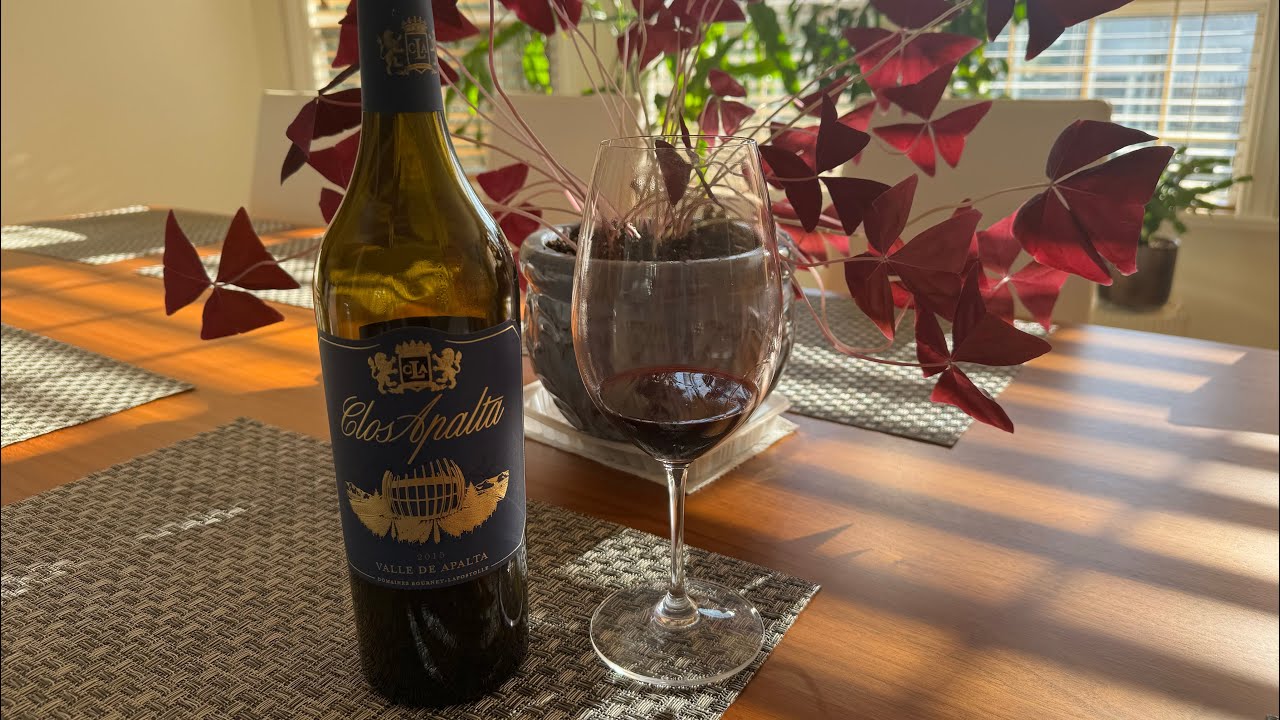
Clos Apalta was established in 1994 by Alexandra Marnier Lapostolle and her husband, Cyril de Bournet, whose family also owns Casa Lapastolle & Grand Marnier. It is now managed since 2013 by Charles Henri de Bournet Marnier Lapostolle
Clos Apalta has a distinct micro-climate which is semi-Mediterranean (winter rains and a long, dry summer). This allows the grapes to reach optimum maturity. The extreme thermal oscillation favors the accumulation of anthocyanins which creates the deep, rich color of the wines.
The winery is located in Colchagua and is about 60 hectares in area. The oldest plots were planted between 1915 and 1920; the stocks were imported from France at the end of the 19th century. The winery has 21 vats for fermentation and blending the grapes. The grapes are 100% hand de-stemmed and 100% native yeast are used. The wine is aged in new French oak barrels for 26 months. The wine is not fined, cold stabilized or filtered.
For the 2015 vintage, the blend is 46% Carmenere, 30% Cabernet Sauvignon, 19% Merlot and 5% Cabernet Franc.
Carmenère (pronounced Carmen nair) is a French grape variety, from Bordeaux, which was destroyed in France by a Phylloxera plague in the second half of the 19th century. However, wine growers in Chile had imported vines from France before the plague and for most of the 20th century they were thought to be a clone of Merlot, with which Carmenère shares many characteristics. Only since 1998 can Chilean wines officially be labeled Carmenère (prior to that, many wines described as Merlot were actually Carmenère). Now Chile is almost the only source of wines made from Carmenere grapes. Carmener is a late ripening grape and needs a long growing season, making it very suitable growning in Colchagua. Carmenère wines are medium to full bodied with high tannins and relatively low acidity. Like Merlot, it has a velvet texture accompanied by black fruit flavors of blackberry, black cherry and plum, with spicy notes of clove and black pepper. If the grapes are not fully ripe, the wine can have unpleasant vegetal notes.
For more information about the winery, please see their website at https://www.closapalta.com/
Hello everyone trophy wine Hunter welcome back to my YouTube channel today I’m doing a review of the 2015 closeth a Pala a Chilean wine which is kind of unusual for me I don’t drink a lot of Chilean wines but this is a pretty Flagship type wine so um I
Thought that I would try it out and I had a friend who actually wanted to drink Chilean wines this Winery was started in 1994 by Alexandra marer lostelle and her husband C de bouret currently the winery is managed by Charles H de bour Mar Lael and he uh has
Done that since 2013 so this is the family that owns castala pastel and also the grand marer which is the famous Spirit The Miner is located in apalta which is in the kagua valley in Chile and it supposedly has a microclimate that is distinct from the general
Climate of Chile um and it’s they call it sub or semi Mediterranean where it has R winter rains and a long dry summer and so that supposedly allows the grapes to reach Optimum maturity and because of this extreme thermal oscillation this favors the uh accumulation of an toyins
Which create the deep rich color of the wine which you can actually see on this video the winery is about 60 hectar in kaga some of the oldest plots uh are were planted in 1915 and 1920 from um stocks that were imported from France so the winery when it was purchased in 1994
There was obviously lots of upgrades that were made and uh I think in 2005 they finished all their major upgrades they have 21 Vats which is something that I always look at with wineries how many Vats they have so that will allow them to ferment different great varietals or different plots uh in
Different Vats and then be able to blend them together in the future so the interesting thing about this wine it is basically carire based uh majority carire uh every vintage it changes a little bit in the 2015 vintage it was 46% carire 30% C 7on 19% Mero and 5% cab
Frog uh just a little bit more information about how the wine is made 100% handy stemmed 100% % native yeast it’s aged in new French Oak barrels for 26 months it’s not fined cold stabilized or filtered let’s talk about the carer grape and I’ve really been more
Interested in this grape Bridal since I uh was able to taste purple Angel uh with the montz family really impressed with that wine and really kind of had a wow factor to me he’s like wow I’m missing something here I had always thought Chile and wine was Cabernet
Samong and you know what’s the difference I actually found Chile and Cabernet SE a little bit green but with these carer wines I really enjoy them so carer is a French grape varietal and it’s really ironic a lot of these gra verios like malbach and carire started
In Bordeaux and uh because of um the fera plague in the second half of the 19th century generally speaking it’s all of it all these grape varials that started in France are actually not grown in in France anymore and so Malbec is making a comeback but you know it’s
Funny that all these grape ver French grape varios are actually now um you know predominant in other places and that’s the truth of carire carire basically is uh not really grown anywhere else other than in Chile at this point uh with really great success so these wine Growers um uh in Chile had
Imported these Vines prior to the plague um and that for most of the uh 20th century they actually labeled it Mero so it’s it was actually carbonair and it’s only since 1998 that Chilean wines have actually been able to label their wines CER so they always thought this was Mero
Because it tasted and kind of reacted very similar to Mero it’s actually carire now Chile is basically the only real source of highquality um carire uh wines so Caron a is really uh very good for the South American climate it’s l ripening and it has a long needs a long
Growing season um it is medium to full body with a good level of tannins and low acidity so it’s quite um reacts or drinks quite like Mero because it’s velvety and it’s got the dark black fruit flavors but one thing that it does that probably Mero doesn’t have as much
Of is the spicy notes so it has a little bit of spicy notes black pepper um on that side and cloves things like that so so that’s a little bit different than Mero um and if the grapes don’t ripen properly they have a kind of a vegetal
Note like green peppers kind of like cam Fran so that’s kind of the difference but carire is a great grape um so treat it in a way uh as I would say kind of in between Cabernet seon and Mero um it’s got some character characteristics of
Both here’s the cork of the wine very clean CL of Alta uh the Family House of Castle uh uh castal pastel was established in 1827 but of course this whiny wasn’t um per or established till 1994 so let’s you see the castle La pastel um kind of logo on the top of this
Um and then uh the label is quite nice on the back of this not much in information and then we’ll go to the actual wine itself which is um very dark color um I think that’s just a product of the carbonera grape in my opinion um
It’s got a great color to it so this wine uh I’ve had in my seller for a little while it is a 100 point wine according to James suckling and it’s a 90 95 point wine according to um wine spectator and again I had it in my
Seller and I’m not a big uh Chilean U wine person I don’t have a lot of bottles in my cellar uh but it was just interesting I think the last time I went to the international Wine Festival one of my friends really enjoyed Chilean wines and so that’s why um you know
That’s I we had dinner and so I said well let’s open my closeth ofala and see how you think of it so this has been opened overnight and so I put it back in the fridge and now I’m drinking it the next day um when I tasted it last night
We had it with uh steak and it was uh wonderful pairing um really delicious lots of dark fruit a little bit of Oak influence and uh a long what I could recall from last night was it was a very long aftertaste compared to some of the
Other wines that we had that night so let’s taste it now after a day so on the nose I think you do get um some I guess some earthiness um like gravel elements but also the dark fruit so again I think I my um first point about it’s kind of a
Cross between almost like Cabernet Fran and Mero um it doesn’t smell typically like a Mero it SM there’s certain parts of this the earthiness and the dark fruits that smell like Mero but then there’s this little bit of um almost like a mineral or stoniness and um a little bit of pepper
Pepper that reminds me a little bit of um a little bit like Cabernet frog so um yeah it’s kind of a cross it’s definitely not straight Mero but it’s got that smoothness of Mero and it’s got the dark fruit yeah I can see where it does partially taste like Mero because you
Have that chocolatey earthy silky component to this wine you have dark fruits black plums it’s got really nice aftertaste it’s medium tannin um medium to full body so not as heavy as a full-on Cabernet 7 Yong yeah so it’s got I think it’s got some blackberries in there too
It does have a on the taste it does have a spicy note to it like cloves or black pepper black white pepper me white pepper and cloves and then um a lot of dark fruit so and then the aftertaste has got a little bit of um edginess to it like a
Bite to it but a pleasantness a pleasant bite almost like a um I want to say almost like Dill uh elements to us or maybe um kind of a grassy um element to the aftertaste of this um but not to a point where it’s vegetable or herbaceous in a bad manner it’s just
Got that little bit of a Bittersweet taste to it at the at the back end of this wine it’s a very unique wine I would say um doesn’t taste like Bordeaux for sure and um I think it drinks better with food so I’m noticing um the kind of aftertaste the
Almost the um mild um Bittersweet aftertaste more right now when I’m drinking it without anything else when I was having with food it actually didn’t really translate into Bittersweet it translated more into almost a licorice um taste which is again not part of my taste profile that I enjoy but some
People enjoy licorice that was more it last night um last night when I drank it I thought it would be a 95 point wine for sure today I’m drinking it I’m thinking it’s not quite 95 so let’s set it at 94 points really still a magnificent wine um I think it’s
Drinking very nicely right now I don’t think there’s really any need to wait I mean is there a rush to drink this I don’t think so there think maybe another you could wait another 5 years but I don’t think it’s really going to get any better I think the tannins are
Resolved um it’s nice it’s to me it’s quite a nice wine it’s quite um it’s in its drinking window it is 15% alcohol but you don’t really taste it in that sense I think it’s quite well balanced um so I really enjoy this wine and again
I think I do I’m starting to enjoy the carire grape inside Chilean wies more and it’s particularly when you’re eating food hope you’ve enjoyed this video until next time happy drinking
5 Comments
Great review, one of my favourite wines. I think you made a typo in the title and put the vintage as 2016 instead of 2015.
I recently visited Clos Apalta and it was a wonderful experience. I am glad that you enjoyed this wine because it definitely Is one of the best.
For the price difference we enjoy the “le petit” version much more. We found the main wine a bit over-priced
Never tried high class Chilean wine… interesting for sure
I’ve had this a few times and really enjoyed it. Unfortunately, like so many other wines, the price has been going up over the last few years. I’m thinking of grabbing a few and cellaring them before the price goes any higher.