
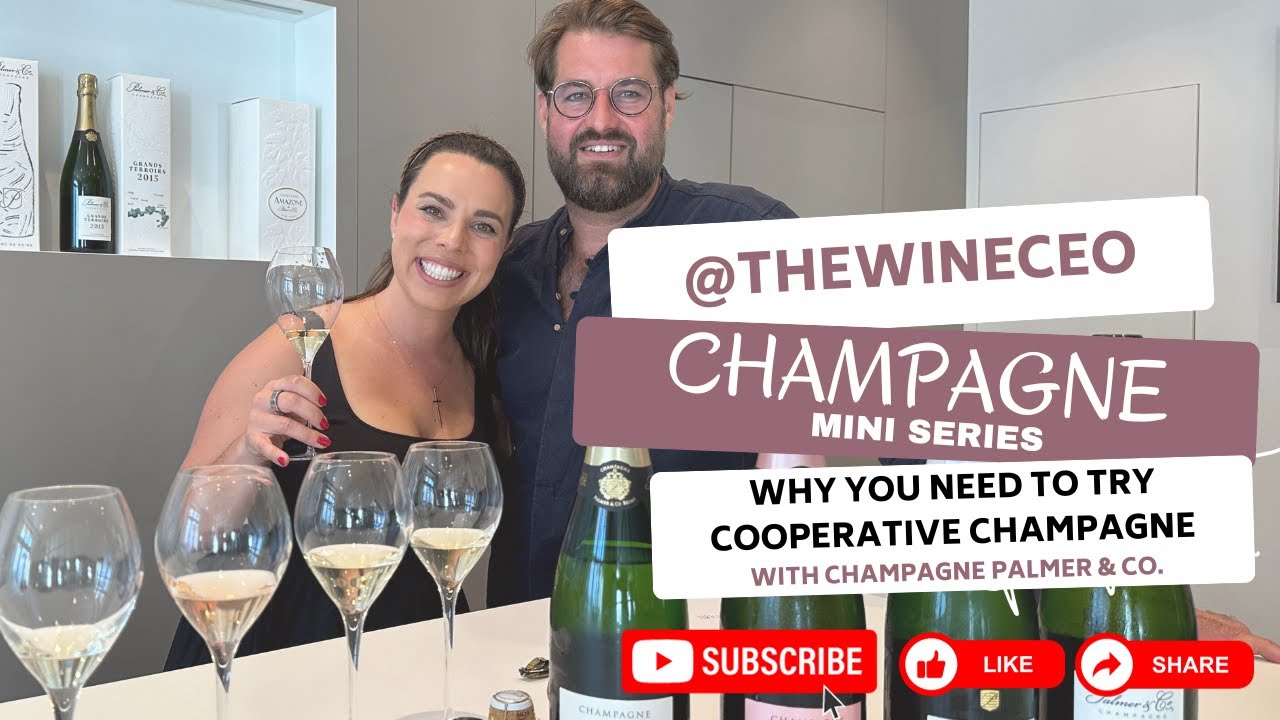
Do you know the difference between a Cooperative and a Maison? In today’s episode, Sarah interviews Francois, the Communications Director from Champagne Palmer, one of the top Cooperatives in Champagne. They discuss the house’s Solera system, unique grape portfolio, history of the 7 founders, and much more! So grab your favorite glass of bubbles and press play now!
——
Sign up for The Wine CEO newsletter and get a free guide to Food & Wine Pairing: thewineceo.com
Email: Sarah@thewineceo.com
Instagram & TikTok: @thewineceo
——
Champagne Palmer: https://www.champagne-palmer.fr/en/
Instagram: @champagnepalmer
#champagne #champagnelover #wineeducation #winelovers #visitfrance #visitparis #sommelier #winemaker #winery #frenchwine #cooperative #cooperatives
Many wine consumers are very familiar with the large houses in Champagne but there are some really incredible grower producers as well as cooperatives throughout the Champagne region today on the podcast show I had the great opportunity to sit down with the director of communications from Champagne Palmer and friend SWAT and I
Talk about the history of champagne Palmer the incredible wines that they’re making there and why it’s so unique to be able to try a champagne from a Cooperative when you are visiting the Champagne region as well as a consumer at home the one thing that I love so
Much about the champagne Palmer story is that they were not just a group of cooperatives that came together because of a lack of equipment or maybe needing a surplus of grapes they were looking for diversity in their portfolio they were looking for depth in flavor and style so these seven producers came
Together in order to create one label champagne Palmer that would have a really excellent highquality brand recognition for outstanding champagne and champagne Palmer participates in their history today by still having family members from each of the original Seven Founders as part of the board or winery working at champagne Palmer
Another thing I love about champagne Palmer is that 50% of their grapes are coming from Premier crew and Grand crew Vineyard in Montana donon this is a really exciting fact because you know that they’re making really incredible wines with these high quality grapes and they have some of the best fruit from
The region so it’s a phenomenal Winery and one that I can’t wait for you to learn more about so let’s dive into my conversation with franois from Champagne Palmer and learn a little bit more about this amazing Cooperative in the wine CEO Podcast well welcome to the wine CEO podcast show this week I’m so excited I’m in champagne and I’m with Francois the communications director for champagne Palmer which is an amazing wine brand in the Champagne region it’s actually a cooperative and we’re going to learn a little bit more about that
Today so fris welcome to the Wi CEO podcast show hello thanks for joining us so um would you mind telling the listeners just quickly how you got into wine and then what brought you to Champagne Palmer absolutely uh I was born in in the mass actually in the
Champagne region so the the champagne is in my vein and I’m from the original appellation and I started with uh with my family because she in Champagne you know champagne is a is a wine it’s very important because it’s it was always in on the table during family dinners
During Gatherings and not only for Christmas but also for uh day to day I would say so it’s our table wine and so it’s a it’s a love story started I started to to to learn with uh with my father at 8 years old I think my first
Tip of of of champagne and started to understand the difference of uh different region different style of champag and um I did a TR school and I and I always has loved this product because it’s it’s not only wine it’s it’s something something else it’s uh um
The history of the region but also we are very proud of this product in uh in in France of course it’s also where you it’s a beautiful products which is um which Sparkles every everywhere in the world so as the wine of Celebration it’s always a we always say that it’s the the
King of of wines and we are here in the very important city in the CH history because all the kings almost all the kings were crowned in h so the link right I’m very very happy and proud of of this product and especially Palmer because Palmer is a as you said the
Cooperative very very quality oriented focus with a beautiful and prestigious Tera on the M urance area which is very interesting if you like wine with with with depth with body with also with very lot of Elegance and the minerality and to the house treasures and um and in
N p 7 years ago amazing so while you’re pouring the first wine I’ll remind the the listeners about what a Cooperative is so basically if you are a Vine grower and you have a large plot of land but you don’t have the facility to produce
The wine so maybe you don’t own a press you can’t buy the expensive material to be able to make wine you might get together with other Vine Growers and share a production facility so that’s what a Cooperative basically and in different cooperatives it can operate in
A different way where maybe you are part of the wine making process in some sometimes you’re not um but it sounds like champagne Palmer started as it was six different uh Growers that came together for the Cooperative seven next but the story is is is a bit different
Because the the idea of the the the the the founders of Palmer was to uh elaborate a blend and they were old um very established uh Growers with their own press center with the uh prier and gr Vineyard and they were already selling um their wines abroad so the
Idea of the The Cooperative here is not to mutualize the the the tools of production of the facilities it’s more to be able to uh enlarge the the the capacity of of of taste with different uh uh grape origin and different Vineyards which is very unique in the
Way we very different absolutely and it’s the same is and we are true to this um to this DNA of the founders because when they decided to um welcome new members in the in the panare um house it was a 20 years and contract so you can
Imagine the commitment um 100% of your Vineyards and you had to be a owner of op or and also have your own press facility so it’s very very selective uh Cooperative we are working with the with the best corers and uh and that’s it our goal is to produce the best grape the
Best possible grape because with good grape you can make a great wine on the contrary is not possible with the only thing is with good grapes you can make bad wines but that’s a human problem it’s not it’s not grapes but uh but is very important the quality of of the
Grapes from the beginning from the very beginning it’s it started in in the vineyard all year long and before the the step of the wine waking process which is very important but uh yeah yeah so so now you have excuse me so now you have over 300 Growers that are part of
The cooperative and each one has to have their own pressing facility not anymore it’s since the the night 1980s and uh and now we I would say we also have our own PR Centers located near May in the muras near treay in the muras and in L
So we have three U press centers because we now we have more than uh 420 hectars to manage uh during the Harvest so it’s uh always a very very important moment for us and uh yeah we decided to grow and to be able to um to welcome more
Growers and more grapes amazing and so you’re a private company now and you make about how many bottles a year we produce 1 million bottle and it’s still the I mean the Pres the former um the existing president sorry the former the grandson of one of the seven
Founders that’s very important we are very linked all the families from the beginning are in the in the boardroom and uh so that’s very important it’s like even if it’s a Cooperative it’s like a family run house it’s uh the spirit and the it’s very human oriented
Which is uh important when you produce wine I guess very cool I love that so tell us a bit about the wine portfolio because you’re getting grapes from all these different Growers um do you specifically focus on any particular grape varieties what’s your kind of house absolutely we are very lucky
Because our Vineyard is planted more than 50% of Chardon which is not common in Champagne because it allows us to um produce an entry level if I can say that but if it’s not the right word but it’s the brute Reserve or the the entry of
The range um with 50% CH it’s very unique in Champagne usually it will be around between 10 and 20% and here at pal we use 50% of Chardon for this CU which gives a lot of of Elegance and freshness that’s very important we blend it with um 30% of pinoa mainly from the
M area the of May and 15% of M coming from the M as well uh and a bit of Val L man the M valet so it’s um the goal is to reach the the the harmony between the the the Shon and the pin the Shon will bring the Elegance the
Freshness um the minerality because we are speaking about sh from the M we’ll see that later more details with blond BL but the the soils are 100% choke which is very important and on the East part of the Monas the roots are going quite deep in the ground in v m uh and
So it gives some salinity to the to the wine it’s um it’s very nice we just just want to have another glass that’s the main main point with that but wonderful blend with pinoir ponir wonderful ponir of May um red fruits yellow fruits um this be lot of
Flavors and you have also the th the Le which is I would say the four um grap varieties for us because it’s it’s only the reason is very simple we are located at the North Face of the monance which means that all the vineyard almost are
Are looking nors and so the the climate can be quite rude in winter here and uh uh it gives a lot of um of concentration but also a lot of acidity to the grapes uh which is great as long as you can keep it in your sell because otherwise
And so to reach the harmony we are looking for in this blend we need to keep this wine minimum of three years in the salar it’s usually more four years but uh that’s very important uh to reach the balance and uh we are looking for and um shardon uh aging only for more
Than three years we start to bring some um spicy nuts also hen nuts um something very interesting and a little bit of of of Bri of pasty so it’s uh it’s always uh always great and Sh from is known for the Citrus approach more than the white
Flowers you can find easily it it’s more citrus oriented which is which is great because it’s um a great coin for an aeri but you can keep it um with your starter with with fish with white meat with it it’s very easy to to pair and to keep it
Because you have the the the body yeah it’s very light crisp and refreshing I mean the Citrus notes are very apparent but you’re right you do get a slight nuttiness as well I mean I can see this being perfect in hot weather in the summertime um but even as you mentioned
Paired with so many different food items it’s very approachable yeah it’s delicious and you have 60% of the arest this one is the Arvest 2017 um and we add 40% of Reserve wines which are Blended brute Reser from the previous years in this one from 2017
You have a proportion of put Reser from 2016 2015 2014 and 2013 so that’s um a Solera system made for the elaboration of this CU it’s Unique in Champagne as well and uh it allows us to keep to to maintain the consistency of the style uh throughout the years so
That’s um very important in a non-vintage CU we are always want to express the style of the house not the the the climatic year on the opposite when you produce um you create a vintage you want to highlight the the climate year and the typicity of of the year of the Vintage
And because of that you wouldn’t necessarily do a vintage every year you would do it on special years when you have really great great absolutely the weather needs to be perfect the growing season with no illness with a with a and so it’s not every year we are quite lucky to be honest
The the global warming is an issue that we produce um in the past years quite a lots of vintages to be honest compared to the to the the last decade um since 2002 we had U some accidents but um more or less we are able to produce even a small
Quantity uh but we can produce almost every year no yeah so you mentioned the Solara system and do you feel like the Solara system is something that adds um just consistency or is it more so about developing flavor as well over a period of time um because I know it does help
It gives consistency but is that the main goal or is the main goal more kind of that unique characteristic of the different ages blending together yeah that’s one we it brings something else to the wine and the principle is uh is quite easy we always we started the
First Solera uh 45 years ago now so it’s quite an old one then we started uh with a red wine actually because we were looking for the perfect red wine to blend for the Rosé Solera so um and we need um red wine with body but with no no
Tanning that’s very important we don’t want that in the in the wine we want something very fresh very easy very fru and so we we tried with different uh pinoir from different regions and uh it was no success and we started to plan um P from
L a year and another and another we started to test and said that’s quite interesting actually because the the young wine of the year will be educated by the old wine and the old wine will bring uh um the young one will bring freshness to the old one so it’s the
Balance is very interesting and uh we decided to keep this wine between 8 and 10 months in small Oak barrels uh the other is more to stabilize the color and also to to reach the the the spicy nuts we’re not looking of the of the wood because it’s old and old Barrel they
Have on average 12 years old so because we one um um new wood was for the the old wood and they they were using in Bui to elaborate white wine for the first part of their life uh second part for champagne and then might finish their
Life in uh in for the spirits or for the rums which is a actually very good life not a bad I love it so while you’re opening that I’ll explain the Solara system a little bit so basically in a Solara system you would have a large
Barrel um and it’s typical to Sherry but obviously used here um as well and you have wine in the barrel and you always want to keep the barrel full so that there isn’t too much oxygen exposure and so you would take some of the wine out
To bottle in a particular year and then you would top it off with more juice from this year so um as fris mentioned that means that over many many years you would have multiple blends of multiple years in this one barrel um so obviously as mentioned that adds consistency as
Well as some of that complexity as well and so this Rosé is from the Cera so this is um is this Rosé de or is this just a it’s a Ros debl we we add we are the only region in the world to be able to blend um red
Wine with with with white one ve and so we add about uh 8% of this Sola in the blend okay so it’s the blend is more or less the same as the the previous wine so dominated by chanet uh which is not common for Ros as well and the touch is
More than a touch because you can see the the the color is quite pale it’s uh pale pink pale gold and um but if you at the nose you can see immediately that the red foods are quite strong but um and you have something very unique with this vinification process it that
You have the on the first nose and the first sip you have the the know the the candy the the the red fruits the wild strawberries and everything it’s very Lively very very fru and um and the second in the mouse it’s it’s m with something with with soft spiciness
Little bit of vanilla of cinnamon coming from the Sola coming from the the Solera raised in Oak barels there’s a beautiful floral Aroma coming from the wine as well I mean you get these beautiful like fresh white flowers and roses that come off the aroma it’s amazing absolutely yeah it’s beautiful so this
Is perfect as an imperative as well but we can play with with spicy food we can play with uh with sill the fish uh with cheeses it’s it’s amazing Ros pink Ros champ and cheeses you’re right the red fruit and the berries are really pronounced too I mean it’s so different
From the first that was more like citrus and Brios I mean this is delicious now um after you disgorge this wine so you you take the wine from the Cera you bottle it age it and then um disgorge it how long is it going to sit before
Release at that point we always keep the wine six more six six more month in the sell is between 6 months and one year it’s quite important because you know the the bottle where slipping in the in the darkness of our sell house for several years and the disgorgement is
Brutal for for the wine so it needs uh even if we don’t add a lot of of sugar I mean palir it’s around between six and seven G per liter so it’s always the beginning of the brute range um but still uh needs to be integrated
Incorporated to the wine so at least to um few more months to to to get the you are looking for that’s that’s important it’s amazing delicious do you know how many cooperatives are in the Champagne region actually there are more than uh more than 100 but few of them
Are their own brand I think we are there are 32 cooperatives uh which are selling their the brand okay and uh you yeah you know the the biggest one uh is is the biggest one we are many many cooperatives are um located in in almost all the villages in champag and they are
Not necessarily produce and sell their their own wine they can only they can produce the wine for their grow and delicious so when you’re looking at the portfolio of your wines compared to some of the other houses would you say that the um main differentiating factor is
The Solera process that you have is it the fact that you age longer than is required by the Appalachian what would you say is kind of a signature to your style uh definitely the the the ter the of the Monas that’s very important the majority of Chardon is very important in
The in the photography and as you said yeah the time management is very important time is Key um because of the exposure again it’s it’s not because we want to because it actually cost a lot of money to keep the wine more than three years on the
Lease but we you we have actually um uh 4 million bottles under our feet now just waiting for them to be revealed so it’s a it’s a long process but uh time is very important and also um I would say our wies are grateful wine coners but not not
Only they can be also enjoyed by uh uh neit I would but uh and I for me it’s a definition of a good wine and don’t have to sink just just enjoy it and you can go deeper you can keep it to pair with a
With a meal for example so it show that it’s not only a good champagne it’s more it’s a wine it’s a wine from Champagne so that’s that’s very important and we have a um guest house at P with a t and our Chef is creating the the meal to pair with each champag
Of the of the range that’s I love that I love the commitment of the champagne Palmer to the expression of the terar because I think that’s maybe a complaint that some folks have against the bigger houses that sometimes you can’t taste the terar and the wine because the juice
Is coming from all over the Champagne region I love you can taste the mon Durant uh terroir truly in in the wines I mean that’s something that is not as common when you have such a large spread of Vineyards absolutely it’s very important and Al of course we all the
The Vineyards and the the the the the the plots are are vinified uh in separate tanks of course um great varieties but from even from a single Village from from um May for example our gr crew we always fify PIR from the the the north of the of the
Plot or in the South we always try to do the the the most precise fication as possible and then we can play uh with the during the blend uh maybe we can say a word about the the the blending process which is very important because
It’s it usually start at p in January so few months after the Harvest um we always start later than the others because we think that the one is still evolving in the Vats during winter so we always start the the blend in January with a team of five analogist we have a
C master and forist and they are testing every day every day the the entire wine Winery we have we have three wineries actually and so they have to to test every single uh tank and um we know the recipe but it will always change from a
Vintage to another and uh so it means that there are testing maybe more than than 200 wats and they have to reduce um and then um non-vintage it’s a blend that’s why I said it was a difficult one to make because it’s a blend of almost 50 different crew um three grap
Varieties and a percentage of freeer wi from the past so it takes approximately 6 months to reach the the the the blend and also to to to evaluate and to forecast the evolution of the wines I did exercise with the Sal master and I did my own recipe on my own
He said your wine is is balanced right now so well done but in 5 years it will be awful oh wow thank you but it’s say the only that’s why they are fist it’s it’s working like a Sol system for the team as well because we we use the the
Knowledge and the experience of the of the the the the the olders um some I think Lan has 40 years experience in the house so it’s perfect memory of all the vintages in Sp years and now we have also um uh younger analogist but and they try to perpetuate the evolution
Diis um and it’s very difficult but um a vintage on the is almost easy to make if we can say that because we only we only select uh specific plots specific Vineyards um in the blond BL for example there are two Villages only so we can
Play more in details and see even in the in The Vineyards uh if it’s the at the top of the hill at the bottom uh the soil the soil can be change with the the the it will be choke but at the top you can have Clay you can have a sand you
Can have so it’s always um we can play with that and that’s very important to be able to to fill into as you say the the ter we that’s very important for for us when we went on the tour of the uh cellers there was a really cool area
That had a ton of wines from like 50 60 70 years ago and so I’m sure the history that champagne Palmer has had saving some of those bottles has helped the current analogist to kind of see how the wines develop over a period of time absolutely we have a huge collection of
Uh vintages from 47 and and on once it’s about almost 60 vintages and we kept we are very lucky because our former president and the team of anist they kept everything and as you said it’s very accurate the first role and goal of this collection is for theologist to be
Able to go back in the past and see the evolution and I I have a good example it was in 2018 it was my third hour at pal um one of our Growers say me I reminds me 57 59 59 I said sorry wasn’t born and uh and
We went in a Sellar with Xavier our Salam master and we opened a 59 in the in the Salas and it was a very good um to understand the evolution of the wine and to um try to take the good decisions to elaborate the blend of the 2018 wow
So of course we are selling few of them uh every year on a location but it’s treasure it’s it’s more again more for the analogy and the and it’s incredible how a champagne if it’s stored in good condition you can keep it 10 20 30 40
Years it’s because um it’s not cocked we we the the bottles are kept um neck down so the sediment dead yeast is still in the bottle so it’s there is no or tiny exchange with oxygen very very tiny so it’s okay we can keep it uh 10 20 30
Years and then we we disgorge it and we put a c and once the coke is on on the bottle you can keep it 10 years probably maximum otherwise it’s it’s going to be dangerous amazing okay so this is the block to Blan and you said that the grapes only
Come from two Vineyards within the plot two Vineyards in the Monas actually there is three but 85% of shardan coming from V and very Citrus oriented lot of minerality very leegant very fresh and we add 15% of Chardon from the very important because it’s more
Um more ripe I would say and it gives a um exotic fruit approach so that at the end you have something like a fried pineapple mango something quite sweet like this and it’s going very well with the Citrus um of the first nose so it’s um very unique in the recipe that’s why
No pal is known for the blond BL Um which is um from the base wi 2017 which was which wasn’t very difficult Harvest but uh with um a very small quantity picked but the concentration the result is that is very very very fresh very elegant it’s delicious you can definitely pick out the tropical fruits you mentioned the
Pineapple so FR while you’re opening this which I’ll have you tell us about the wine in just a moment um but tell us about the sustainability measures because I know that’s something that’s very uh important here at champagne Palmer it’s abolutely very important and we started um in 2014 in the vineyard we
Started in The Vineyards um to improve our um practices in the in the vineyard to reduce uh any uh almost everything to be honest but maybe to listen more the the the soil the the ecosystem the everything and and try to um to um I would say teach is not the right name
But sorry for that but to to bring um our philosophy to our goers um some of them were are far in advance and some others were maybe in the questioning part so we try to to to to work with them and to see how we can improve and uh and now
After 10 years we can say that we did a massive Improvement and more than 85% of the vineyard has been certified it has hv3 which is the biggest in for sustainability plus uh VDC called V dur on chag which is um something um managed by the the the champagne committee so
It’s it’s very important it’s uh it’s it’s not a victory it’s a it’s a ongoing process we will still have to improve um now it’s not only in the vineyard it’s also during the vinification process uh the way we use the water in the because
To produce a bottle of wine you need a lot of water unfortunately so we try to improve this part as well and also um the the of our company as well so we are now part since um June this year we are a mission driven company so the the the
Sustainability is is one of the goal in our status that’s very important so we are selling producing and selling wines obiously but we are our goal is to protect the environment and that’s key in every single stage uh not only in the one in the verification process but also
So in the offices uh maybe we think about how we travel to sell the wine and lot of questions like that that um it’s very important and the only thing we do that is because we want to be able and all our children be able to still
Produce wine in champagne in in in 10 20 years that’s that’s all an issue today so I love the commitment you mentioned a moment ago um the percentage of Growers that are sustainable um and it reminded me that you know with so many Growers obviously everyone is kind of doing a
Little bit of their own thing so how do you ensure consistency as a brand to make sure that you’re getting the same quality juice from all the Growers that are part of the Cooperative um the first thing is how we we uh Rec recruit them but it’s a world
Of mouth you know in Champagne we everyone knows one and we are working with um um grows very quality focused and they know that and and they are proud of the wine that of pal so they just want to give this to give us the best possible grapes and our goal is to
Produce the best possible wines but there is a a contract with that and we know we know that and we can see it easily when the year is difficult um this year for example we we have to Salt the grapes in the vineyard and if your um members um uh are
Committed that will be no issue and we will receive beautiful grapes in the in the pr centers so that’s that’s very important and we don’t want to to grow too much I mean we always and we often say no uh to new members because we want
To choose uh and want to stay true to the to the to the would say the the balance between the gr of the m duras and the other region uh it’s very important to be able to to stay focused on three region we know very well rather than playing with different
Uh other regions which we have um very important our plan is to to be able to produce more bottles in in the coming years but we don’t want to um to put the blend at risk we want to stay true to this because it was a vision of the of the
Seven fonders 75 years ago and um even if the wine is uh we reduced the dosage we we changed the the recipe we maybe we used more Reserve wies but the philosophy and the recipe is almost the same since 75 years and our role in I
Said I’m not making the wi but when I discussed with the Sal master and the team they said it’s and they will make wine for the future it’s uh it’s sometimes when you see zavier joined Palmer in 2003 from 21 years ago and and is the one is working now from
The future vintages you probably won’t see them so that’s it’s it’s something you do for the next Generations that’s that’s amazing it’s very that the time in Champagne is just uh it’s very important it’s also it’s um sometimes when you work at in communication and marketing uh like me you need uh
Everything is very quick has to be very fast and said uh when I discuss with journalist and said do you have some new products and Sh no I’m not selling new products every year it takes at least four years to make wine so please be patient and um the most important thing
Is to stay true and consistent uh that’s very important I think that’s really good to hear for consumers as well because you know sometimes you go to a shop in the US and you may compare a bottle of champagne with say a bottle of prco or another sparkling wine and you’re like wow
Champagne is so expensive you know you know I don’t know if I can I can go for that or what am I paying for you know the consumer might be um confused and it’s good to remember that that’s why you’re paying for the time and effort you’re paying for obviously the storage
Of all the wine for many years before they they’re being sold and obviously there’s a lot that goes into the process the grapes have to be handpicked and so much more but it’s that extra time and effort and care that really you’re paying for with a bottle of champagne
That you may not get when it comes to a lot of other sparkling wines and you need to do the test and uh uh I’m not saying that poo is is a bad wine I’m just it’s it’s not the same same philosophy something made totally different yeah very different absolutely and and
Champagne can be a great journey because you can go um and try to understand and to discover the different varieties of and the regions it’s it’s quite complicated even um as I said I’m I’m 40 42 almost I have I had a several testing is my professional life and personal
Life and is always it’s the thing with wine that one life is not enough to understand and to and I’m always happy to to to test sparkling wines from all over the world and I’m very happy to see the theel is also going uh they all improved uh in
The past year so it’s it’s great because uh we are very good at champagne to say that we produce the best wine in the world but we need to prove it and and to continue to to show it we need to be better in the wine Management in the in
Everything for the environment as well and in the wine as well so um yeah lots of work to do and there’s variety within champagne I love that you mentioned that too because I have had some people say oh I don’t really like champagne um but you can’t say that
Because there’s so many different styles of champagne there’s so many different flavors and because of the terar you can have one champagne from one region and it will taste nothing at all like a champagne from a different region here so it is good to explore explore and try
Different ones and the region has uh also worked a lot of the capacity of welcoming welcoming visitors from all over the world um now there is a direct train the fast train from um the the airport in Paris so you can reach champan region in 45 minutes which is
Great and many houses opened their door to um to be spoke tasting or private uh tasting which is very important and also guest houses uh possible to enjoy um lunch and dinners with private chefs it’s say it’s quite new um in Champagne I would say in within the five last five
Years we improved a lot stopped for 20 years obviously like everyone in the world and we see now the the visitors are coming back uh even from Japan now reopened and uh it’s it’s great to see the the potential uh of this uh region as a um destination from wine tourism
Definitely yeah thank you for mentioning the wine tourism because I was going to ask what is it like if viewers wanted to come to champagne and visit champagne Palmer do they have to book a reservation what’s the process like uh yes you can you can book make an
Appointment to do a private uh private testing with one of the team who will try to go through several wines with a Topic in general it’s more we will um concentrate on one single region to see the the different uh Styles as well and
Um but on the man we are not open to visitors to general public but we we we don’t say no to White lovers or someone very uh passionate about point to be honest but uh fabulous and it’s always my advice it’s also when you are in somea to visit when
Not not only one house just to see maybe a few Growers one big name to see the the the the power of the of the biggest brand in the in the region it’s always interesting and maybe a middle siiz quality oriented houses like pal uh with uh very
One oriented so that’s uh many things to do in and also the history of the of the city is is is rich and the restaurants because we have many many fine dining in in the region from the stre Miss St to a small bori Cafe it’s a we have a good
ReliOn yes there’s a lot to see here so tell us a bit about this F because the first thing you mentioned just a moment ago so the glasses is different so um you shared that for this vintage champagne really you need a special glass to be able to enjoy the full aroma
So tell us about the swine the swine is actually a tribute to the seven funders of because we um it’s a blend of the seven crew of The Seven fers so that’s very important called gr because the first name of the company wasag that was the legal name uh champag
Palmer is the is the brand so the gr is is important for us it’s a blend of 50% Chardon coming from Tre in v again mon duras um and 12% of M from the m duras and the race of P from the of and and a bit of
Of and so it’s the perfect expression of the M duras area in a particular year so 2015 was a very hot year we had a is quite common to be honest seen this last decade but last one was 2003 and this one was um was very interesting as well very rich
With um comped fruits with flowers and that’s why we chose a larger class to be able to um to let the the the Aromas breathe and express um in in the glass absolutely incredible I me oh sorry go ahead the the first thing I sensed was actually the talk I mean you
Really get such an incredible flavor of vibrancy you can taste the terroir um but there’s this beautiful kind of lemon zest and Brio note that follows but you can tell it’s definitely um a very well balanced um and refreshing champagne I mean you get the the fruit though from
The warm year just absolutely delicious thank you very good wonderful and so this is the the we express the style of the house but we it’s a balance between the expression of the year of the Vintage and expression of the way making team so it’s um always different and a new exercise
Every every year um we’ll see we know that we have in the cellar um 18920 it’s going to be a amazing Trilogy that’s for sure and uh 21 was difficult and uh and again we have 22 23 uh finger Frost but uh no no it’s it’s uh great to see the potential and
Sometimes you have to sacrifice your vintage if the the quantity of grape is not enough to produce the the wrench you need to sacrifice the Vintage to be able to produce your non-vintage wrench and especially for us when the sh uh we lose a lot of sh so sometimes we have to
Reduce the production of blond BL to be able to sa the rest of the rench that’s um not easy decisions but that’s that’s important so careful balance and it sounds like a lot of work the wine making team does to ensure incredible quality when possible to do a vintage
But otherwise making sure the non-vintage the house champagne is really keeping the incredible quality and consistency that it’s known for and they have to be 100% agree to move forward in to take a decision in one making so that’s why when they are testing every day if one of them is not
Agree with the decision they will start again to test the wine the day after uh it’s like a like in sport you can be good all the time so when you test wines sometimes you are not in the mood of testing wines uh the weather can play
But uhwi it takes the time again but uh to be able to to take the right decision so that’s that’s important amazing well France why incredible wines and beautiful portfolio thank you so much for sharing so much about champagne Palmer today telling us more about uh your incredible Winery here and uh thank
You for your time so Sante Sante thank you very much all right friends I hope you enjoyed my conversation with Francois from Champagne Palmer and learned a little bit more about cooperatives in the Champagne region if you love today’s episode don’t forget to like and share this with a friend and if
You haven’t yet subscribed to the wine CEO podcast Channel please do so now I hope you drink something new and delicious this week and I will catch you all in the next episode of The Wine CEO podcast
3 Comments
What an amazing and interesting interview! Great episode!! 🥂
Thank you so much! I’m glad you enjoyed it! 🍾
Even if it is not my favourite exercise :), the experience was truly enjoyable, and I appreciate the time you have devoted to discovering our beautiful home and its magnificent wines. Thank you Sarah