
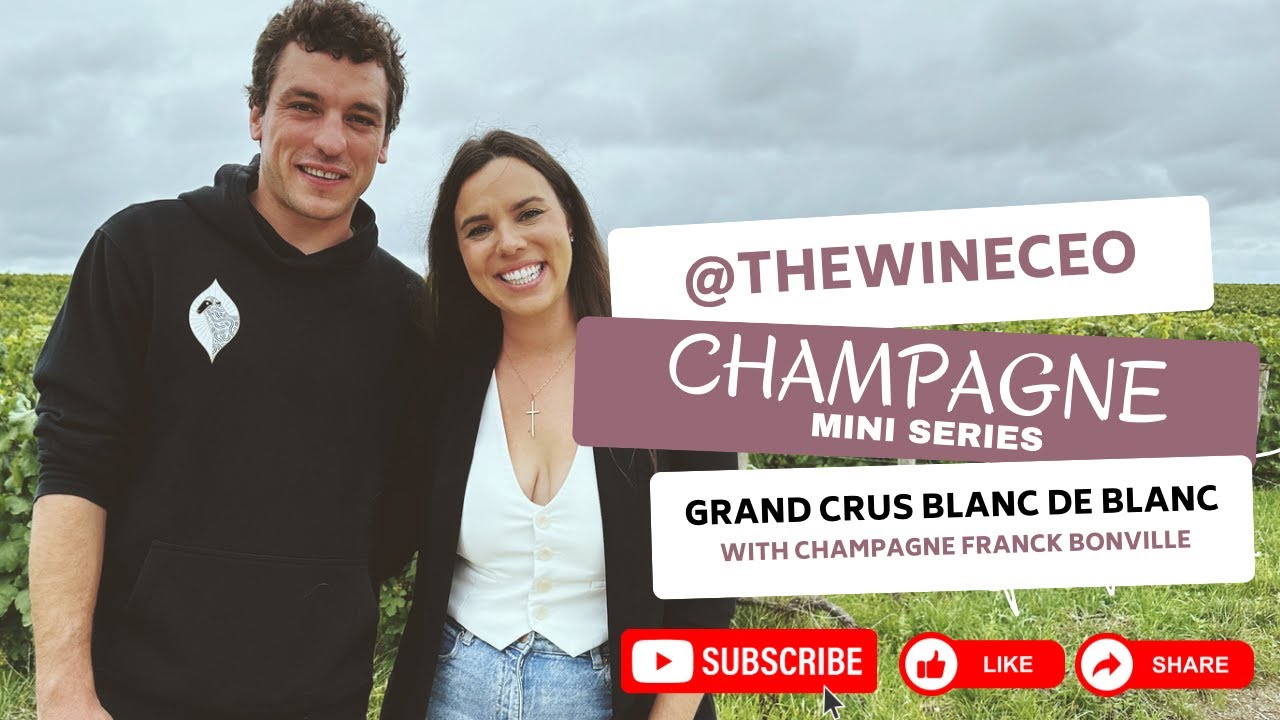
Do you know what a grower producer is? Or how about the importance of the term “Grand Crus” on a label of champagne? In today’s podcast episode, I interview Ferdinand, winemaker and business partner at the Champagne house Franck Bonville. It’s a great conversation about Chardonnay Champagne, Grand Crus, and more! So grab your favorite glass of bubbly and press play now!
——
Sign up for The Wine CEO newsletter and get a free guide to Food & Wine Pairing: thewineceo.com
Email: Sarah@thewineceo.com
Instagram & TikTok: @thewineceo
——–
Today’s Featured Winery: Champagne Franck Bonville
Website: https://en.champagne-franck-bonville.com/
Instagram: @champagne_franck_bonville
#champagne #champagnelover #wineeducation #winelovers #visitfrance #visitparis #sommelier #winemaker #winery #frenchwine
Do you know the importance of a grower producer champagne or how about why you want to have gr crew grapes to be able to make your wine from hi friends my name is Sarah and I’m a certified smia and host of the wine CEO podcast show
And we are in the middle of my miniseries on champagne I had the great opportunity to travel to this amazing wine region this last summer and I met with dozens of wine makers and wine industry professionals to learn a little bit more about the amazing wines made in
This region one of the individuals I sat down with was Ferdinand from Frank Bonville Winery a small grower producer champagne house that’s making incredible Blan to Blan Champagnes from gr crew Vineyards if you’re not quite sure what I’m talking about yet then this is the perfect episode for you let’s go ahead
And dive into my conversation with Ferdinand so you can learn a little bit more about this amazing G producer in the Champagne Region hi wne Co podcast followers I’m so excited today I in the town of a a yes you did right we’re working on this my French is we’re working on it I’m in the town of a in champagne in champag and I’m here with Ferdinand Ruel derell
From the Frank Bonville Winery and we are here to talk about this incredible Family Winery his stepfather Olivier uh is the owner and current uh technical director of the winery but Ferdinand is the managing director he does a lot of the business and helps the wine making
And and the whole process uh and is the next Generation so for and thanks for coming on the Y CEO podcast today thank you for visiting us and happy to be here with you yes thanks so much for having me so we’ve been talking a lot you’ve
Given me a beautiful tour of the facility and the winery so tell me a little bit about the history how old is the winery um and tell me a bit about what type of wine you make here in the region sure so the the Bonville family
Is come from C Deon so this part of of champagne where a is in and um the the brand Frank bronville really start after World War II so that’s when really the first bottle were sold with the name Frank Moville on it uh but they were wine makers before the war already
Between the two Wars at this time they would they would grow the grapes and sell it to big houses um in the 1930s the economic situation was not that good and um the big houses were not buying the grapes so they decided to buy a place with sellers with a press and to
Start and do their own wines uh and that’s how it started so um yeah in the 50s and then between the the 60s and the 80s Frank Bonville so Olivia’s grandfather um bought more and more Vineyard around the house and um then it was Jill Bonville so Frank’s son Olivia
Father uh that came in the 80s and that modernized the the the exploitation the domain uh and Olivier my stepfather came in the 2000s after analogical analogical studies and really designed and developed the style of the house uh in the in the last 20 years and it was also
The 2000s were the the start of the movement to export for The Growers so he developed that as well so that’s why today we are uh um distributed in uh uh quite well in the whole world and yeah so um a little word about the wines uh
The particularity of the house is that we have 15 hear of Chardon only so Chardon is the only grape that we grow on the estate and um this sh comes from three villages a so we in a right now o the village that is 2 kilm in the South
And L another 2 kilm in the S so three gr cre villages in Chad and so all our wines the the whole range is only Shad so only blond BL so that’s the the idea amazing um and as a small sorry to interrupt as a um grower producer uh
Which is different than a lot of larger champagne houses where they may buy the grapes from The Growers um so you grow all your own grapes produce all the all of your own wine and you said you make about 150,000 bottles of exactly yeah um exactly so 100% of the grapes that we
Use are owned it comes from the vineyard that we own and here we have 15 hectars so that represent depending on the years and the yield but approximately between 130,000 and 150,000 abouts per year aming um and you’re all Grand crew right so can you tell the listeners a little
Bit about what makes an area Grand crew in Champagne because it’s different from appalation to appalation exactly yeah um there is a grand crew scale there’s a crew scale in Champagne with grand crew prier crew and without crew let’s say um you have 17 grand crew Villages 40
Something with 42 I think prro Villages and in total you have 319 villages in CH the the gr Crees in Champagne was built this Built This Way um so the houses they buy grapes to The Growers and 100 years ago they would buy at different prices depending on the quality of the
Grapes or depending on the value of the villages some Villages were more thought after than others and at some point so they put a scale on this Market uh situation so the the the villages in which we were buying the grapes at the highest price were the gr crew let’s say
And that’s how it was it was built also based on geological um situation but the the prices was already reflecting that so basically in man if you take the the area where you have choke quite quite uh close to the ground surface uh and oriented East and East and Southeast you
Are in the ground viles that’s still little bit how you see this so um so the gr Cru scale in Champagne is a is a bit different from other regions because all the village is gr crew uh so all the village of a even though some plots in
The corners maybe less qualitative to be honest uh in alas for example in in a single Village you can have some plots that are gr and some other that are that are not so it’s not exactly the same um system and uh to be fully um honest with
You um one of the drawbacks of the ground scale could be that um it was created quite a long time ago and after that new parts of champagne were added to the champagne area like OB and so of there are no Gren in OB because OB was not
Part of champagne when the gr Cru scale was made so it has also um uh not it’s not negative I mean that’s that’s history but um the the kind of closed and forever sealed uh rankings uh limiting is limiting in a way because uh it’s not up to date and if we were
Assessing today water should be maybe the output would be slightly different but then yeah that site was created and and and here we are in a grand crew okay thank you for explaining that so I think what I’m hearing is that there are incredible wines being made outside of
The Premier crew and Grand crew labels definitely um but it is a very prestigious thing to be able to be a cron crew because you know you have incredible Tero that your grapes are coming from so a good historical uh acknowledgement there exactly yeah that’s it the the RO product from the grand
Privileges I mean there’s an in Inc quality uh and of course then I mean you can have bad Growers with good grapes but in a we have such good quality of grapes that honestly even the minimal intervention in wine making uh can do super super good good wines uh but it’s
True that we we taste super super good wines from all of uh champagne and that’s why we are proud to be in the country Village and in the gr crew area we’re proud of it we’re not hiding either behind it or not hiding it uh but we
Just know that we should consider it like this just like a History gift uh and not um we’re not fighting the other with the gr world I would say I love that so are these the different soils from your your different plots exactly so um so the
Scale is not is not uh respected here so uh this this is like two M and a half so just to give the idea and um the code deblon is a chokey part of champagne basically you have the the ban parisan so the parisan area with the c millions
Of years ago and so you haday layers of sediments uh that are buried on the ground and at some point the uh the the bassan parisan crumbled uh and so the layers that were the lay the sediment Marine layers that were uh buried it crumbles it is like this and this is
Called Deon so that’s part from the the underground soil that that came to the surface then and uh it’s the same type of geological stuff that happened in in burgundy and so that that this is why we have this is why we have a lot of Choke
Uh then depending on the villages and of the on the situation of the plot in The Villages you will have the choke closer or deeper so in L in the south it’s really really uh close to the ground surface 20 30 cm even the the the path
In the vineyard where you go with your truck or already white um in in o o is a bit more in a kind of hole so with the time erosion brought soils on top of the choke so you have choke but on top of that you have the
Two three M of mixed between Limestone choke a little bit of every type of soil um and this is somewhere in the middle we have we have the choke at like between 50 cm and 1 M um so yes that that shows that even in a in 6
Kilometers in a very chy area then you have differences from one plot to another uh that we are trying to to explain here and trying sometimes to draw lines between the soils and the wines even though um it’s difficult to be to be fully sure that this is the
Reason why in the wine is like this there are so many things happening in the wine making uh in the in the vineyard in the choice of plants you grow the way you grow it the date of harvest everything so it’s we are quite humbl with that sometimes we’re trying
To say okay we have this plots with this type of so that give this type of wine maybe this link idea but it it definitely I’m sure plays a part in the whole process right in the whole flavor and it’s very cool to be able to see it
So do you do single plot wines from from these regions or are you blending mostly we we blend mostly because champagne is known for the Blends and to be honest that’s also where you make a living on the on the Blends cuz the the importers and the people they need wines to pour
By the glass they need um so the like more than 50% of our volume or Blends then we have vintages that also blend between several plots but from a single Harvest and then we have four today four um CUV that are uh would say geographically um precise we have a an actual single
Plot CUV it’s called label vo so that’s the name of a plot in O so that’s a single that’s that’s a single parcel um that is uh big enough to fill our 8,000 kilogram press because that’s the the challenge to make a single plot CU you
Have to fill the Press with this single plot and um in champag now it’s like the four or fifth generation so sometimes with the generation the plots were split so we have a lot of super small plots um so that’s the the the problem and then these three CUV so from the three
Different villages with the three different soils it’s not uh technically speaking single plots cuz we choose in each Village Three plots so always the same three plots that we blend because we think that these three plots represent the village so in a we took one plot in the north one in the South
And one in the middle to say okay we’re not talking about one plot we are trying to to explain what in our mind a taste like so that’s a I would call it single crew or single Village more than single uh plot okay I love it thank you thank
You for explaining that that’s great fand uh let’s walk through some of these wines because you have for only Chardonnay right obviously you still have incredible depth of flavor that comes from aging and and the different processing so walk me through a couple of these wines sure so so we have Blends
Um and vintages so we and single plot vintages so that’s what we we’ll go through with these four wines today um so everything is gr crew everything is shardon so only blond blond and we’ll start with this CU that’s called Brute CU so that’s the the classic blend cuet
So it’s a young blend it’s a base 2020 with Reserve wine so this 70% of 2020 wines 2020 was a a quite um warm year and so that gives quite a lot of generosity already in the wines so this one is a bit uh special because
We have more 2020 and we filled with 21 uh uh wines it’s a it’s a CU that we like to be on the on the fretty Fresh side of the chadon so quite an easy to drink Shad which is not um for me is not a negative point I like
When people say my wine is easy to drink and they enjoy the second glass just after the first one CU that’s what we want sometimes we try not to overthink all the wines sometimes just uh um just having precise fresh and enjoyable uh Chardon is a is is is fine
For us and um so you keep on the the end of the M the characteristic of the Cod Deon so with the the saltiness the kind of yeah fresh and salty ends that gives length to the wines so that’s really um our best seller in terms of volumes and
Also most of the people that will drink from mville they will they will find this bottle first uh so that’s really we try really to to make it uh at our style and image so yeah I would Define the style like this so keeping the freshness and with the reserve wine with the
Malolactic with a little bit of do I think we put five gram on this one four gr uh to bring a small generosity uh so keeping the fresh structure but building a small generosity on top of it um we not obsessed by the freshness our our
Goal is not to break your mass with acidity or or freshness so we try to keep this balance between yeah uh freshness acidity Sal saltiness and uh small generosity the very first hint of evolution that comes from The Shard leav um so yeah that’s the idea of this I can
Definitely sense that and you mentioned as we were walking through the winery that you favor stainless steel and you do use some old oak but you can definitely tell that in the wine I mean it is very refreshing very approachable um it doesn’t maybe have that same uh
Kind of uh oy characteristic that you might get from some other Champagnes but that makes it really fresh and approachable I mean this is like for me living in Florida this would be a perfect summertime wine when it’s hot out and I want something just refreshing and crisp it’s delicious but it’s not
Too crisp and acidic right you’re right it’s very balanced it’s delicious that’s yeah that’s that’s the one the type of wi that we enjoy um you’re right we mostly working with st steel um to keep this the the energy of the Charon um so G repres more than 90% of our volumes and
We still use a little part of Oak to to make the leure the do to make our single plot Vineyard so we also have more bit more generous in the oxidative and OK part wines but this one is is not really um meant to be uh to too far in that in
That range do you tend to lean a little bit more towards brute style it seems like um at least for this this is definitely a drier style um really depends on the on the wines and on the year on the blend um there’s a a trend in Europe now quite
I don’t know how it is in Florida but uh uh people are really asking for extra brute a lot extra brute is really popular uh it’s true that most of our wines are good as extra brute so as we try to balance uh as we do the malolactic the wine itself is already
Generous enough you you don’t have to add that much but still we we process this this way with the same we take 10 bottles we do 10 different do uh so between zero and 10 we put in the sell for three months we wait and then we drink everything blind and we
Say which one we don’t we’re not trying to give the ranking and say this one is more sweet than this one we’re just trying to say okay which one seems the most enjoyable and well balanced for us sometimes it happen that is seven G if
You 7 G we put seven grams um this time it was four grams because 2020 was already a rich year and so we do it like this and sometimes um we could sell more if we would put extra boot on everything uh but I mean yeah we’re just trying to
To stay focused on this uh just taste the wine and see what happens that’s great but then having said that it’s true that we often choose extra brute as a result between yeah two three four because yeah the shadon on Le evolves it gets more buttery more pastry uh Bakery
Like and and this gives enough enough richness uh so you don’t have to you don’t have to add that that that much um uh liquor okay um and I just wanted to add we not um I mean for us is really part of the wine making process uh it can be seen as
Salt or spices for a chef you know and so there’s no we don’t see uh we don’t see anything bad in do do sometimes it can be misunderstood I think uh because people have the feeling that we add some sugar in the end like to hide or
Something which was maybe the case in green harvest in the 80s ’90s today we really see it as a um a way to to give length and to to to Really finish the wine uh sometimes just a little a little do gives the wines an extra complexity and a length when you don’t
Have it it like stops quite so we are we are really thinking that uh it it brings something to the wine and that’s why we are we are uh taking this decision as an anical decision saying okay what is best for the one if it’s 7 G 8 gram we put 8 gram
We write on the bottle and that’s it nothing to hide yeah and I love that as the wine maker you’re truly waiting to see how the Harvest is and and what the wine tastes like before kind of making that decision and tasting it wine because I think um yeah it’s it’s one
Thing to care about the marketing and what consumers might see from the label but it’s another thing to know that you’re sticking true to your style as the wine maker and it’s consistent and you know that it’s a great quality wine so that’s awesome yes as long as it
Works like this way I mean we we we Growers uh sell our history our ter our vineard and our style so so far it has worked this way Olivia has worked this way to make the wine as he thinks they are the best and then to try
And explain that to the customers it works that way and we are managing to sell the bottles I’m not judging sometimes I mean if you need to sell and you have to stick a little bit more to the market request I mean that’s part also of the business and everyone needs
To to pay the employees and to make a living so we are lucky that today we can do the wi that we like and our customers importers Som they understand this and they like it as well uh and I hope it goes on and that we can stick to this
Philosophy yeah I agree that’s awesome um we can move to the second one it’s another blend so again non vintage but uh we select one on this one so the Q is called Unison Unison um and uh it’s a it’s a blend of 2017 and 2018 so the wine stay longer in
The sell so this one stay four years and a half um the idea here is to be more on the first evolution notes of shadon to try and have these more yeah creamy buttery pastry notes um so so leaning a little more into the mctic fermentation kind of and more in
The longer aging only so more exchanges between the leaves and the and the wine in in the bottle and this is a little bit the sometimes when when I have appointment with a s or with someone and sometimes they say oh I’m in a hurry
Just bring one bottle with I one wine I bring this one for me it’s the one that represents the style and the type of wine that we’re trying to make the most um so we choose wine when we do the Blends we choose wine with a bit more character
And personality knowing that they will have four years to soften a little bit and um so it’s not exactly it’s not just taking the same wines as the brute and aging longer we also consider bit more um intense wine in this one yeah it’s amazing how I mean just a little extra
Time it really adds so much additional character and development to to the wine I mean even the fruit tastes so different it’s incredible cuz obviously same grapes same uh but I mean it tastes so different it’s incredible yeah that’s definitely the style of wine that the
Style of Blondo blond that we like so uh at the at the age between the the Young World of shadon and the and the the beginning of the evolution so that’s where we try to be uh it’s beautiful really beautiful again still really approachable it’s still very fresh and I
Think blun to blancs tend to be right especially when you compare it to um Blan Noir or you know just a typical champagne that would have the PIR and the P but um this it’s it’s even more I think developed than you might find a typical Blan to Blanc it just has this
Really beautiful like Peach flavors and the Aromas give you um even like a little touch of that bio still it’s yeah really delicious so this is so that was our two blend so brute and Unison uh that really represent the style of the house and uh and we are
Super proud of this CU and now we move to to vintages so we have two CU one vintage 15 and another vintage 15 that is single plot and Oak Barrel raise and fermented so we’ll start with the extra Bo 15 so 16 yeah 15 was was bottled in 16 so and this gge this year in 22 so that’s um six years and a half on um and can you mention the um process quickly for the listeners on what the the requirement for the region is versus
What you’ve chosen to do with this particular wine yeah in Champagne so we have the in terms of duration so basically we we have to remember we are white wine producers so basically at the Harvest we pra The Grapes we do white wine so after two weeks three weeks we
Have white wine um so in September and then uh starting January 1st we are allowed to to bottle it and so we we we are we we bottle in in the spring and so we add the sugar and yeast in the bottle when we bottle and we close with a
Metallic Crone cap and so that makes the second fermentation and uh the the bubbles appear and then after this bottling you have to keep the wines 15 months minimum for non-vintage Blends and 3 years minimum for vintages for our Blends we basically we do um approximately 2 years only so 24 months
And for our um for our vintages depend on the Vintage but between five six seven years so this one is six years yeah okay you get this nuttiness immediately on the palette that’s incredible exactly we definitely more in this part of the chadon Aromas with the nut with the
Coffee with a little bit more the bakery and the yeah time of not exactly so yes definitely more in this Um slightly evoluted notes um and 15 was a a normal warmy not that warm so we keep quite a lot of freshness and a little bit of bitterness in the end that um you have saltiness but you have also have a kind of bitterness of vet notes quite elegant that that we
Like on the 15 that’s really characteristic from the 15 V Day show mhm um no delicious I mean I definitely agree with the vegetable notes but you still get a little bit of that salinity that minerality still comes through it’s nice and acidic um and The Toasted not
Uh toasted nut flavors I mean that’s just really so delicious yeah incredible and this one is 100% um a the blend that we tasted before were um were blends of years but also Blends from plots coming from a and o so this one is 100% a it’s not a requirement it’s just
That the Vats that we selected that were for us representing the year the most were the were from this so okay um which was it that way um and then we can still stay on the same vintage also vintage 15 but single plot so all the grapes come
From this plot that is on the top of o so the village just 2 kilm in the South and when the rest of the revange was tin still vinified this one was vinified in the burg the size of barrel so now we have about 50 barrels and the minan age
Of the barrel is seven eight years so um every year we will uh take out maybe two or three barrels that we feel give less energy to the wine and we will buy two or three new so we have two three new barrels out of 50 um then then we blend
All the wine together so the the wines coming from the new bars will be a bit more oy uh vanilla style okay but uh blending with the rest would be okay um we’re not trying to do Californian sh sty you know yeah a little little lighter yeah that’s good I mean you have
Some good ones it’s definitely a a sty style it’s a style and a preference definitely i’ yeah I’ve said on the show before for that uh California chard has a time and a place and there’s times where I love it and there’s times where I love more of a crisp more lighter
Style of sharding as well exactly that’s why we were saying before there’s no I think there’s no truth in the wine uh you have wines for special occasion wies for others and um and then you have taste of course but uh so that but that that’s the choices we’ve made with the
Oak so we try to to use more used work than yeah which is different around champagne right so there are some wine makers that use brand new fresh Oak and that’s the flavor profile they’re looking for so I think that’s one thing that um is important to remember with champagne you
Can try so many different producers to find the style that you really like and what you’re looking for definitely and I mean champagne we speak about champagne as um unique and uh stuff but there are so many different Tero and uh wine makers and grapes so pona will not handle the Yoke the
Same way as the Shon did does so you have also yeah a lot of factors that that’s why um there’s no truth I mean uh you can use the in several ways you have some super good producer that do super super well with really
Oky uh wines and we love it as well just uh not the one we do sure just different different style it’s delicious I mean the um Oak notes are more pronounced on this but you still get that fresh acidity again a little bit of the nuttiness too but it’s not as pronounced
Maybe as the the first the end is more salty to me and you feel the Yol mainly in the middle of the mouth when you feel little bit this extra generosity um and um I definitely get the saltiness I feel like this would be amazing with seafood I mean this is
Just again really refresh is so basically all Shon Shon and blond blond and seafood is never a bad option I think it’s always super good and um this I I agree and this is even concentrated and expressive enough to try I think more even we we we we’ve had it with
Like white meat and kind of mushroom creamy sauce you know and so to to get this this cream that this generosity that you have this n um so it’s expressive it’s still good at De apperitive and and but it’s expressive enough to try uh unusual pairing for
Champagne I mean we do it but I know that most of people don’t don’t uh D sometimes to have champagne with meat or with uh chicken or stuff like this and that goes Super well sure um I know one of the things that um is a constant
Debate in the wine world is aging wine right and I think we’d spoke a little bit as we were walking through the cellar a lot of uh wines around the world a winery may sell the wine to the consumer and then it’s up to the
Consumer to age it if they want to um but really the philosophy in in most of champagne especially with your house is you’ve aged the wine to where you feel it’s the the perfect age for release right so that it’s ready to drink when you release it right exactly um
Basically we keep the wines in the sell only then we start the dis garment when we think the the wine is ready so um the wines that we sell are enjoyable now um for the vintages they they can age a little bit more I mean it won’t get bad
It may actually get even better uh waiting a few years but uh but we think that drinking the bottle now is not a mistake either you know what I mean um on the blend maybe we we’d like to age it 6 months more or one year more with
Slight L going this way um we have to find the balance between the the cash and the and the Aging to be honest that’s how it works as well but it’s the Vintage is we we we put on the market when we think that the wines are really
Ready to be drunk and and um and yeah can age a little bit more you can keep it a few years in the S house but um but doesn’t need it doesn’t need especially you will get something different uh you’ll be some somewhere else on the wave you’ll get another
Experience uh but we don’t think that it will be obviously better it will be different for sure it won’t be worse but it would be different yeah amazing that’s the idea awesome fan you’re making some really incredible wines so these are truly outstanding um and yeah
I’m uh excited to see how uh the winery continues to grow I know you’ve been here for three years so I’m sure as you continue to be here the minds will continue yeah working hard with my stepfather Olivier to really Pursue the the idea of the style of wine that we want to do and um since I joined Olivier for years ago Le has been focusing 100% of his time on the wines and so uh yeah I think we We are following our path and we are really looking forward
To show our customers and uh to show you the the wines that we have Aging in the sell so in a few years U uh be great as well I love that does Olivier um feel like he’s kept the flavor profile and tradition of his father and grandfather
Or has he changed the style a little bit naturally um I mean it it has slightly evolved but I think that we are I wasn’t there obiously but we are slightly getting back to um this balance between freshness and and generosity that has always been a little bit the the type of
Uh one that we were trying to do the thing is then the the the the weather and the climate are changing so we not making the same wines as we were doing before so that’s that’s one also of the reason that we have to change a little
Bit our way making decision because it’s not um uh the parameters are not the same anymore in the 17s 80s they used to to harvest uh in October with like 9% alcohol uh because the the grapes and the vine couldn’t get couldn’t give more now we Harvest at the end of August
Beginning of September with 11 something degrees so the profile of the wine are not the same and so Olivier and I have to adapt also to to this but I mean we’re trying to to keep an idea of the Bonville style that I tried to explain today amazing well it’s outstanding so
Thank you so much truly this has been amazing all right friends I hope you enjoyed my conversation with Ferdinand I learned a ton from this amazing grer producer champagne house and I hope I hope you enjoyed learning a little bit more as well for more information check
Out the show notes below so that you can get the link to the Frank Bonville Winery as well as subscribe to my podcast Channel if you haven’t yet if you learned something new today I would love if you could drop a comment below and like and share this episode with a
Friend the best way for others to learn about the wine CEO podcast is by word of mouth so if you could share it with someone who has not yet heard of my show I would so greatly appreciate it until next week friends I hope you drink something new and delicious and I will
Catch you in the next episode of The Wine CEO podcast