
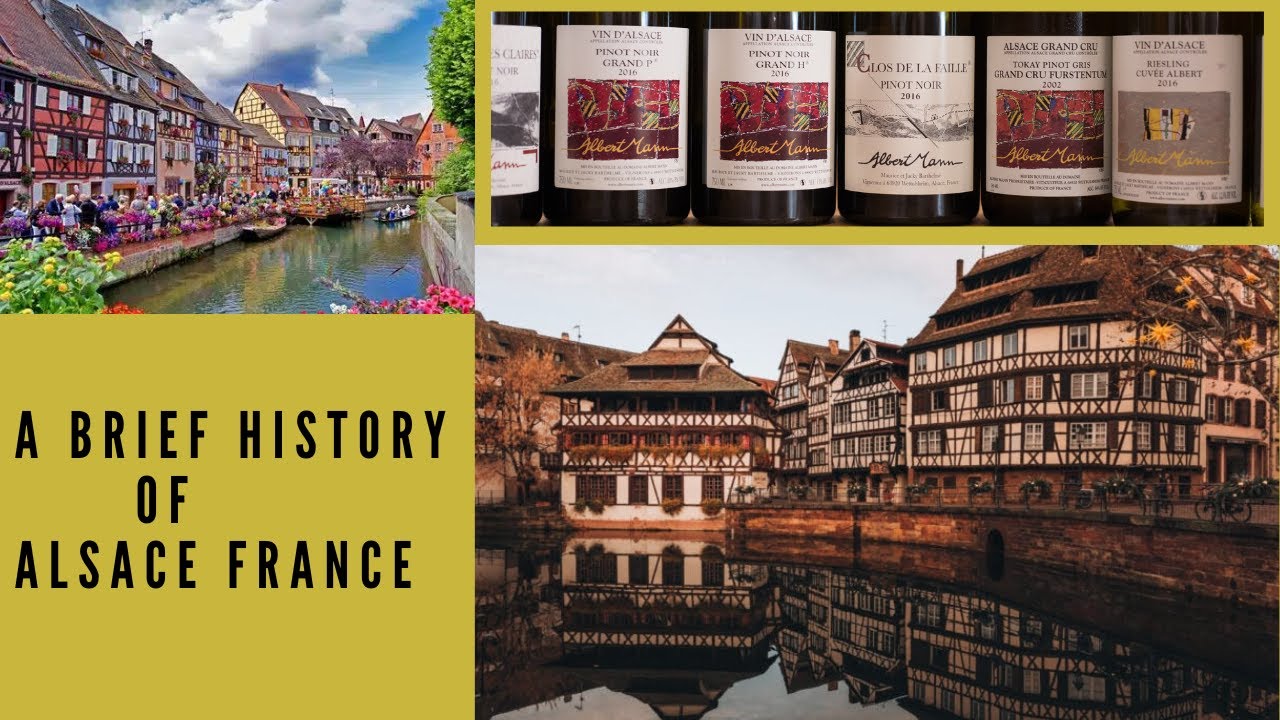
Kevin Day from openingabottle.com gives us a brief history of the region of Alsace France.
Rob’s Contact
www.foodwinewhiskey.com
rob@foodwinewhiskey.com
@foodwhiskey on X
@food_wine_whiskey on IG
Todays Guest – Kevin Day
Editor-in-Chief at openingabottle.com
His focus is primarily on European wines, with a lean toward Italian and French wine. Not only does Kevin drink and evaluate these wines but he also travels to the regions. He gets to know the winemakers, their processes and why they do what they do. Then he shares this with all of us.
Photos in this video were provided by Kevin Day at openingabottle.com
Okay let we’ve talked you know visiting and kind of you know the the multi I don’t want to say multi the Dual type of culture that’s there with the German influence and the French influence but you know why is that what’s the history of this this area why does it have this
Mix of culture uh from the German and the French yeah and and a third part of that would be the Swiss okay really yeah because yeah because it’s Downstream from Switzerland so the Rin river flows out of Switzerland into Alas and and you know heads North and by many accounts a
Lot of the alaan um Heritage can trace its roots and lineage back actually to Switzerland which is pretty interesting um but it’s you know it’s it is it is uh it is uniquely its own thing I will say that uh you know it’s they are they are loyal
To France you know they’ll root for the French soccer team when they play um and you know there’s there’s a a recent history with Germany in World War II um that you know is is still pretty painful I think for a lot of multigenerational families um but nonetheless it’s it’s
You know that location being right on the Ry River being kind of this area you know it’s if you’re familiar with Italian wine and Italian regions it’s really not that different from alto ad or from fuli where you have you know there’s some zones like this in Europe
Where the the the borders don’t really mean a ton you know there’s there’s much of a gray area between cultures and alas is really that you know it’s things have just been blending for so long um that it’s it’s formed its own unique identity um you know Vin culture in the area does
Date back to the Romans so the first evidence of of vines producing for uh wine goes back to 2 ad so we’re talking very very far back um you know I was reading up on this this morning from the wine scholar Guild manual and uh you
Know there was a quote in there that in the 9th century there were documented 116 160 different Villages were producing wine in alasce so the industry by the 9th century was large enough that you had wines being produced you know kind of across the whole vog mountain
Range um and really it reached a Prestige peak in the 1500s it was really the world’s most prestigious wine at that time so it’s it’s uh it’s been a celebrated wine for a long time it just maybe hasn’t had the same kind of track record with America like champagne has
Or like burgundy or Bordeaux has uh but it’s a very well-regarded and prestigious wine region uh that had some very difficult times in the 20th century that it had to recover from that maybe those other wine regions didn’t have nearly as much of a hill de climb uh to
Be quite honest so you know that’s kind of if you fast forward from the 1500s to modern times you see that alas went back and forth between Germany and France several times I actually had to write this down because I I thought it was so interesting um so in the 17th century
Louis the 14th annexed it from Germany into France so that’s the 17th century and then the 17 late 1700s the French Revolution the Napoleonic Wars that kind of followed that really destabilizes the region and then it’s reclaimed by Germany in 1871 and then after World War I it goes
Back to France and then Nazi Germany invades in World War II and occupies it for a duration of World War II and then it’s liated it goes back to France again so alas was in a tug of war there for a period of time from 1871 to 1945 where
It went back and forth and the uncertainty that came from that uh the trauma that came from that uh really uh formulated uh you know the modern identity of alsas in many ways and so after that war when you had so much of the infrastructure destroyed uh you know
You you wanted to Rebound with the the viticulture of the area it was natural for them to embrace industrialization uh by doing so and I think as a result of that you know it built the industry back up but it really kind of had to Pivot back towards Fine
Wines terar Centric wines less industrial wines um and and that’s been kind of the trajectory of the wine region uh is going back into more of a traditional mindset back towards more of a handcrafted wine scene um that that’s really quite robust at this time but
Yeah it’s interesting when you go uh to Alas Rob and you tour some of these Villages you know one Village will have just a spectacular uh Church steeple crowning it that is clearly several hundred years old and then another church will be look like it’s brand new
You know the steeple will look brand new and you come to find out that at the close of World War II a lot of American bombers uh targeted the churches and the church Steeples because that that’s where the Nazi snipers were as the American troops advance to liberate Alas
And so it was an unfortunate um sacrifice to liberate alsas was to you know the you know the icon of each Village uh was destroyed in many instances and so you know there there’s there is a there does appear to be a lot of stories that I’ve heard from
From wineries that you know oh the you know my great-grandfather he he made it to America and he thanked so and so who you know liberated you know met him in person and so there’s there’s kind of this this camaraderie that alas has with America that’s tied to the end of World
War II that’s kind of interesting that I’ve I’ve Just Seen flashes of I’m no expert on it by any means but it’s certainly part of this you know the wonderful story and the tapestry of this Region’s history um that that kind of uh you know you can actually visibly see it
When you’re there which is kind of kind of interesting well and and you mentioned you know the back and forth during the war it wasn’t just that they wanted to gain more land right this this is a strategic location with the mountains and and the and the the river
That run down that this was a uh for military reasons they wanted this area for Access across the border in into France and into Germany sure yeah absolutely and you know I think you know and predating that you know the the you know there was a lot of treasure to be
Had in having this you know this wine uh region under your belt as an Empire