
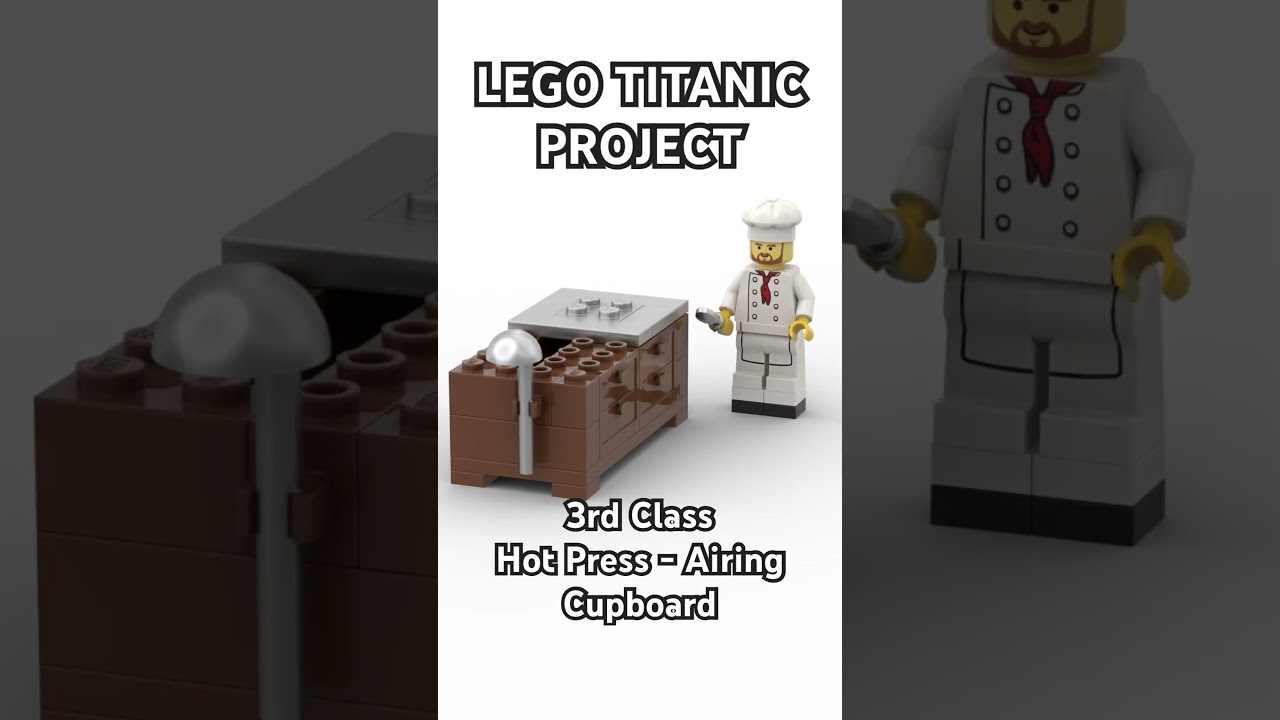
Here is our render of a kitchen Pantry Hot Press where Third Class Passengers stood in line and were served food that was hot. Found on F deck between Watertight Bulkheads H and J. We are using Bricklink Studio to render these images. This model includes cabinets and serving utensils.
If you would like to help see this consider supporting the project: patreon.com/TheLegoTitanicProject
The kitchen staff of the Titanic played a crucial role in ensuring the smooth operation of the ship’s culinary services. Here are some facts about the kitchen staff of the Titanic:
1. Size of the Kitchen Staff: The kitchen staff on the Titanic consisted of approximately 80 individuals, including chefs, cooks, bakers, scullery workers, and other kitchen personnel. They were responsible for preparing and serving meals to the passengers and crew.
2. Head Chef: The head chef on the Titanic was Charles Proctor, a highly skilled and experienced chef. He oversaw the entire culinary operation and was responsible for menu planning, supervising the kitchen staff, and ensuring the quality of the meals served on board.
3. French Influence: Many of the kitchen staff members on the Titanic were French, as French cuisine was highly regarded during that time. French chefs were sought after for their culinary expertise, and their presence added to the ship’s reputation for fine dining.
4. Hierarchy in the Kitchen: The kitchen on the Titanic followed a strict hierarchy, with various ranks and roles. The highest-ranking chefs supervised different sections of the kitchen, such as the bakery, butchery, and pastry. Each section had its own specialized chefs and workers.
5. Long Hours: The kitchen staff worked long and demanding hours to meet the needs of the passengers and crew. They often started their shifts early in the morning and continued late into the night, ensuring that meals were prepared, served, and the kitchen was cleaned and organized.
6. Multicultural Staff: The kitchen staff on the Titanic consisted of individuals from various nationalities, reflecting the diverse nature of the crew. Besides French chefs, there were also British, Italian, and other international members who contributed their culinary skills to the ship’s operation.
7. Training and Experience: The kitchen staff of the Titanic underwent rigorous training and had extensive experience in their respective roles. Many of them had worked in renowned hotels and restaurants before joining the ship. Their expertise and attention to detail were vital in delivering high-quality meals.
8. Multilingual Environment: The kitchen staff had to work in a multilingual environment due to the diverse crew and passenger composition. Communication was essential for efficient operations, and staff members had to understand and work with colleagues from different linguistic backgrounds.
9. Adaptability: The kitchen staff had to adapt to the unique challenges of cooking at sea. They had to account for the ship’s movement, maintain proper food storage, and ensure that the meals were served promptly and in optimal condition despite the shifting environment.
10. Sacrifice and Loss: Sadly, many of the kitchen staff members did not survive the sinking of the Titanic.
The kitchen staff of the Titanic, like the rest of the crew, played an important role in the ship’s operation and catering services. Their expertise and commitment contributed to the ship’s reputation for providing exceptional dining experiences, even amidst the tragic events that unfolded.
We’re building a 30+ foot Titanic and we are in the designing phase using the actual blueprints of the Titanic itself. Not only creating an exterior focused model but also every room, door, mechanism and furniture. Our current build is Boiler Room 2. From there we will begin to expand along the tank level toward stern and bow.
#titanic
#bricklink
#moc
#legomoc
#legos
#lego