
This is an audio version of the Wikipedia Article:
History of French wine
00:01:17 1 Early history
00:05:47 2 Middle Ages through the Age of Enlightenment
00:09:59 3 Revolution to Phylloxera
00:13:32 4 To the modern day
00:16:40 5 Influences on the French wine industry
00:17:16 5.1 The British
00:19:11 5.2 The Dutch
00:22:06 5.3 The Christian Church
00:27:12 6 See also
Listening is a more natural way of learning, when compared to reading. Written language only began at around 3200 BC, but spoken language has existed long ago.
Learning by listening is a great way to:
– increases imagination and understanding
– improves your listening skills
– improves your own spoken accent
– learn while on the move
– reduce eye strain
Now learn the vast amount of general knowledge available on Wikipedia through audio (audio article). You could even learn subconsciously by playing the audio while you are sleeping! If you are planning to listen a lot, you could try using a bone conduction headphone, or a standard speaker instead of an earphone.
You can find other Wikipedia audio articles too at:
You can upload your own Wikipedia articles through:
“The only true wisdom is in knowing you know nothing.”
– Socrates
SUMMARY
=======
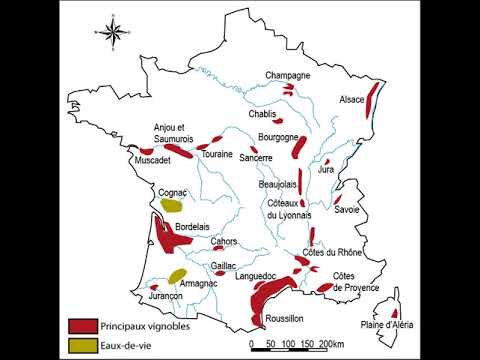
The history of French wine, spans a period of at least 2600 years dating to the founding of Massalia in the 6th century BC by Phocaeans with the possibility that viticulture existed much earlier. The Romans did much to spread viticulture across the land they knew as Gaul, encouraging the planting of vines in areas that would become the well known wine regions of Bordeaux, Burgundy, Alsace, Champagne, Languedoc, Loire Valley and the Rhone.
Over the course of its history, the French wine industry would be influenced and driven by the commercial interests of the lucrative English market and Dutch traders.
Prior to the French Revolution, the Catholic Church was one of France’s largest vineyard owners-wielding considerable influence in regions such as Champagne and Burgundy where the concept of terroir first took root. Aided by these external and internal influences, the French wine industry has been the pole bearer for the world wine industry for most of its history with many of its wines considered the benchmark for their particular style. The late 20th and early 21st century brought considerable change—earmarked by a changing global market and competition from other European wine regions such as Italy and Spain as well as emerging New World wine producers such as California, Australia and South America.