
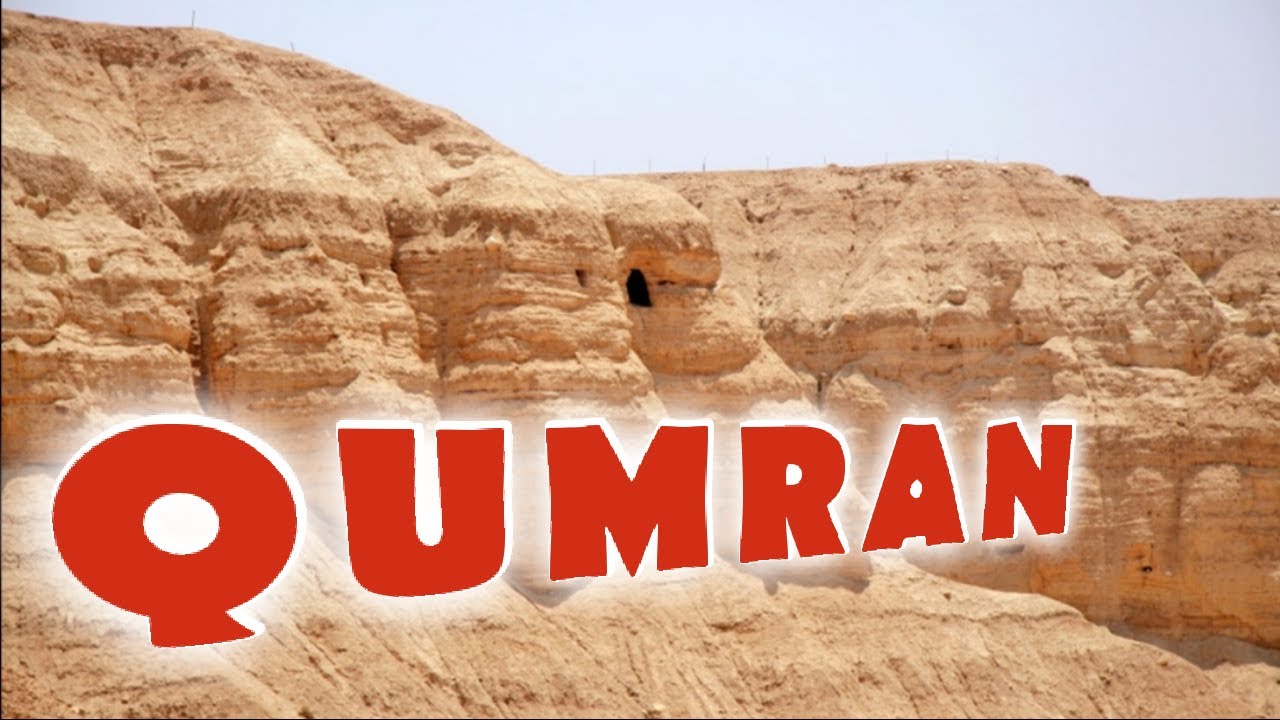
After our trip from the dead sea we pass by here ,the Qumran.
Qumran ,located west of the Kaliah-Sedom Road On the north-western shore of the Dead Sea, had a Jewish population as far back as the 8th Century B.C. E. But it was not this settlement that made the site famous. Qumran’s fame comes from a breakaway sect, known as the “Essenes”, who lived and studied here for centuries- from the end of Hasmonean period ,through the great revolt of the Jews against the Romans- and left in the surrounding caves a magnificent legacy, the now called the DEAD SEA SCROLLS.
The Essenes arrived at the Qumran towards the end of the 2nd century BCE, During the rule of either John Hyrcanus 1or Alexander Yannai. In 31 BCE during the reign of Herod ,there was a serious earthquake in the area and the sect abandoned the site. But a quarter of a century later, during the rule of Archelaus , Herod’s son (4 BCE-6 CE),The Essenes returned to Qumran and rebuilt it. In 68 CE, During the great Jewish revolt, the Romans Conquered Qumran and dispersed the sect. The last inhabitants of Qumran were members of a Roman garrison stationed there during the Bar Kochba revolt(132-135 CE)When the garrison was relocated, the site was abandoned and forgotten
The search for the center of Essene activity began in 1947, the year that Bedouins shepherds found seven ancient scrolls in a local cave .Father R. de Vaux and a team of French Archaeologists excavated the area between 1951 and 1956 and found additional scrolls and early structures that supported the theory that Qumran had been the nucleus of Essene activity. The caves that dot the difficult to reach slopes and crevices of Qumran had served the Essenes in time of need as hiding places for their library. The SCROLLS hidden in jars for nearly 2 thousand years ago and preserved as a result of the area’s arid climate, included books of the Old Testament, the Apocrypha and the sect’s own works. some of these scrolls are on the display at the “shrine of the Book” in the Israel museum.
The Essenes were ascetics and as such had paid great attention to ritual bathing and purity. They lived a communal life in settlement that was constructed to make them as self- reliant as possible. They had assembly halls, a central dining room ,in which ceremonial meals were eaten, a kitchen, ritual baths, a laundry room, a watch tower, a stable and a pottery workshop. of special interest is the Scriptorium- the writing room-with it’s desk and inkstands, where the Essenes scribes probably wrote most of the scroll found in the adjoining caves.
– from Qumran National Park, Tel: 029942235
www.parks.org.il *3639
**** “WITH HIS TRUTH HE IS CLEANSED” ******
Observing the laws of purity was a primary concern of the Yahad community. They sought not only ritual purity but also spiritual perfection. The quest of purity affected every facet of activity in the strictly regulated daily life of the community.”
In excavation of the site Ten ritual baths (mikvaot) were uncovered. texts from the period suggest that the members of the community immersed themselves at least 2x a day.
******* THE COMMUNAL HOUSE ******
The communal meal was a central event in the daily life of the Yahad Community. At midday the sectarians ceased work, bathed in the ritual bath and gathered in the dining hall. An aura of sanctity enveloped the dining hall which also which also served as the meeting hall of. Each member of the sect was served a modest portion of bread and cooked food. A priest conducted the meal and after he pronounced the blessings the community ate in silence.
– The remains of a large long hall probably dining and meeting hall were found at Qumran in a nearby pantry. Hundreds of pottery ,tableware pieces were discovered neatly in piles.
MUSIC: English Country Garden by AARON KENNY
On the Island by God mode
The stoic and the Sailor by Unicorn heads
from
– youtube audio library
#qumrannationalpark
#deadsea
#deadseascroll
#caregiversinisrael