
Drinking Jove’s Blood: A Tour of Tuscany with Sangiovese
We continue our Italian sojourn this week with a trip to the Tuscan countryside, a “nation within a nation” synonymous with wine tourism (for better or worse). This is the world’s most dramatic hill country with picturesque fortified towns overrun each summer by foreigns legions with sunscreen as their war paint and selfie sticks as their swords.
Sangiovese is Italy’s most widely grown grape, the very blood of Rome’s “sky father”. It comes in many shapes and sizes throughout its historic home with Chianti dominating the market until Brunello’s emergence and Vino Nobile’s revival. As usual, I love what Oz Clarke has to say on the subject:
“Not remotely New World in softness or richness – but with real class, imbued with Florentine arrogance and an austere haughty beauty that makes no effort to seduce, demanding rather that you make the effort to understand. As producers ease off on the new wood, the flavors more and more reflect the earth, the character, the history of Tuscany. If you’re one of those red wine lovers who like a little pain with their pleasure, Tuscan Sangiovese is increasingly the place for you.”
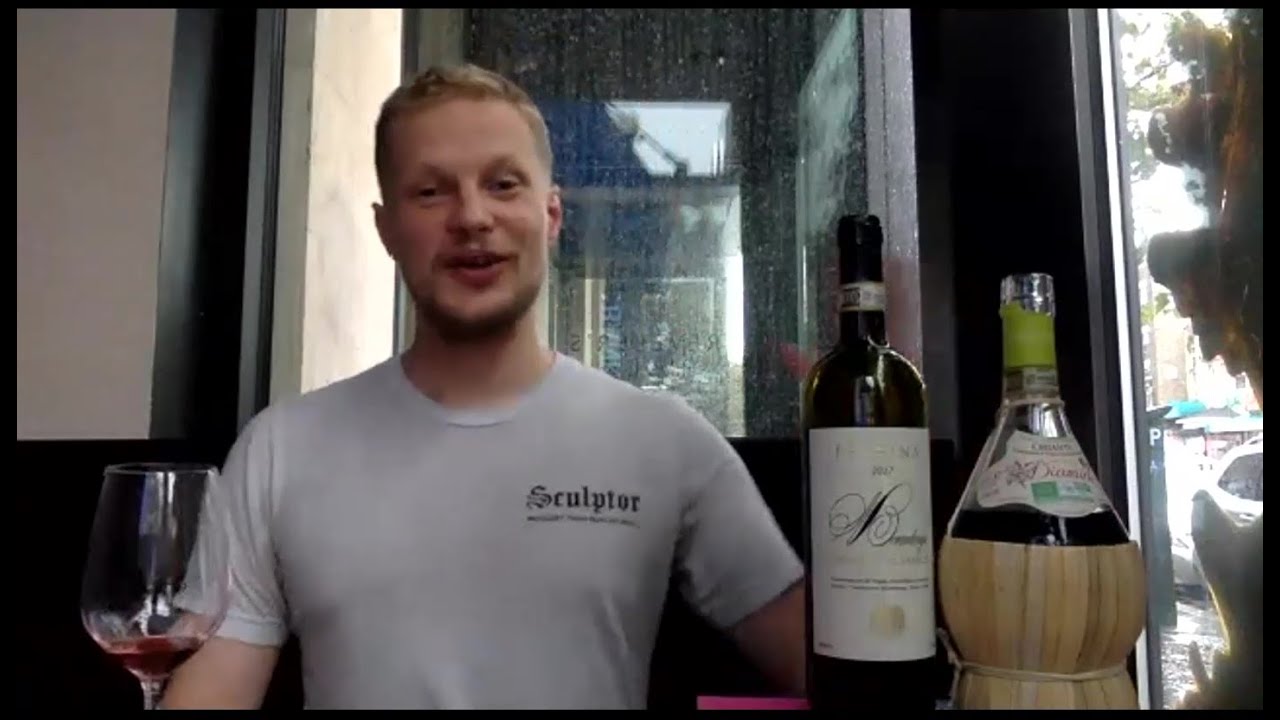
Bill Jensen, sommelier for Michelin-starred Washington DC restaurant Tail Up Goat, and her sister Reveler’s Hour, is a breakout star of the Covid-19 Pandemic with his virtual wine school. In an effort to stay in touch with his regulars and soon-to-be regulars, he launched #StayHome Wine School on March 29th, and continued every Sunday at 4 pm EST for 40 straight weeks. In the very beginning, it was BYOB. Later, Bill would recommend bottles to be purchased at various wine shops. By week 9, TUG and RH reopened and local wine school students could shop there, first for bottles and later also for flights.
To be added to the newsletter and gain access to the class each week, email your request to: wineschool@tailupgoat.com
This week’s bit of verse was from Bacchus in Tuscany by Francesco Redi
In Bill’s weekly recap email, he said this:
Sangiovese is a bit of an archetype for its home country, equally temperamental and transcendent, suitable for everyday drinking or ranked alongside the world’s greatest, most durable red wines.
Sangiovese was one of my first wine loves, and revisiting the finest examples feels like coming home. I made a distinction between Italian and French wine to open the glass that brings to mind an encounter between the two countries’ former heads of state. Circa 2016, then Italian Prime Minister Matteo Renzi is said to have told French President François Hollande that “Italian wine is better than the wine in France.” Holland replied “but ours is more expensive.” If French wines appeal to the bookkeeper, then Italian ones speak to the poet.
The world is your oyster for the sake of additional resources, be it wine windows, Italian bureaucratic regimes, or literary inspired tasting:
– Smithsonian Magazine shows off Florence’s newly relevant, plague friendly wine windows:
– GuildSomm covers the byzantine history of Tuscany’s wine laws, underscoring the difference between Chianti and Montalcino:
– The Gray Lady’s Eric Asimov has a Sangiovese double feature, profiling controversy in Brunello di Montalcino:
and reemergence in Chianti Classico:
– Forbes goes underground and into the cellar with one of our featured wineries, Conti Costanti of Montalcino:
– Decanter breaks down the aging requirements for Italy’s most age worthy wines:
– The Paris Review cooks with Giovanni Boccaccio and The Decameron: