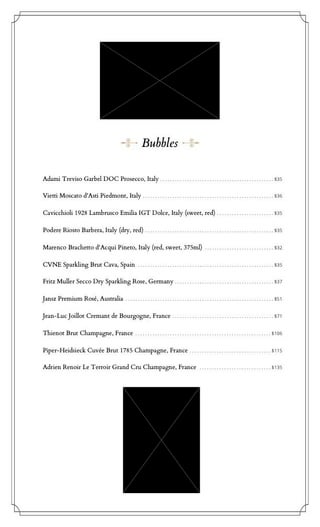
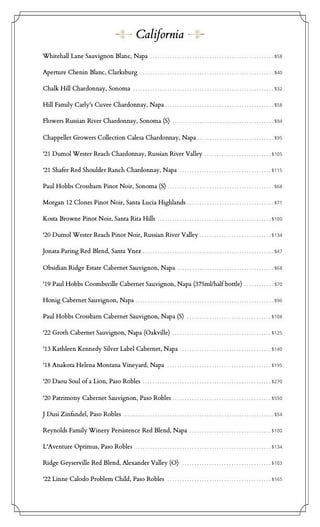
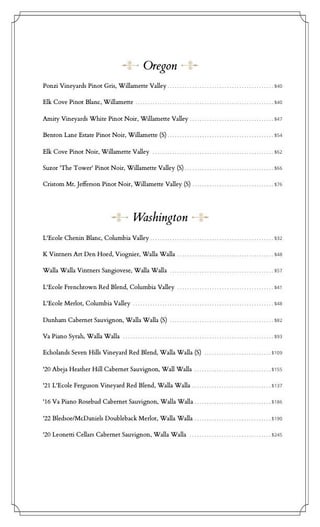
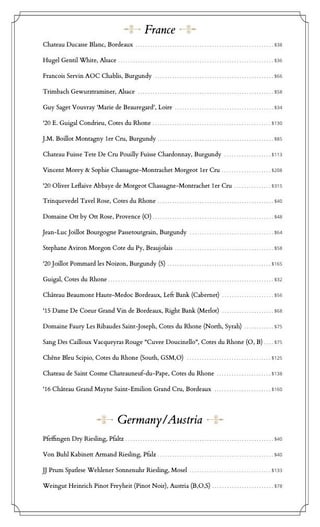
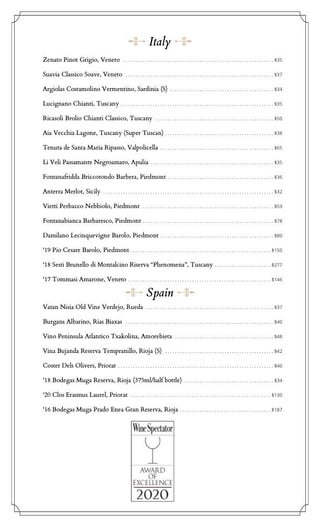
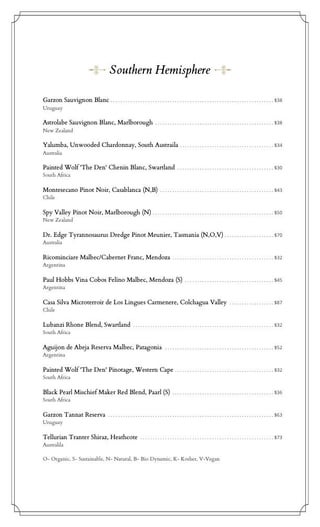
I own a small steakhouse in Montana. I take pride in my wine list of around 125 wines. Any opinions are welcome. Whats wrong, whats right (if anything). Any glaring omissions?
I barely looked and went straight to comment because it’s hard to take seriously when only some wines have vintages on them
Sweet_College_4554
First of all, I imagine that Montana doesn’t have the variety of importers/distributors that many more populous states have, so I think the selection there is probably less than some other areas. You obviously have a Kermit Lynch distributor there, so why not try to work in more of their French/Italian selections as opposed to the more grocery-oriented brands. I also think there’s too much CA/WA wine, but maybe that’s based more on who is visiting you and what they’re asking for? As the other post said, please use vintages on all of the wines and use “NV” to indicate those that don’t have them. I also prefer a wine list organized by sparkling, white, rose, and red. Then you can list the region and producer, region, and country after that and sort them by region, type or price.
agmanning
Gosh I really don’t like the formatting.
agmanning
Oh my god. I just spotted the Wine Spectator Award from nearly six years ago! Oh man that’s just sad.
SnooOwls5438
I think you are missing lbv port. They pair excellent whit steak au poivre
nojefe11
I think it’s a great selection for a small steakhouse in Montana. I suggest adding vintages and being uniform with how you format appellations, regions, and countries
likatigani
Especially given you’re a steakhouse, I wonder if it might make more sense to go varietal first, then region. Or even just to seperate the whites and the reds.
Nolanola
All bottles need a vintage listed. Current release is not a uniform year for all wines from all regions. If you’ve got unlisted 2023 burg on there, you’re gonna edit the doc to mark 2023 when the 2024s come out? I would hope so because those two vintages are incredibly different. For one example.
Grouping and marking whites from reds is a good idea. Especially in the old world, not everyone knows what’s white or red from the name.
Grouping subregions within countries is a good idea, no need to mark them if there’s only a couple.
BigBoiMike93
I’d be happy with this list if I’d go to a small steakhouse in Montana. That being said, I’d split it towards sparkling/white/red/sweet and vintages with all wines. It’s a bit of a waste of the wine list to not denote vintages

9 Comments
I barely looked and went straight to comment because it’s hard to take seriously when only some wines have vintages on them
First of all, I imagine that Montana doesn’t have the variety of importers/distributors that many more populous states have, so I think the selection there is probably less than some other areas. You obviously have a Kermit Lynch distributor there, so why not try to work in more of their French/Italian selections as opposed to the more grocery-oriented brands. I also think there’s too much CA/WA wine, but maybe that’s based more on who is visiting you and what they’re asking for? As the other post said, please use vintages on all of the wines and use “NV” to indicate those that don’t have them. I also prefer a wine list organized by sparkling, white, rose, and red. Then you can list the region and producer, region, and country after that and sort them by region, type or price.
Gosh I really don’t like the formatting.
Oh my god.
I just spotted the Wine Spectator Award from nearly six years ago!
Oh man that’s just sad.
I think you are missing lbv port. They pair excellent whit steak au poivre
I think it’s a great selection for a small steakhouse in Montana. I suggest adding vintages and being uniform with how you format appellations, regions, and countries
Especially given you’re a steakhouse, I wonder if it might make more sense to go varietal first, then region. Or even just to seperate the whites and the reds.
All bottles need a vintage listed. Current release is not a uniform year for all wines from all regions. If you’ve got unlisted 2023 burg on there, you’re gonna edit the doc to mark 2023 when the 2024s come out? I would hope so because those two vintages are incredibly different. For one example.
Grouping and marking whites from reds is a good idea. Especially in the old world, not everyone knows what’s white or red from the name.
Grouping subregions within countries is a good idea, no need to mark them if there’s only a couple.
I’d be happy with this list if I’d go to a small steakhouse in Montana. That being said, I’d split it towards sparkling/white/red/sweet and vintages with all wines. It’s a bit of a waste of the wine list to not denote vintages